

Wednesday 30 April 2025
The quest for secure communication has long been a challenge in the wireless world. With the increasing reliance on internet of things (IoT) devices, securing these connections is more important than ever. Researchers have been working tirelessly to develop innovative methods to safeguard our data. A recent study published in a prestigious scientific journal sheds light on a novel approach that leverages channel reciprocity to boost physical-layer security.
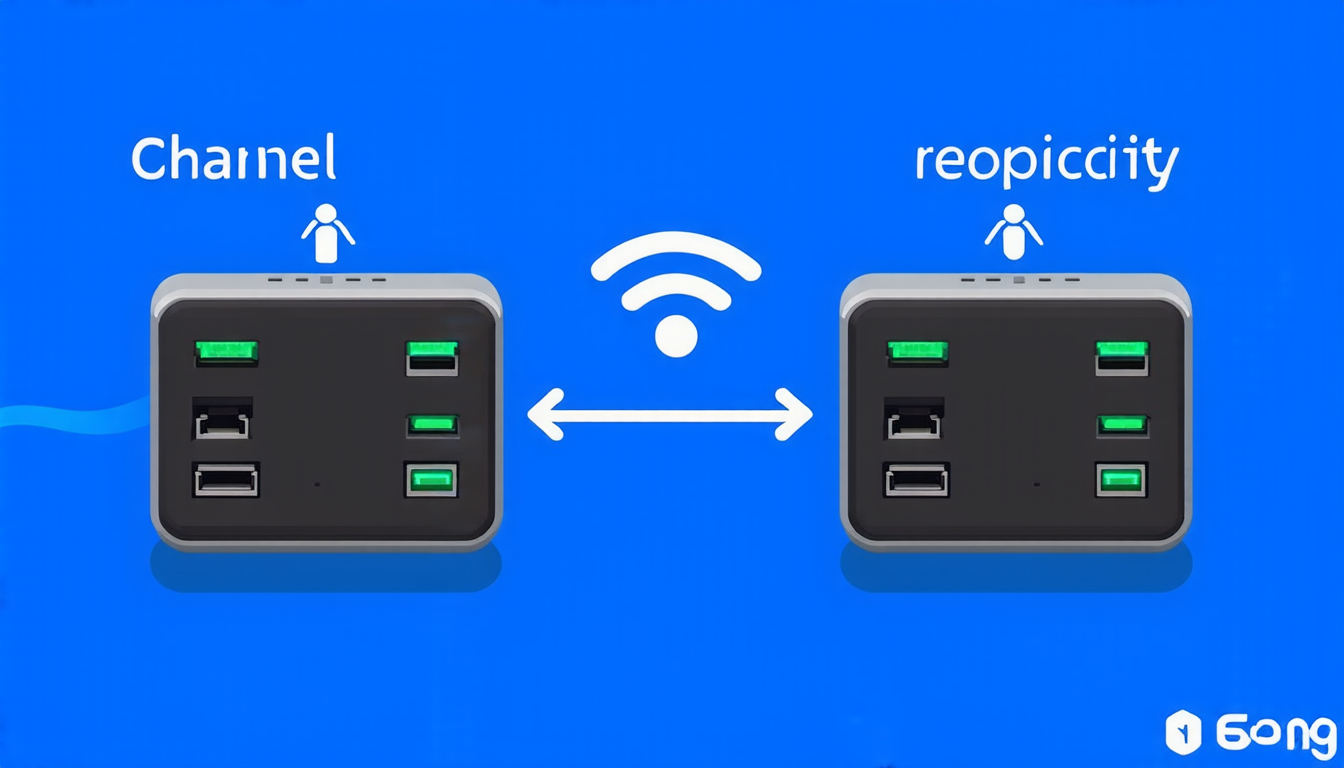
The concept of channel reciprocity is rooted in the idea that two devices communicating over a wireless link will experience similar channel conditions, even if they are not synchronized. This property can be exploited to generate shared secrets between devices, essentially creating a secure key. However, this method has its limitations, as channel impairments and asynchronous measurements can significantly degrade channel reciprocity.
To overcome these challenges, the researchers employed wavelet-based techniques to reconstruct CSI data that are consistent between the two participating devices. This approach utilizes wavelet coherence, Pearson’s correlation, and time-lagged cross-correlation to quantify channel reciprocity in a more robust manner. By leveraging this technique, the team demonstrated significant improvements in channel reciprocity, making it possible to generate secure keys at faster rates.
The researchers also proposed a novel secret-key generation scheme that exploits CSI temporal variations to enhance device authentication resiliency against replay attacks. This approach is particularly relevant in IoT scenarios where devices may be subject to malicious tampering or data manipulation. By using the wavelet-based technique, the team showed that it’s possible to detect replay attacks with high accuracy, thereby safeguarding device authenticity.
The study highlights the importance of channel reciprocity in wireless key generation and demonstrates a novel approach to overcome its limitations. The findings have significant implications for IoT security, as they provide a reliable method for generating secure keys and detecting malicious activities. As the number of IoT devices continues to grow, this research is a crucial step towards securing our increasingly connected world.
The researchers’ innovative use of wavelet-based techniques offers a promising solution for wireless key generation and authentication. By harnessing the power of channel reciprocity, they’ve opened up new avenues for secure communication in IoT environments. As we continue to rely on these devices for various aspects of our lives, it’s reassuring to know that scientists are working tirelessly to develop cutting-edge security solutions.
Cite this article: “Boosting Physical-Layer Security with Wavelet-Based Channel Reciprocity”, The Science Archive, 2025.
Wireless Communication, Iot Security, Channel Reciprocity, Physical-Layer Security, Wavelet-Based Techniques, Secret-Key Generation, Device Authentication, Replay Attacks, Wireless Key Generation, Secure Communication





