

Thursday 22 May 2025
Scientists have long been fascinated by the intricate dance of proteins and water molecules within living cells. In a recent study, researchers delved into this complex relationship, uncovering new insights that could have significant implications for our understanding of biological processes.
At its core, protein density is a fundamental property that determines how proteins behave in solution. Think of it like trying to predict the movement of a ball on a trampoline – you need to know the mass and volume of the ball to accurately forecast its trajectory. In this case, proteins are like balls bouncing around within the cell, and their density affects how they interact with each other and with water.
Previous estimates of protein density have been based on rough assumptions and simplifications, which may not accurately reflect real-world conditions. To get a more accurate picture, scientists employed advanced computer simulations to calculate the density of individual proteins in solution. They found that most proteins are less dense than previously thought, with an average density of around 1.3 grams per cubic centimeter.
But why does this matter? Density plays a crucial role in determining how proteins fold and interact within cells. For instance, changes in protein density can affect the way they bind to other molecules, which is essential for many biological processes like cell signaling and metabolism.
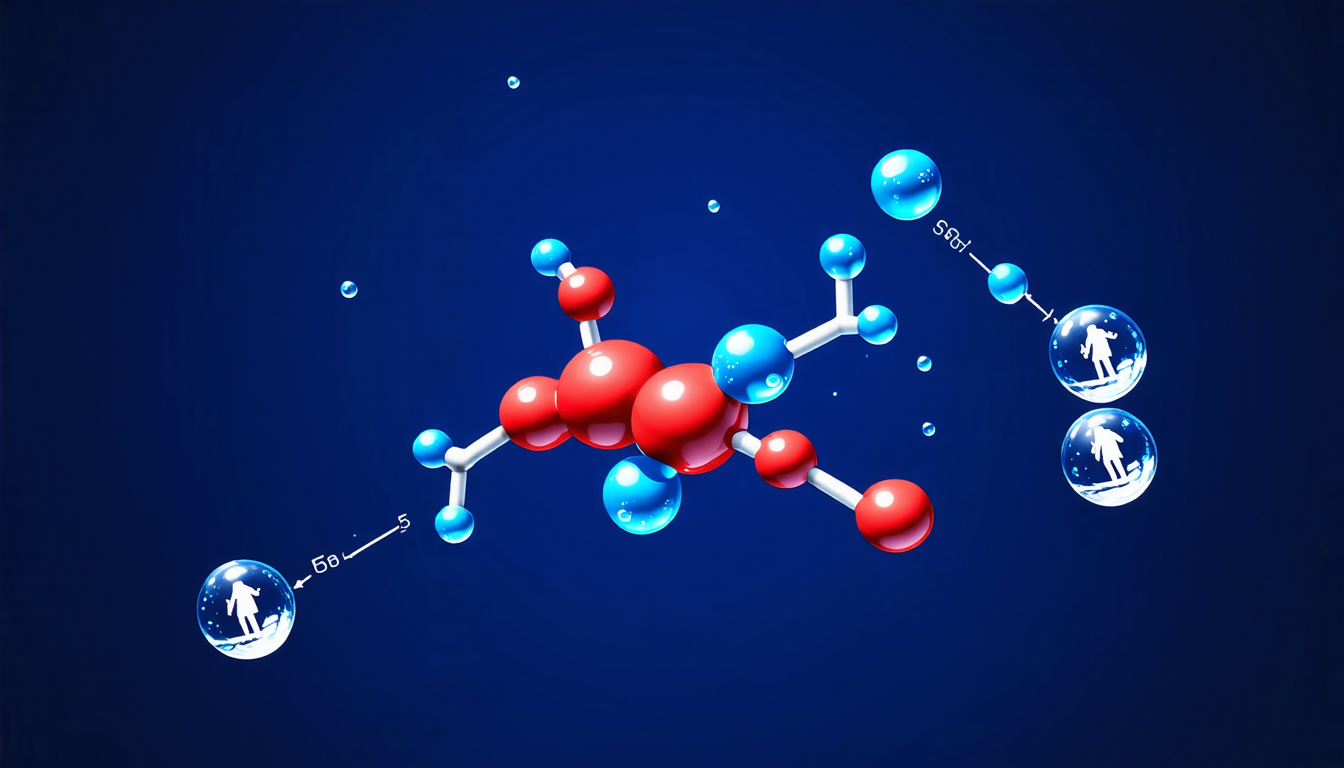
The researchers also explored the impact of hydration on protein density. Hydration refers to the amount of water surrounding the protein molecule. Surprisingly, they found that even small amounts of water can significantly alter the density of proteins. In fact, the first two layers of hydration around a protein are actually denser than bulk water – think of it like a layer cake with increasingly dense layers.
These findings have significant implications for our understanding of biological processes and could potentially lead to new treatments for diseases. For example, changes in protein density may contribute to the development of certain diseases, such as Alzheimer’s or Parkinson’s.
The study also highlights the importance of accurately modeling these complex interactions between proteins and water molecules. This requires advanced computational tools and sophisticated algorithms that can simulate the intricate dance of atoms and molecules within cells.
In summary, scientists have made significant strides in understanding the relationship between protein density and hydration. These findings could lead to a deeper understanding of biological processes and potentially even new treatments for diseases. By better grasping the complex interactions between proteins and water molecules, researchers can continue to unravel the mysteries of life at the molecular level.
Cite this article: “The Intricate Dance of Proteins and Water: Uncovering New Insights into Biological Processes”, The Science Archive, 2025.
Protein Density, Protein Hydration, Water Molecules, Biological Processes, Cell Signaling, Metabolism, Computer Simulations, Molecular Interactions, Disease Development, Computational Modeling.





