

Friday 01 August 2025
The quest for machines that can read music has been a long-standing challenge in artificial intelligence. While computers have made significant progress in recognizing written text and images, deciphering the complex notation of musical scores has proven to be a more elusive task.
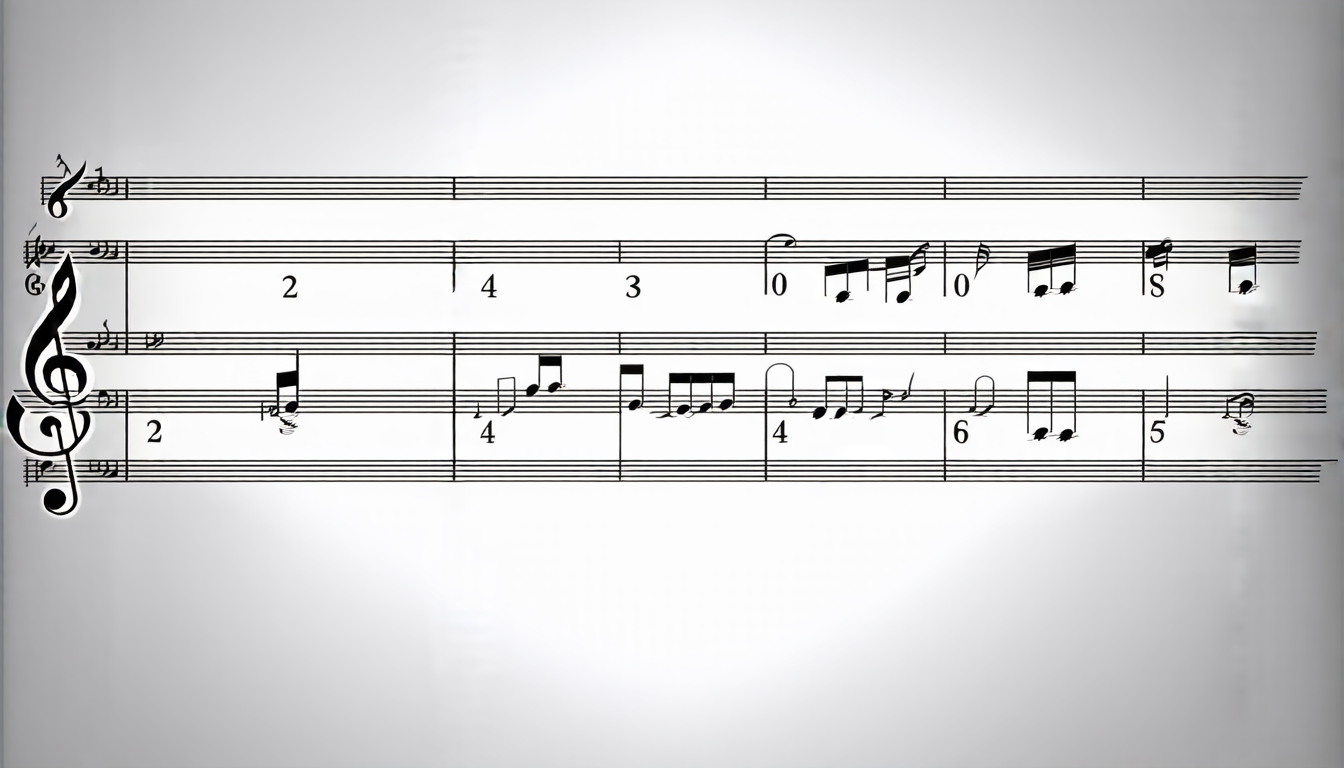
Recently, a team of researchers has made a significant breakthrough in this field by developing a dataset called MusiXQA, which allows large language models to learn how to read music. The dataset consists of high-quality synthetic music sheets generated using a tool called MusiXTEX, along with structured annotations that cover various aspects of the music notation.
One of the key challenges in teaching machines to read music is the complexity of musical notation. Unlike written text or images, which follow straightforward rules and conventions, music notation involves a range of symbols, markings, and abbreviations that require a deep understanding of music theory.
To address this challenge, the researchers designed MusiXQA with a focus on providing comprehensive annotations that cover various aspects of music notation, including note pitch and duration, chords, clefs, key/time signatures, and text. This allows large language models to learn how to recognize and interpret these elements in order to provide accurate answers to visual question-answering tasks.
The researchers used the MusiXQA dataset to fine-tune a large language model called Phi-3-MusiX, which achieved significant performance gains over existing methods. The model is capable of recognizing and interpreting various aspects of music notation, including note pitches, durations, and chords.
One of the most impressive demonstrations of the model’s capabilities was its ability to recognize and extract note durations for a given bar, as well as infer chord labels based on the notes present in that bar. This level of accuracy is critical for tasks such as music transcription and analysis, which require machines to accurately interpret musical scores.
The development of MusiXQA and Phi-3-MusiX has significant implications for the field of artificial intelligence. By enabling machines to read music, these technologies have the potential to revolutionize various applications, from music education and therapy to composition and performance.
In addition to its practical applications, the ability of machines to read music also raises interesting questions about creativity and cognition. Can machines truly understand music in the same way that humans do? Or are they simply able to recognize patterns and relationships within musical notation?
As researchers continue to push the boundaries of machine learning and artificial intelligence, these questions will only become more pressing.
Cite this article: “Deciphering Harmony: Machines Learn to Read Music”, The Science Archive, 2025.
Artificial Intelligence, Music Notation, Machine Learning, Language Models, Phi-3-Musix, Musixqa, Synthetic Music Sheets, Music Theory, Visual Question Answering, Music Transcription





