

Friday 26 September 2025
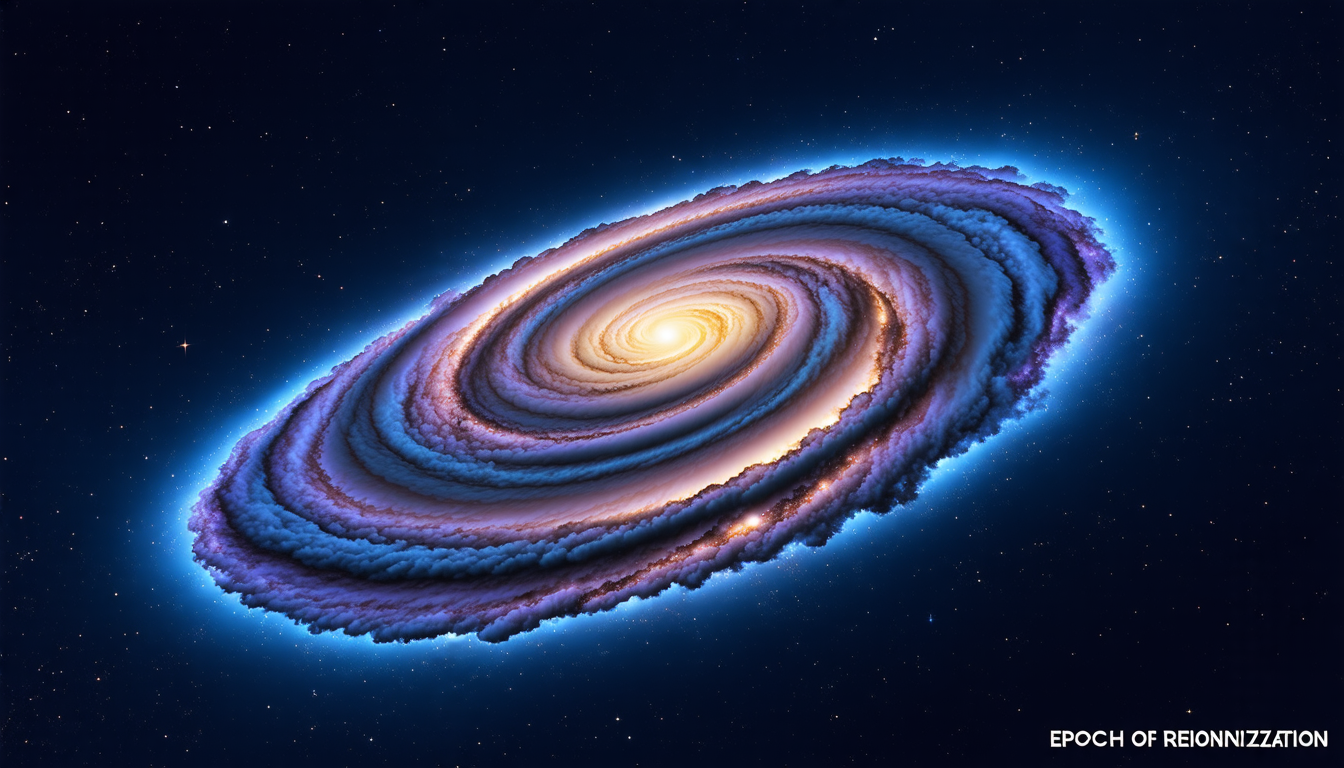
The universe has been expanding and evolving for over 13 billion years, and scientists have long been fascinated by the early days of its formation. One of the most significant events in this process is the Epoch of Reionization (EoR), when the first stars and galaxies began to shine, ionizing the surrounding gas and creating a patchwork of neutral hydrogen.
To better understand this period, researchers have developed sophisticated computer simulations that mimic the conditions of the early universe. These simulations can produce detailed maps of the density and temperature of the gas, as well as the distribution of dark matter and radiation. However, these simulations are time-consuming and require massive computational resources.
In a recent study, scientists have developed an innovative approach to streamline this process. By using artificial neural networks (ANNs) to emulate the behavior of the universe during EoR, they can generate accurate predictions about the properties of the gas and dark matter with much less computational power.
The researchers used a semi-numerical reionization model to create simulations that mimic the conditions of the early universe. They then trained an ANN to predict the 21-centimeter (cm) signal from neutral hydrogen, which is a key indicator of EoR. This signal can be detected by future telescopes like the Square Kilometre Array (SKA), allowing scientists to study the properties of the gas and dark matter.
The ANNs were trained on a dataset of over 7,000 simulations, each with different parameters such as the density and temperature of the gas, as well as the number and mass of the first stars. By analyzing these simulations, the researchers found that the ANNs could accurately predict the 21-cm signal and its cross-correlation with dark matter density.
The implications of this study are significant. With an efficient way to simulate EoR, scientists can now focus on understanding the underlying physics of the universe during this period. They can also explore new ways to constrain astrophysical and cosmological parameters using future observations of the 21-cm signal.
One potential application is in determining the ionizing efficiency of the first stars, which is a key parameter for understanding EoR. By analyzing the 21-cm signal, scientists may be able to infer the number and mass of these early stars, as well as their ability to ionize the surrounding gas.
Another area of exploration is the relationship between EoR and the formation of galaxies.
Cite this article: “Simulating the Early Universe with Artificial Intelligence”, The Science Archive, 2025.
Epoch Of Reionization, Artificial Neural Networks, Dark Matter, Radiation, Gas, Universe, Simulation, Cosmology, Galaxy Formation, Early Stars





