

Friday 10 October 2025
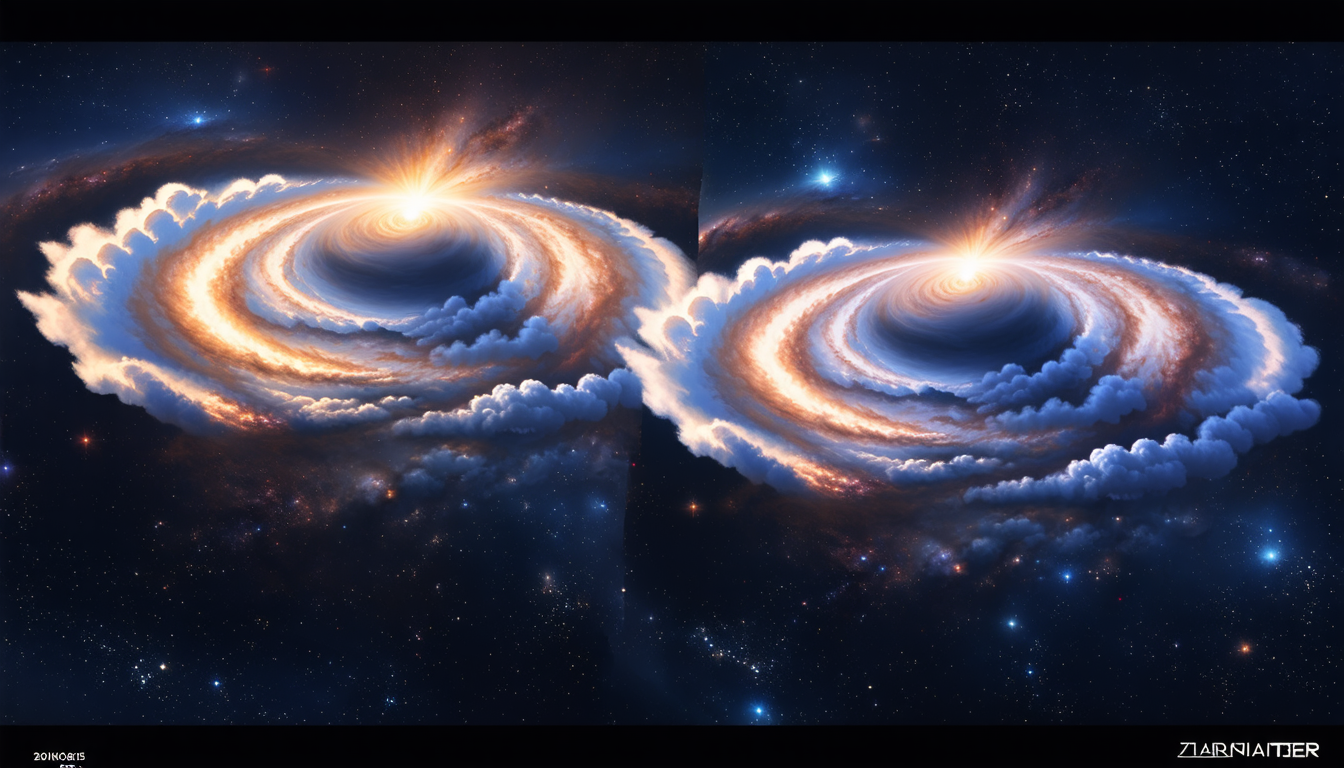
Deep in space, scientists have discovered two galaxies that are sending shockwaves through our understanding of how the universe evolved. These galaxies are a mere 12 billion years old, yet they have already stopped producing new stars – a phenomenon known as quiescence.
Galaxies like these were thought to be rare and only exist at much older ages. But these two, named GS-z5-Q1 and COS-5-Q1, are among the most distant and youngest galaxies ever found with this property. Their existence challenges our current understanding of how galaxies form and evolve over billions of years.
One of the key questions scientists have is: how did these galaxies stop producing new stars so early in their lives? The answer lies in their environments. Both galaxies are nestled within massive galaxy clusters, which provide a steady supply of gas and fuel for star formation. However, it’s possible that these galaxies may have experienced some kind of event or interaction that cut off the flow of gas, preventing them from forming new stars.
Another mystery is how these galaxies managed to form so quickly in the first place. It’s thought that they likely formed through a process called hierarchical clustering, where smaller galaxies merge together to create larger ones. But this process takes time, and it’s unclear why these galaxies were able to form so rapidly.
These discoveries have significant implications for our understanding of galaxy evolution. They suggest that quiescence is not just a late-stage phenomenon, but can occur much earlier in a galaxy’s life. This challenges the current thinking on how galaxies transition from actively forming stars to stopping production altogether.
The discovery of these galaxies also highlights the importance of environment in shaping galaxy evolution. It seems that even at very young ages, galaxies are influenced by their surroundings and may undergo significant changes as a result.
These findings have been made possible through the use of advanced telescopes like the James Webb Space Telescope, which has allowed scientists to peer deeper into space than ever before. The discovery of these galaxies is a testament to human ingenuity and our desire to understand the mysteries of the universe.
The existence of GS-z5-Q1 and COS-5-Q1 opens up new avenues for research, as scientists seek to uncover more about their formation and evolution. By studying these enigmatic galaxies, we may gain a deeper understanding of how the universe came to be the way it is today.
Cite this article: “Unraveling the Mysteries of Ancient Galaxies: Challenges to Our Understanding of the Universe’s Evolution”, The Science Archive, 2025.
Galaxies, Quiescence, Star Formation, Galaxy Clusters, Hierarchical Clustering, Universe Evolution, James Webb Space Telescope, Telescope, Space, Astronomy





