

Wednesday 29 October 2025
Scientists have made a significant breakthrough in the field of robotics, developing a new system that enables robots to hand over objects to humans in a more intelligent and efficient way. The innovative approach uses large language models (LLMs) to reason about the task at hand and select the most suitable grasp for the object.
Traditionally, robot-to-human handovers have been limited by the robot’s inability to understand the human’s intended use of the object. This has led to awkward and inefficient interactions, with the robot often presenting the object in a way that makes it difficult for the human to use it immediately. The new system addresses this issue by using LLMs to analyze the context of the handover and select a grasp that optimizes post-handover usability.
The researchers developed a custom dataset of 12 household objects, each with detailed part labels, to train their LLM-based framework. They then tested their approach on a range of tasks, including pouring liquids from a bottle, stirring food in a pan, and using a screwdriver to hammer nails. The results were impressive, with the robot successfully completing over 80% of the tasks without any prior training.
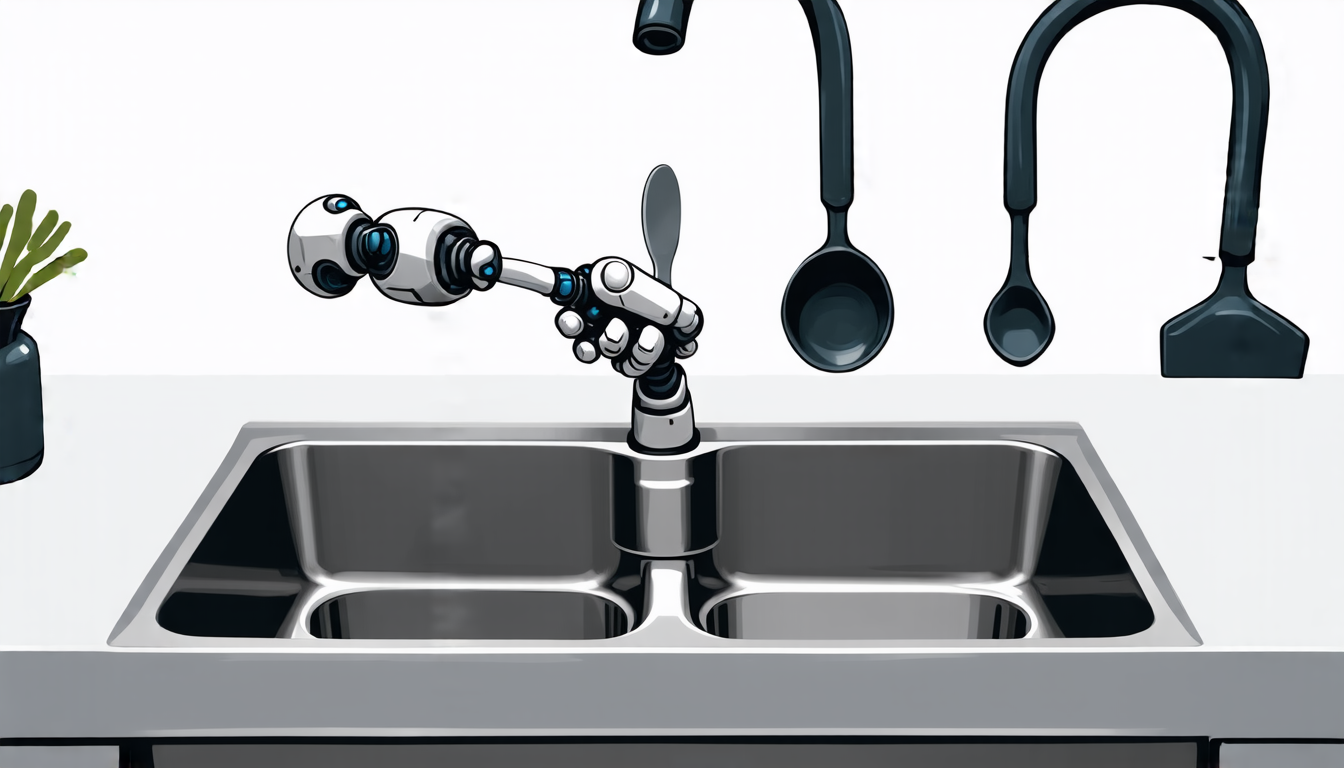
But what’s truly remarkable about this system is its ability to adapt to new situations. By incorporating part segmentation and object orientation into their framework, the researchers enabled the robot to adjust its grasp based on the specific task at hand. For example, when asked to stir food in a pan, the robot adjusted its grip to ensure that it could easily access the handle of the spoon.
The user study was just as impressive, with 86% of participants preferring the LLM-based system over a baseline approach. The participants noted that the robot’s ability to understand their intended use of the object made the handover experience feel more natural and intuitive.
This breakthrough has significant implications for human-robot collaboration in various fields, from healthcare and manufacturing to education and the home. By enabling robots to work more effectively alongside humans, this technology could improve productivity, efficiency, and safety while also enhancing the overall user experience.
The researchers are already working on addressing some of the limitations of their approach, including improving part segmentation accuracy and incorporating more task-specific constraints into the system. As they continue to refine their framework, we can expect to see even more impressive results in the future. For now, this innovative technology offers a glimpse into a future where humans and robots work together seamlessly, making our lives easier and more efficient.
Cite this article: “Robots Get Smarter: Intelligent Handovers Revolutionize Human-Robot Collaboration”, The Science Archive, 2025.
Robotics, Handovers, Large Language Models, Object Recognition, Part Segmentation, Task Optimization, Human-Robot Collaboration, Efficiency, Safety, Usability





