

Thursday 20 November 2025
Scientists have long been fascinated by the way surfactants – molecules that reduce the surface tension of liquids – affect the behavior of fluids. In a recent study, researchers used high-speed cameras to investigate how surfactants influence the formation and collapse of cavities in liquid pools.
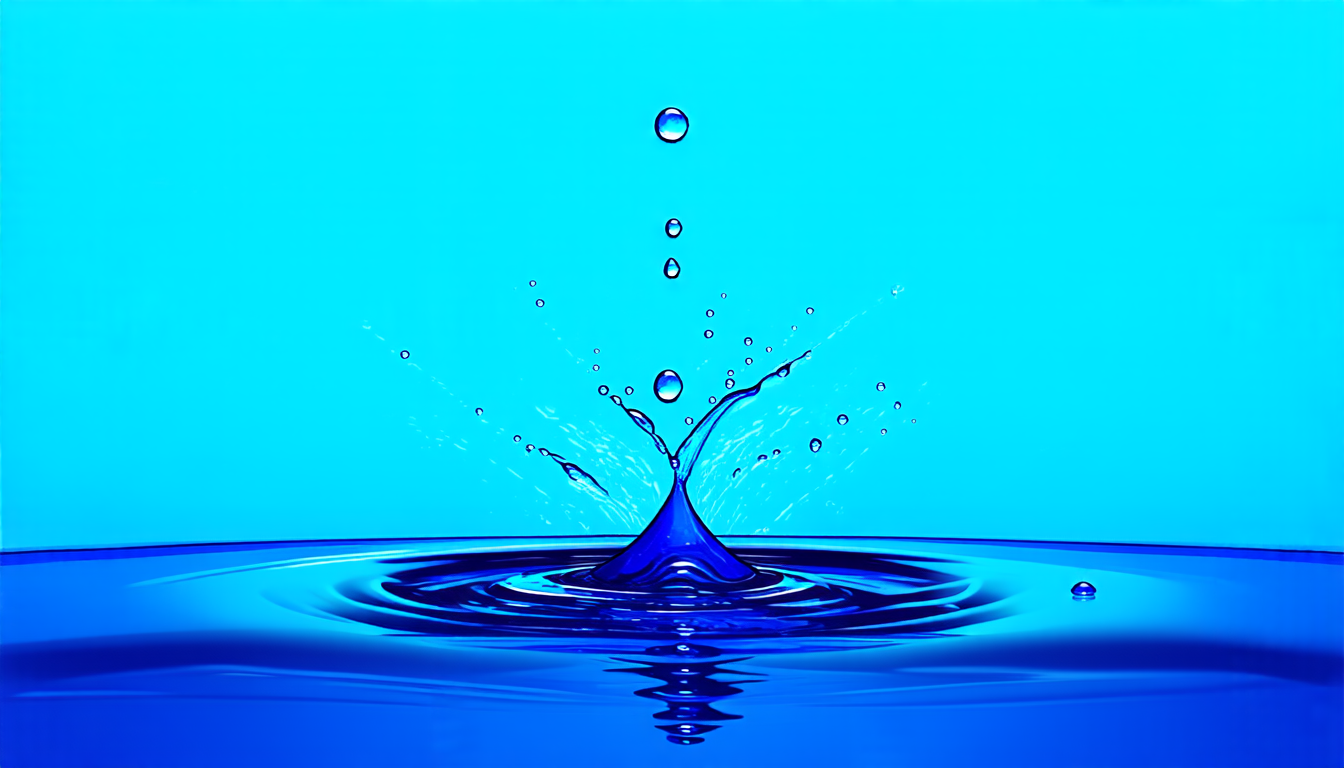
When a jet of water impacts a pool of liquid, it creates a cavity that rapidly collapses. This process is crucial for many natural phenomena, such as ocean waves and raindrops on puddles. Surfactants are often present in these systems, but their effects on cavity dynamics have been poorly understood.
The researchers used a specialized technique called high-speed photography to capture the behavior of cavities in detail. They created a jet of water that impacted a pool of liquid containing either sodium dodecyl sulfate (SDS) or Surfynol 465, two surfactants with different adsorption kinetics. The cameras captured images at rates of up to 100,000 frames per second, allowing the scientists to study the cavity collapse in unprecedented detail.
The results showed that SDS, a surfactant with moderately fast adsorption kinetics, had little effect on the cavity dynamics. The collapse pathway was similar to that observed in pure water, suggesting that the dynamic surface tension reduction was negligible. In contrast, Surfynol 465, an ultrafast surfactant, allowed for the formation of deeper cavities that persisted longer in the liquid pool.
The researchers used a mathematical model based on the harmonic oscillator to describe the cavity collapse. They found that the fitted values of the damping ratios were consistent with the dynamic surface tensions measured during the experiment. This suggests that the adsorption kinetics of the surfactant play a critical role in shaping the cavity dynamics.
The study highlights the importance of considering surfactant effects when studying fluid behavior, particularly in systems where rapid interface formation is involved. The findings have implications for our understanding of natural phenomena such as ocean waves and raindrops on puddles, as well as technological applications like microfluidics and inkjet printing.
By gaining a better understanding of how surfactants influence cavity dynamics, scientists can improve their ability to predict and control fluid behavior in various contexts. This knowledge has the potential to lead to breakthroughs in fields such as environmental science, materials engineering, and biomedical research.
Cite this article: “Uncovering the Role of Surfactants in Cavity Dynamics”, The Science Archive, 2025.
Surfactants, Cavity Dynamics, Fluid Behavior, Surface Tension, Adsorption Kinetics, High-Speed Photography, Jet Of Water, Pool Of Liquid, Harmonic Oscillator, Damping Ratios.





