

Wednesday 26 November 2025
For decades, scientists have been searching for a way to accurately predict the likelihood of real-world events. While probability theory has been widely used, it often falls short in complex situations where multiple factors are at play. Enter possibility theory, a new approach that takes into account the uncertainties and unpredictabilities of everyday life.
Possibility theory, developed by Lotfi A. Zadeh, views an event as having prerequisites that enable its occurrence and constraints that may impede it. By considering these factors, scientists can calculate the degree to which an event is possible. This concept may seem simple, but it has far-reaching implications for fields such as robotics, computer networks, and even decision-making.
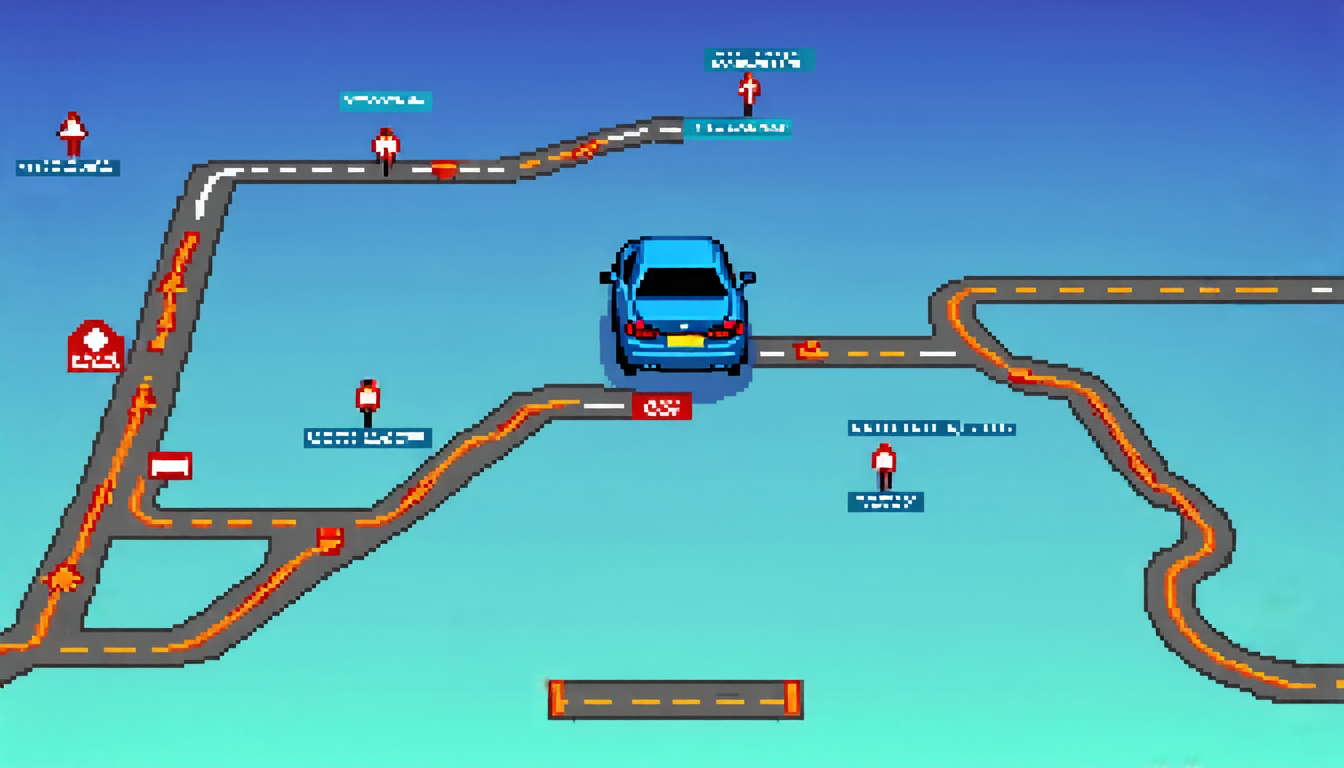
One of the most exciting applications of possibility theory is in planning and navigation. Think about trying to find the shortest route between two points on a map. Traditional probability theory would focus solely on the distance between the two locations, ignoring factors like traffic patterns, road closures, and construction. Possibility theory, on the other hand, takes these variables into account, providing a more accurate estimate of which route is most feasible.
This concept has significant implications for robotics, where autonomous vehicles must navigate complex environments to complete tasks. By using possibility theory, researchers can create more efficient and reliable navigation systems that adapt to changing circumstances.
In computer networks, possibility theory could revolutionize the way information is transmitted. Currently, network congestion and bandwidth limitations are major obstacles to reliable data transfer. Possibility theory could help identify the most feasible paths for data transmission, reducing errors and increasing overall efficiency.
Possibility theory also has practical applications in everyday life. For instance, when deciding which route to take to work, possibility theory can consider factors like traffic patterns, road closures, and weather conditions to provide a more accurate estimate of which route is most likely to get you there on time.
The possibilities (pun intended) are endless for this new approach to uncertainty. By incorporating possibility theory into our decision-making processes, we may find that we’re better equipped to handle the complexities of everyday life.
Cite this article: “Beyond Probability: The Rise of Possibility Theory”, The Science Archive, 2025.
Uncertainty, Possibility Theory, Probability, Lotfi A. Zadeh, Robotics, Computer Networks, Navigation, Decision-Making, Uncertainty Principle, Prediction
Reference: Daniel G. Schwartz, “A Concept of Possibility for Real-World Events” (2025).





