
Friday 31 January 2025
A team of researchers has made a significant breakthrough in the field of structural health monitoring, developing a new method that can accurately identify and track changes in building structures over time.
Structural health monitoring is crucial for ensuring public safety and preventing costly repairs. Existing methods rely on complex calculations and assumptions, which can lead to inaccurate results. The new approach uses Bayesian statistics and machine learning algorithms to analyze data from sensors installed on the structure, providing a more accurate picture of its condition.
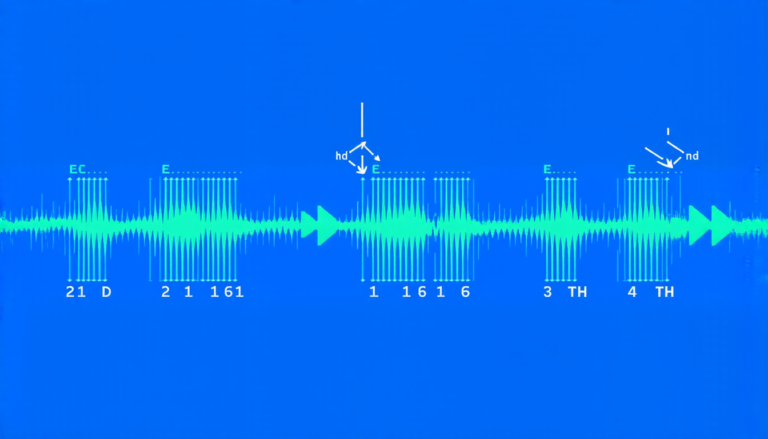
The method, known as EM-for-BAYOMA, is designed to identify subtle changes in the structure’s behavior over time. By analyzing data from multiple sources, including accelerometers and gyroscopes, the system can detect even slight shifts in the building’s vibrations, which can indicate issues such as cracks or corrosion.
One of the key challenges in structural health monitoring is dealing with noisy data. Traditional methods struggle to distinguish between real changes in the structure’s behavior and random fluctuations caused by environmental factors. EM-for-BAYOMA overcomes this issue by incorporating a novel algorithm that can separate signal from noise, providing a more accurate picture of the structure’s condition.
The new method has been tested on several real-world structures, including a high-rise building in China. The results show that EM-for-BAYOMA is capable of accurately identifying changes in the structure’s behavior over time, even when the data is noisy and incomplete.
The implications of this breakthrough are significant. By providing a more accurate picture of a structure’s condition, EM-for-BAYOMA can help engineers and architects make more informed decisions about maintenance and repairs. This could lead to cost savings, reduced downtime, and improved public safety.
In addition to its practical applications, the new method has also opened up new avenues for research in structural health monitoring. As researchers continue to refine and develop EM-for-BAYOMA, they may be able to uncover new insights into the behavior of complex structures and identify new ways to improve their performance.
Overall, the development of EM-for-BAYOMA represents a major advance in the field of structural health monitoring. By providing a more accurate and reliable way to analyze data from sensors installed on buildings, this new method has the potential to make a significant impact on public safety and reduce the costs associated with maintenance and repairs.
Cite this article: “Advancing Structural Health Monitoring with EM-for-BAYOMA”, The Science Archive, 2025.
Structural Health Monitoring, Bayesian Statistics, Machine Learning Algorithms, Sensor Data Analysis, Building Condition Assessment, Noise Reduction, Signal Processing, Vibration Detection, Crack Detection, Corrosion Detection