

Friday 31 January 2025
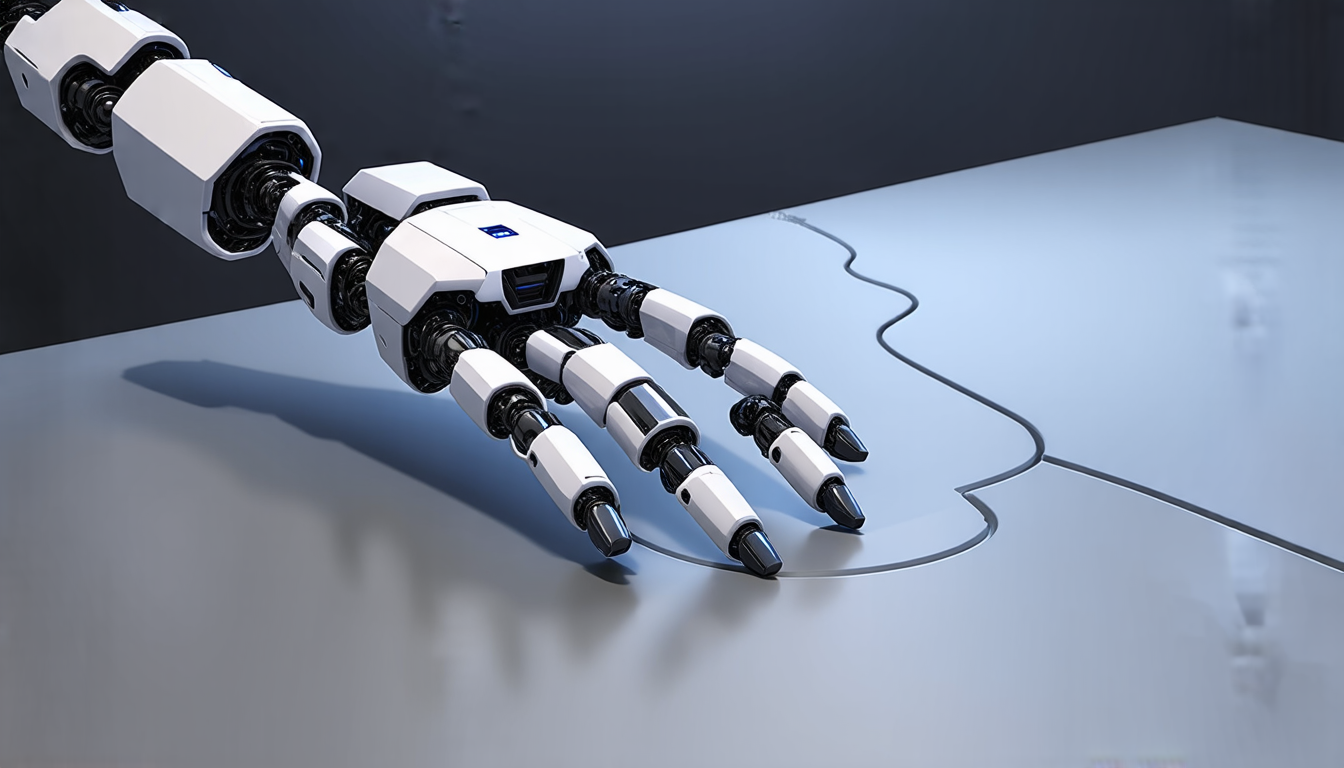
In a breakthrough that could revolutionize the way robots interact with their surroundings, researchers have developed an artificial skin that can accurately pinpoint touch locations on its surface. The innovative device uses a neural network to translate raw sensor readings into precise 3D coordinates, allowing it to detect even slight variations in pressure and texture.
The artificial skin is made up of a semi-conical shape with 64 non-uniformly distributed sensors, which are capable of detecting the subtle changes in capacitance caused by a human finger or other objects. The sensors are arranged on a curved surface, mimicking the natural contours of human skin, allowing for more accurate detection and localization.
The researchers trained a fully connected neural network to interpret the sensor readings, using a dataset of touch locations and corresponding sensor images. The model was able to accurately predict the location of touch with an error rate of just 5.7 ± 3.0 mm, outperforming human skin and comparable artificial sensors.
This technology has significant implications for robotics and prosthetics, enabling robots to better understand and respond to their environment through touch. It could also be used in healthcare applications, such as robotic-assisted dressing or bathing, where the ability to accurately detect and localize touch is crucial.
One of the key advantages of this artificial skin is its adaptability to different surface geometries. The sensors are able to conform to complex shapes, allowing for accurate detection even on irregular surfaces. This flexibility could enable robots to interact with a wider range of objects and environments, making them more effective and practical in real-world applications.
The researchers also demonstrated the potential for multi-touch interactions, detecting multiple points of contact simultaneously and recognizing specific gestures such as swiping or tapping. This ability to recognize patterns and respond accordingly could greatly enhance the capabilities of robots and prosthetics, enabling them to interact with humans in a more natural and intuitive way.
Overall, this innovative artificial skin has the potential to revolutionize the field of robotics and prosthetics, enabling machines to better understand and interact with their environment through touch. Its adaptability, accuracy, and ability to recognize patterns make it an exciting development that could have far-reaching implications for a wide range of applications.
Cite this article: “Artificial Skin Enables Robots to Accurately Detect Touch Locations”, The Science Archive, 2025.
Artificial Skin, Robotics, Prosthetics, Neural Network, Sensors, Touch Detection, Localization, Adaptability, Multi-Touch, Gestures





