

Friday 31 January 2025
The pursuit of efficiency in computing has led researchers to explore innovative techniques for tackling complex graph problems. In a recent breakthrough, scientists have developed an algorithm that accelerates the process of finding maximum matchings in bipartite graphs by leveraging kernelization and multi-vertex merging.
Maximum matching is a fundamental problem in computer science, with applications in network analysis, data mining, and machine learning. However, traditional algorithms often struggle to scale efficiently on large datasets, leading to slow computation times. The new algorithm, dubbed MV M, addresses this issue by exploiting the structure of bipartite graphs and applying kernelization techniques to reduce the problem size.
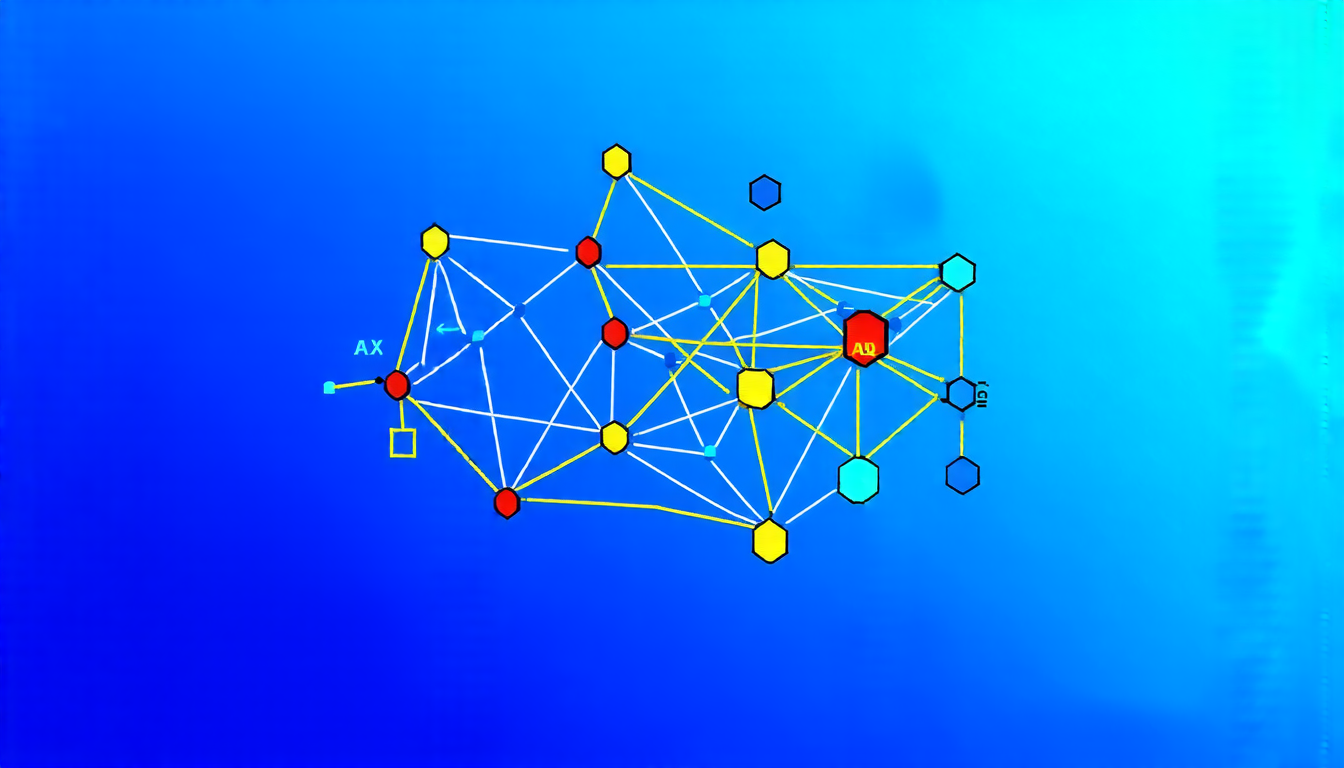
Kernelization is a method that transforms an original graph into a smaller, equivalent representation, which can be solved more quickly using standard algorithms. In the case of MV M, the kernelization process involves identifying and merging vertices with similar properties, effectively reducing the number of nodes in the graph while preserving its structure.
The multi-vertex merging strategy is key to MV M’s success. By combining multiple mergeable vertices into a single node, the algorithm can efficiently eliminate redundant computations and reduce memory usage. This approach also enables the use of more powerful data structures, such as arrays and hash tables, which further accelerate processing times.
Experimental results on real-world datasets demonstrate the impressive performance gains achieved by MV M. Compared to other state-of-the-art algorithms, MV M consistently outperforms them in terms of runtime, with some instances showing speedups of up to 230-fold. This significant improvement is attributed to the algorithm’s ability to effectively reduce the problem size and leverage multi-vertex merging to accelerate computations.
The development of MV M has far-reaching implications for various fields, including social network analysis, data mining, and machine learning. As datasets continue to grow in size and complexity, efficient algorithms like MV M will become increasingly important for extracting valuable insights from these vast amounts of data.
In addition to its practical applications, MV M’s kernelization approach also sheds new light on the theoretical foundations of graph algorithms. By exploring the properties of bipartite graphs and developing novel techniques for reducing problem size, researchers can lay the groundwork for future breakthroughs in this area.
The advent of MV M marks a significant milestone in the quest for efficient graph processing. As computing demands continue to escalate, innovations like this algorithm will be essential for unlocking new possibilities in data analysis and scientific discovery.
Cite this article: “Accelerating Maximum Matching in Bipartite Graphs with MV M”, The Science Archive, 2025.
Graph Algorithms, Maximum Matching, Bipartite Graphs, Kernelization, Multi-Vertex Merging, Data Mining, Machine Learning, Network Analysis, Computational Efficiency, Graph Processing





