

Friday 31 January 2025
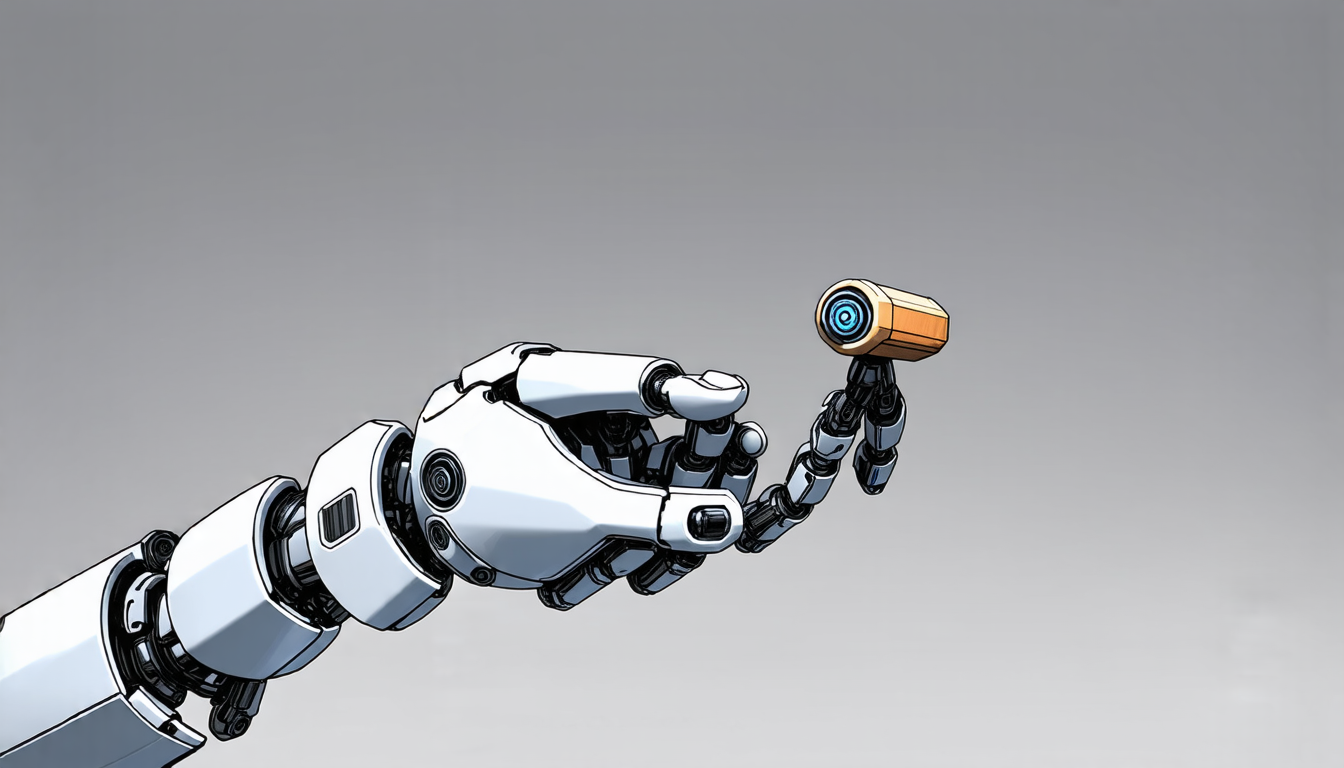
A team of researchers has developed a revolutionary robotic hand that can mimic the dexterity and flexibility of human fingers, allowing it to perform complex tasks such as grasping and manipulating objects. The key innovation is a nerve inclusion flexible epidermis, a thin layer of material that covers the robot’s fingers and allows them to detect contact with precision.
The researchers created a 3D printed epidermis using flexible filaments, which they designed to mimic the texture and flexibility of human skin. They also developed a nerve line made of conductive filaments that runs across the epidermis, allowing it to detect changes in resistance when the fingers come into contact with an object.
The robot hand is equipped with seven actuators that allow it to move its fingers independently, giving it a high degree of flexibility and dexterity. The researchers tested the hand by having it grasp and manipulate scissors, which required it to bend its fingers and rotate them in specific ways.
One of the key challenges was developing a way for the robot hand to detect when it has grasped an object successfully. The nerve inclusion flexible epidermis allows it to do this by detecting changes in resistance when the fingers come into contact with an object. The researchers used this information to create a system that can accurately determine whether the hand has grasped an object or not.
The robot hand was also able to perform tasks such as picking up small objects and inserting them into holes, demonstrating its versatility and dexterity. The researchers believe that this technology could have a wide range of applications in fields such as robotics, prosthetics, and even surgery.
The development of the nerve inclusion flexible epidermis is a significant breakthrough in the field of robotic hands, allowing for more precise and delicate movements. It also opens up new possibilities for robots to interact with their environment in more nuanced ways, potentially leading to breakthroughs in areas such as search and rescue, manufacturing, and healthcare.
In the future, the researchers plan to continue developing and refining the technology, exploring its potential applications and limitations. They hope that it will one day lead to the creation of robots that can work alongside humans with greater ease and precision, revolutionizing industries and improving lives.
Cite this article: “Robotic Hand Achieves Human-Like Dexterity and Flexibility”, The Science Archive, 2025.
Robotic Hand, Dexterity, Flexibility, Nerve Inclusion, Epidermis, 3D Printing, Conductive Filaments, Actuators, Grasping, Manipulation





