

Friday 31 January 2025
As electric vehicles (EVs) become increasingly popular, the need for efficient battery thermal management systems has grown more pressing. A new study published in Energy explores a novel approach to cooling lithium-ion batteries using a hybrid system that combines phase change materials (PCMs), aluminum foam, and U-shaped composite cooling channels.
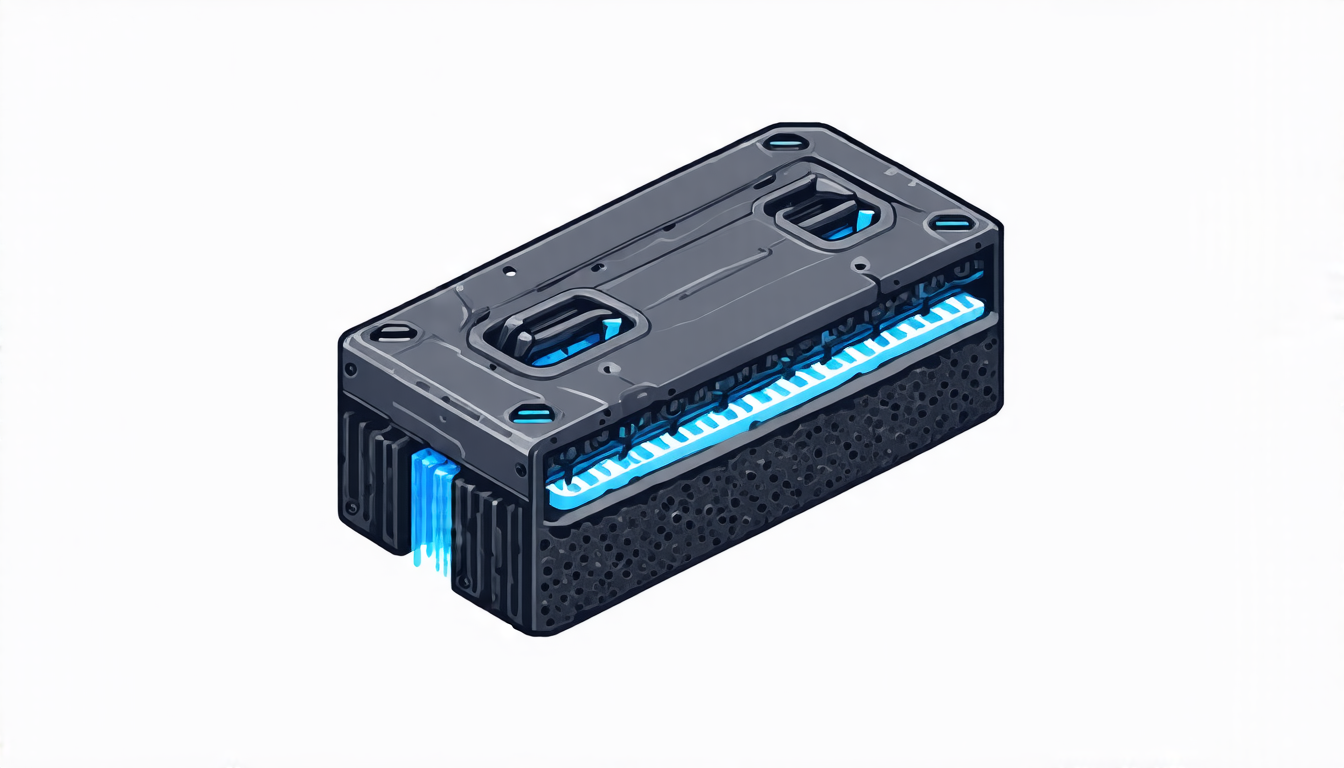
The researchers designed a compact thermal management system that can be integrated into EVs’ battery packs. The system uses PCMs to absorb heat during charging and discharging cycles, which reduces the need for liquid cooling. However, when the battery reaches high temperatures, the PCM melts and releases its stored heat, allowing for more efficient cooling.
To further enhance the system’s performance, the researchers added aluminum foam, which provides additional thermal conductivity and helps to dissipate heat away from the battery. The U-shaped composite cooling channels were designed to maximize heat transfer between the battery and the coolant, reducing temperature gradients within the pack.
The study used numerical simulations to investigate the effects of different working conditions on the power consumption and thermal performance of the hybrid system. The results showed that using Nf(Al) coolant yielded the highest heat dissipation capacity for lithium batteries, with a maximum surface temperature of 40.32°C at the end of discharge.
The researchers also explored the impact of different cooling directions on the system’s performance. They found that the U-shaped composite cooling channel had the best overall heat dissipation performance when the two outer sides were used as inlet directions.
In addition to investigating the effects of coolant flow rate, channel height, and cooling direction, the study examined the impact of varying flow rates on the system’s power consumption and thermal performance. The results showed that increasing the flow rate can reduce the battery surface temperature but also increases the pumping power consumption.
The researchers also developed an enhanced cooling method that uses a step pulse flow rate function to improve heat dissipation capacity. This approach reduced the maximum battery surface temperature by 3.44°C compared to conventional liquid cooling methods, while only increasing pumping power consumption by 5%.
Overall, this study demonstrates a promising approach to thermal management of lithium-ion batteries in EVs. The hybrid system’s ability to absorb and release heat using PCMs, combined with its high thermal conductivity and efficient cooling channels, makes it an attractive solution for reducing battery temperatures and improving overall vehicle performance. As the demand for electric vehicles continues to grow, innovative solutions like this one will be crucial in ensuring their widespread adoption.
Cite this article: “Novel Hybrid System for Efficient Thermal Management of Lithium-Ion Batteries in Electric Vehicles”, The Science Archive, 2025.
Electric Vehicles, Lithium-Ion Batteries, Thermal Management, Phase Change Materials, Aluminum Foam, U-Shaped Composite Cooling Channels, Hybrid System, Numerical Simulations, Heat Dissipation, Pumping Power Consumption





