

Friday 31 January 2025
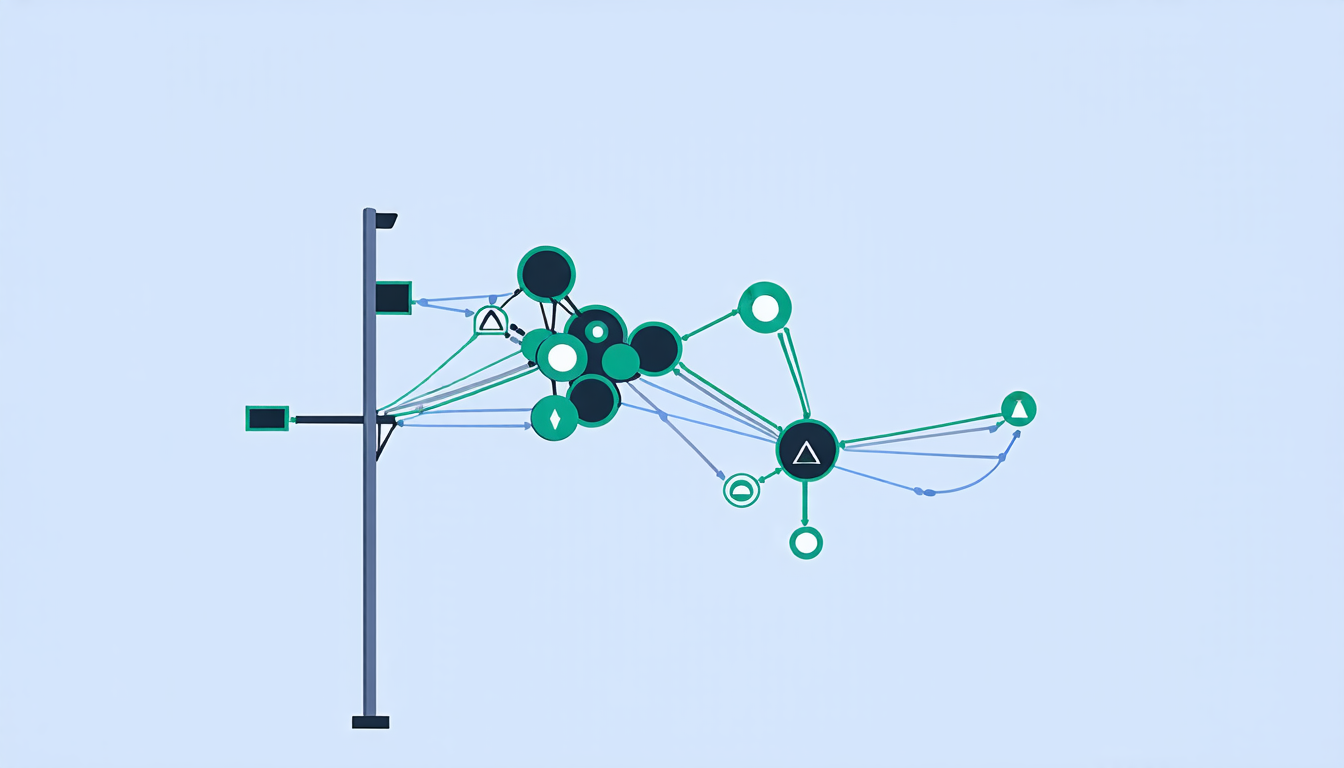
Scientists have developed a new method for clustering large probabilistic graphs, which can be used to analyze complex networks such as streetlight systems. The approach uses a multi-objective genetic algorithm to identify community structures within the graph.
The researchers created a virtual streetlight network and used it to test their clustering algorithm. They found that the algorithm was able to accurately identify clusters of nodes with similar properties, even in large and complex graphs.
The algorithm works by first converting the probabilistic graph into a binary format, where each node is represented as a vector of 1s and 0s. The algorithm then uses a genetic approach to search for patterns in the graph, such as clusters of nodes that are more likely to be connected than others.
To evaluate the performance of the algorithm, the researchers used three different metrics: precision, recall, and F1-score. They found that the algorithm achieved high scores on all three metrics, indicating its effectiveness in identifying community structures within large probabilistic graphs.
The application of this clustering algorithm to streetlight systems could have significant benefits for urban planning and management. For example, it could be used to optimize the placement of streetlights in a city, ensuring that they are placed in areas where they are most needed.
In addition to its potential applications in urban planning, the algorithm could also be used to analyze other complex networks such as social media, transportation systems, or biological networks.
The researchers believe that their approach has the potential to revolutionize the field of network analysis and could lead to new insights into the behavior of complex systems. They plan to continue developing and refining the algorithm in order to make it more effective and efficient for real-world applications.
Overall, this research demonstrates the power of combining machine learning techniques with traditional graph theory methods to analyze complex networks. The results have significant implications for our understanding of these systems and could lead to new approaches for optimizing their performance.
Cite this article: “Clustering Large Probabilistic Graphs for Complex Network Analysis”, The Science Archive, 2025.
Probabilistic Graphs, Clustering Algorithm, Multi-Objective Genetic Algorithm, Community Structures, Streetlight Systems, Network Analysis, Urban Planning, Machine Learning, Graph Theory, Complex Networks





