

Friday 31 January 2025
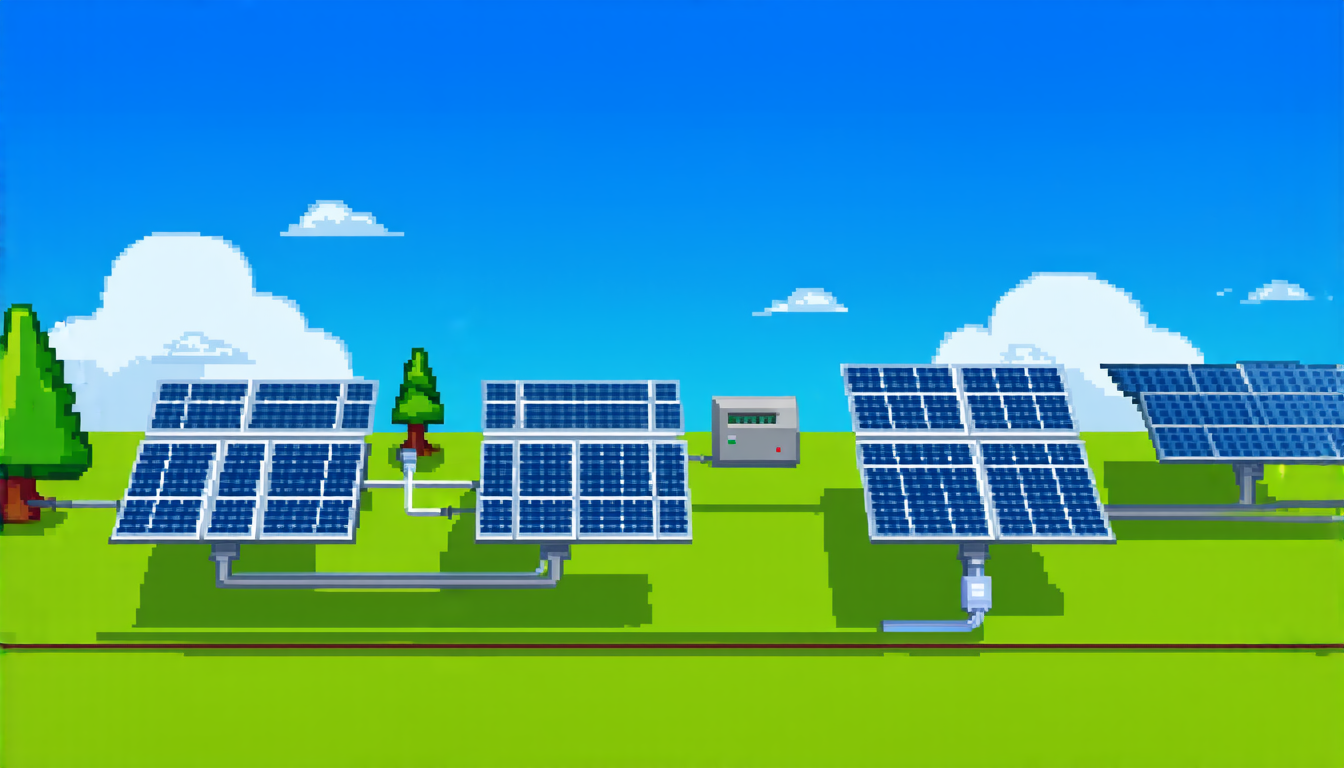
A team of researchers has successfully deployed a machine learning model on an embedded ARM board, enabling real-time solar power regulation in remote microgrids. The model, trained using XGBoost and ONNX formats, can predict active and reactive power outputs for six solar PV inverters with remarkable accuracy.
The study’s authors aimed to address the challenges posed by remote microgrids, where communication infrastructure is often limited or non-existent. Conventional centralized control schemes rely on transmitting commands from a far-end control center, which can be unreliable in these settings. By deploying the machine learning model directly on an edge-computing device near the inverters, the team aimed to reduce latency and improve overall system reliability.
The researchers used real-world data from a remote microgrid in north China to train their models. They collected measurements of voltage, current, power, and weather information for nearly a month, which they then preprocessed and split into training and testing sets. The XGBoost model was chosen due to its ability to handle complex datasets and high-dimensional features.
The authors deployed the trained models on an ARM board based on ARMv8 architecture, running an ARM Linux operating system. They converted the models to ONNX format to enable easy deployment on different platforms. The results showed that the model could accurately predict active and reactive power outputs for each inverter, with MAPE values ranging from 0.05% to 3.17%.
The team also compared the inference time costs of running the model on a PC versus an ARM board. While the ARM board was slower due to its lower processing power, it still managed to complete the inference task in around 0.1 milliseconds – fast enough for real-time solar power regulation.
This study demonstrates the potential of edge computing and machine learning for improving the reliability and efficiency of remote microgrids. By deploying models directly on edge devices, the need for communication infrastructure is reduced, making it possible to operate these systems even in areas with limited connectivity. The authors’ approach also highlights the importance of using open standards like ONNX for model conversion and deployment.
The team’s work has significant implications for the development of autonomous and decentralized energy systems. As renewable energy sources become increasingly important, the need for efficient and reliable power regulation will only continue to grow. By leveraging machine learning and edge computing, researchers can develop innovative solutions that enable remote microgrids to operate seamlessly and efficiently – even in the most challenging environments.
Cite this article: “Real-Time Solar Power Regulation in Remote Microgrids Using Edge Computing and Machine Learning”, The Science Archive, 2025.
Machine Learning, Edge Computing, Solar Power Regulation, Remote Microgrids, Xgboost, Onnx, Arm Board, Armv8 Architecture, Real-Time Prediction, Autonomous Energy Systems.





