

Friday 31 January 2025
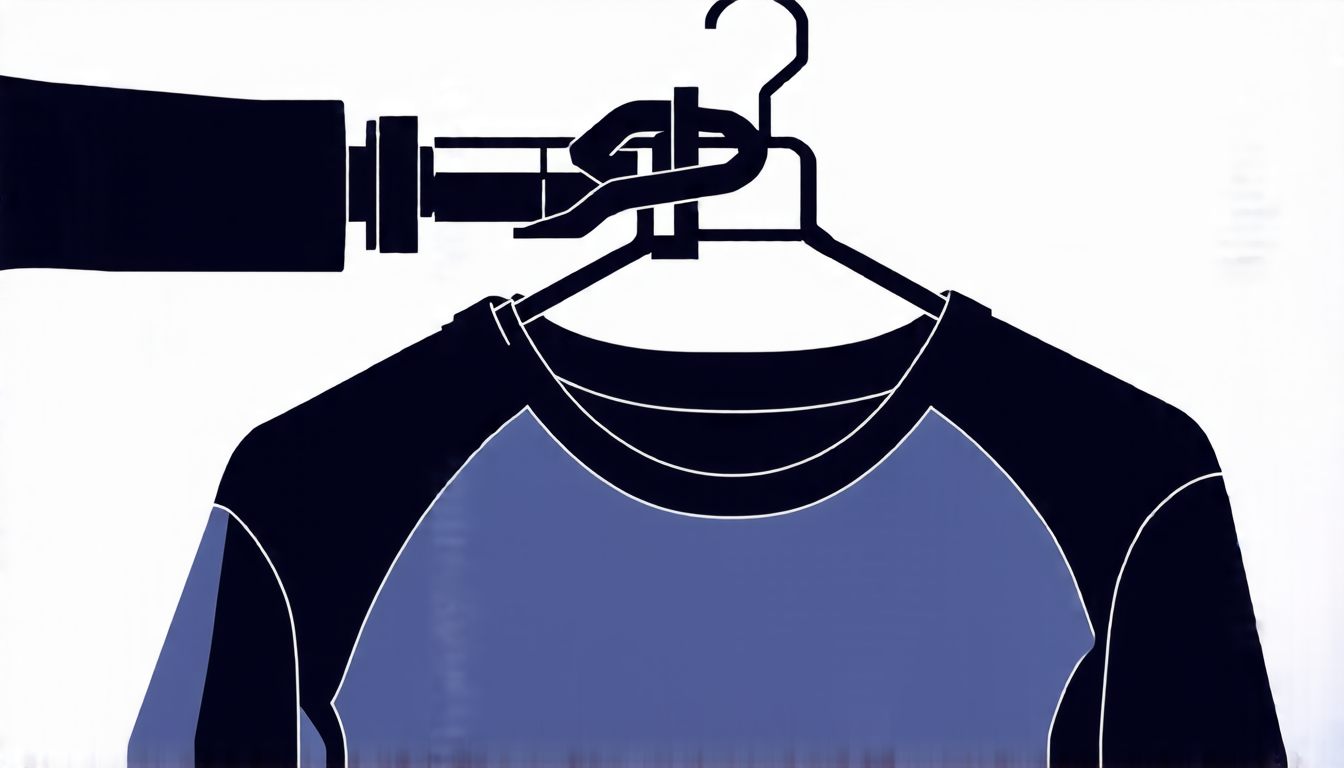
Robotics researchers have been working on developing machines that can manipulate and interact with deformable objects, such as clothing, for several years now. One of the most challenging tasks in this field is inserting a hanger into the neckline of a garment, which requires precise control and understanding of the object’s properties.
A team of scientists has made significant progress in this area by developing an algorithm that can learn to insert a hanger into a garment’s neckline through simulation and real-world testing. The algorithm uses a combination of visual and tactile feedback to understand the object’s shape and movement, allowing it to adapt its actions accordingly.
The researchers used a simulated environment to train their algorithm, where they created virtual garments with different shapes, sizes, and materials. They then tested the algorithm on real garments in various settings, including different lighting conditions and surface textures.
One of the key innovations of this study is the use of online data collection, which allows the algorithm to learn from its mistakes and adapt its strategy in real-time. This approach enables the robot to develop a more nuanced understanding of the object’s properties and behavior, leading to improved performance over time.
The researchers also experimented with different hanger designs and found that certain shapes and materials were more effective than others for inserting the hanger into the garment’s neckline. They also observed that the algorithm’s performance varied depending on the type of fabric used in the garment, with thicker fabrics requiring more force and precision to insert the hanger.
Despite the challenges involved, the study demonstrates significant progress in developing robots that can interact with deformable objects in a practical and efficient manner. The researchers believe that their approach could have applications in various fields, including e-commerce, fashion, and healthcare, where robots are increasingly being used to assist humans in tasks such as clothing sorting, folding, and packaging.
In addition to its practical implications, this study also highlights the potential of artificial intelligence (AI) to improve human-robot collaboration. By developing algorithms that can learn from their mistakes and adapt to new situations, robots can become more effective partners for humans in a wide range of tasks and environments.
Overall, this research represents an important step forward in the development of robots that can interact with deformable objects, and its applications could have significant impacts on various industries and aspects of our daily lives.
Cite this article: “Robots Learn to Master Deformable Objects with Advanced Algorithm”, The Science Archive, 2025.
Robotics, Deformable Objects, Algorithm, Simulation, Real-World Testing, Visual Feedback, Tactile Feedback, Online Data Collection, Artificial Intelligence, Human-Robot Collaboration





