

Friday 31 January 2025
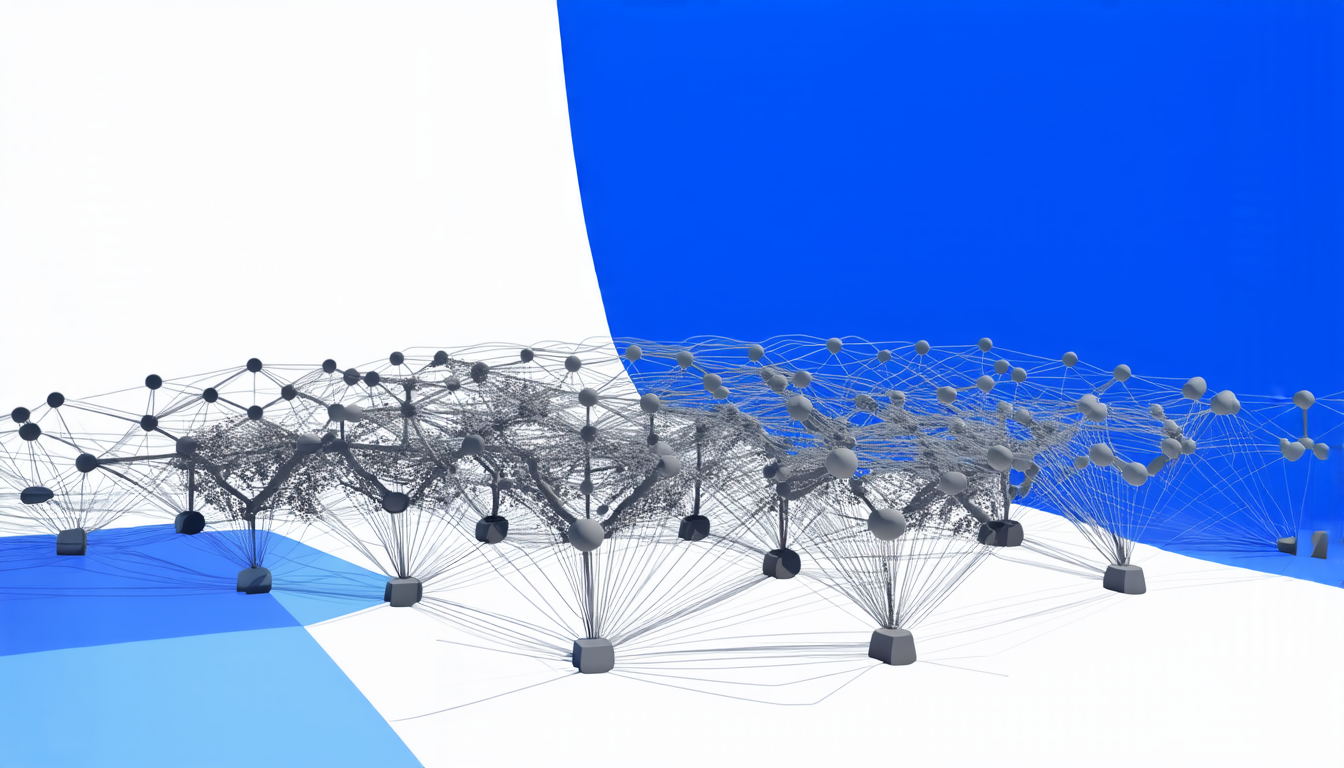
Steiner trees have long been a staple of computer science, used to optimize networks and routes in complex systems. But what happens when you throw obstacles into the mix? That’s where a new approach comes in – a hierarchical bundling method that generates obstacle-avoiding multi-Euclidean Steiner trees.
The traditional Steiner tree problem involves finding the shortest path between multiple points while avoiding obstacles. However, this can be computationally intensive and may not always result in the most efficient solution. The new approach takes a different tack by using hierarchical clustering to group nodes together, then bundling these groups into larger clusters. This process is repeated until a desired level of complexity is reached.
The resulting Steiner trees are not only obstacle-avoiding but also remarkably compact and efficient. In fact, the authors found that their method can produce trees with up to 50% fewer edges than traditional approaches. This makes them ideal for use in networks where resources are limited or where real estate is at a premium.
But how does it work? The process begins by generating a visibility graph of the obstacles and nodes. This graph shows which nodes are visible from each other, taking into account the presence of obstacles. Next, hierarchical clustering is used to group nodes together based on their proximity to each other. These groups are then bundled together using a shortest path algorithm.
The bundling process continues until a desired level of complexity is reached or until no further reductions in edge count can be achieved. The resulting Steiner tree is then optimized using a trust region method, which ensures that the solution is both efficient and feasible.
To test their approach, the authors generated over 500 Steiner trees across 50 different maps with varying obstacle configurations. They found that their method consistently outperformed traditional approaches in terms of edge count and computational efficiency.
The implications of this research are significant. Not only can it be used to optimize networks and routes in complex systems but also to improve the design of physical infrastructure such as power grids or transportation systems. The ability to generate compact, efficient Steiner trees with minimal obstacles has far-reaching potential for a wide range of applications.
In the future, researchers may explore ways to further optimize the bundling process or incorporate additional constraints into the algorithm. However, even in its current form, this approach offers significant advantages over traditional methods and opens up new possibilities for solving complex problems in computer science and beyond.
Cite this article: “Obstacle-Avoiding Steiner Trees through Hierarchical Bundling”, The Science Archive, 2025.
Steiner Trees, Obstacle-Avoiding, Multi-Euclidean, Hierarchical Clustering, Bundling Method, Visibility Graph, Shortest Path Algorithm, Trust Region Method, Computational Efficiency, Network Optimization.





