

Friday 31 January 2025
Researchers have long been fascinated by the ability of animals to move and interact in their environments, but understanding these complex behaviors has proven to be a significant challenge. One major obstacle is the difficulty of tracking and analyzing animal movements, particularly when they are unobservable or partially occluded.
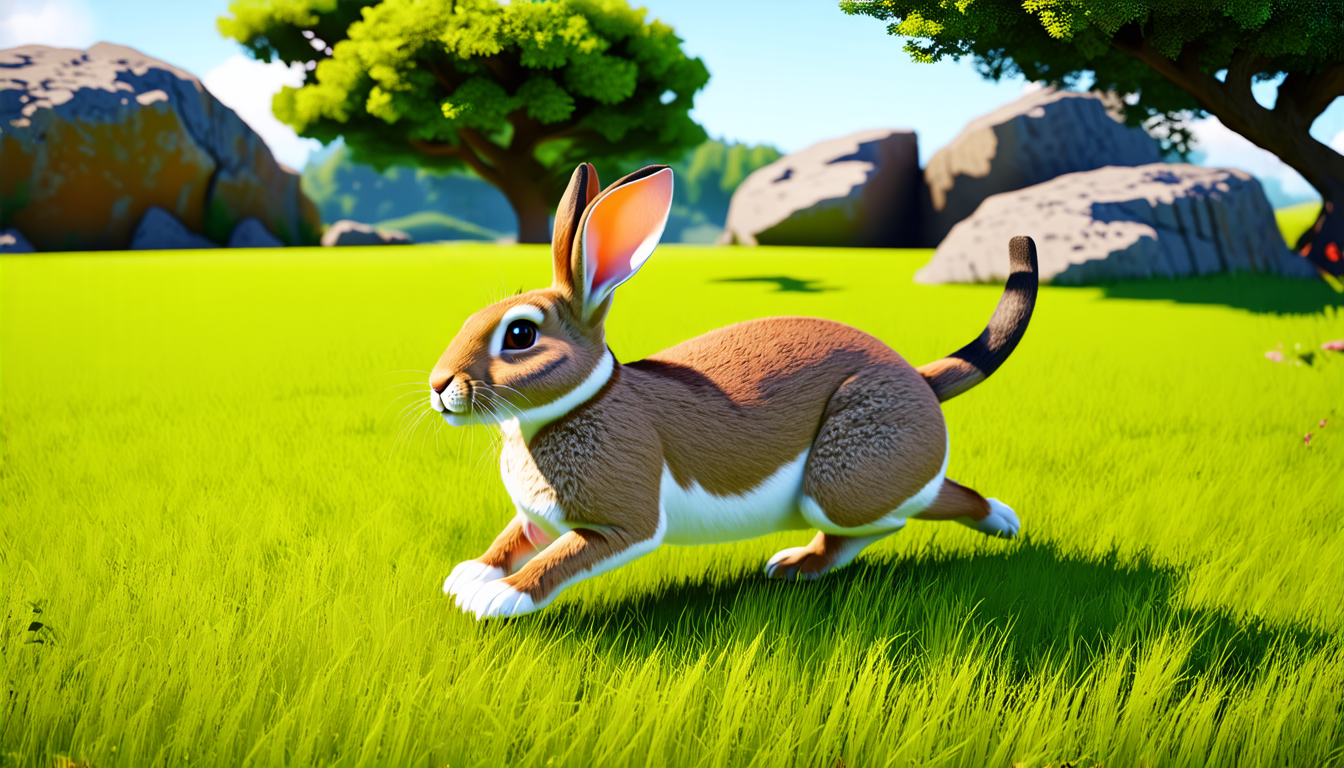
To address this issue, a team of researchers has developed an innovative approach that leverages deep learning techniques to lift 2D poses into 3D space, allowing for more accurate and comprehensive analysis of animal movements. This method, known as Object Agnostic 3D Lifting in Space and Time (OALSST), is designed to work with a wide range of animals, from bears and deer to chickens and rabbits.
The key innovation behind OALSST is its ability to learn patterns and relationships between 2D poses and 3D movements without requiring explicit knowledge of the underlying animal anatomy or behavior. This allows the model to generalize well across different species and environments, even when there are significant differences in body shape, size, and movement patterns.
To develop OALSST, the researchers created a large-scale synthetic dataset featuring 28 different animals, each with its own unique characteristics and movements. They then trained their model on this dataset using a combination of pose estimation and lifting algorithms, which allowed it to learn how to transform 2D poses into 3D movements.
The results are impressive: OALSST outperforms existing methods in terms of accuracy and robustness, even when faced with challenging scenarios such as partial occlusion or extreme movement. This suggests that the model has learned to capture the underlying patterns and relationships between 2D poses and 3D movements, allowing it to generate highly accurate predictions.
One of the most significant implications of OALSST is its potential applications in fields such as wildlife conservation and research. By providing a more comprehensive understanding of animal movements and behaviors, this technology could help scientists better understand and protect vulnerable species. Additionally, OALSST could be used in areas such as agriculture, where it could improve crop yields and reduce the environmental impact of farming practices.
In addition to its practical applications, OALSST also has significant theoretical implications for our understanding of animal movement patterns and behavior. By developing a model that can learn to lift 2D poses into 3D space without explicit knowledge of anatomy or behavior, researchers have opened up new avenues for exploring the complex relationships between animals and their environments.
Cite this article: “Unveiling Animal Movement Patterns with Deep Learning”, The Science Archive, 2025.
Animal Movement, Deep Learning, 3D Lifting, Object Agnostic 3D Lifting In Space And Time, Oalsst, Pose Estimation, Wildlife Conservation, Agricultural Research, Animal Behavior, Robotics





