

Saturday 01 February 2025
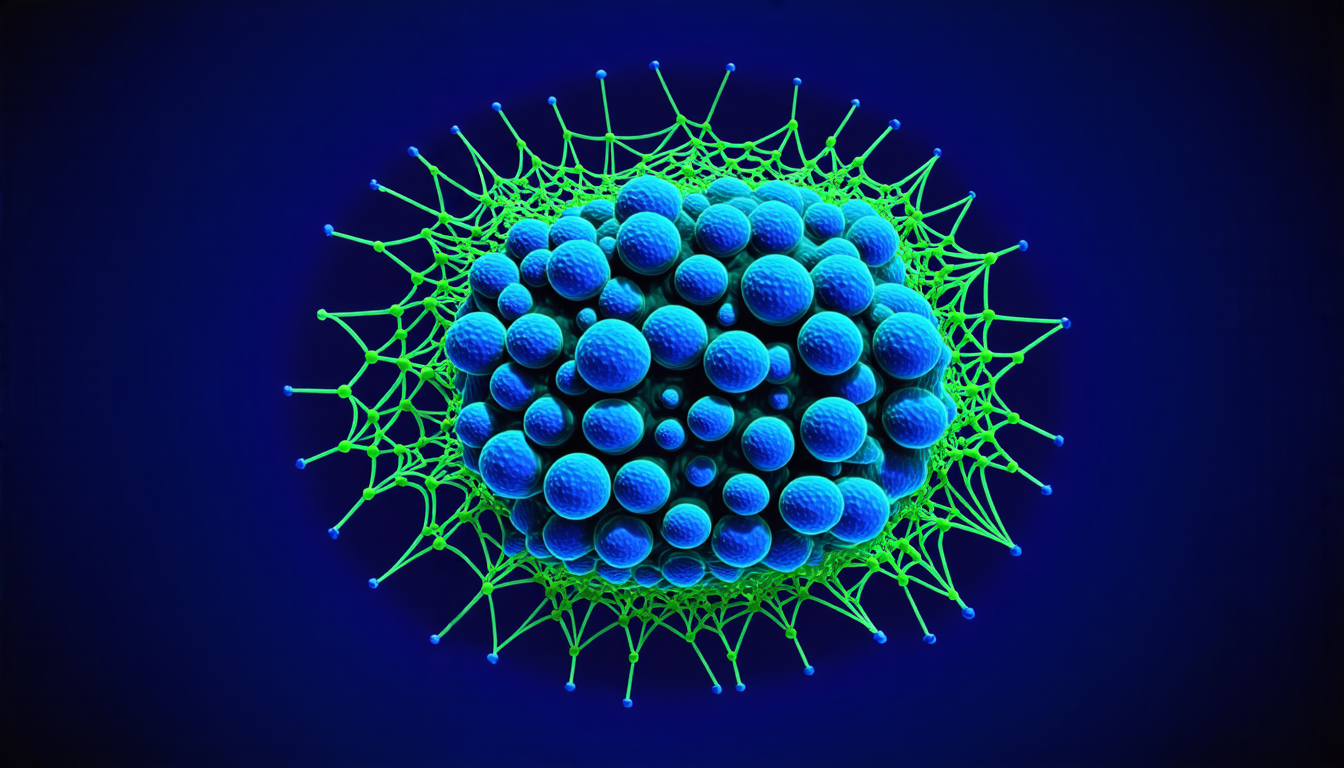
The intricate dance between cancer cells and their surrounding environment has long been a subject of fascination for scientists. A recent study has shed light on this complex relationship, revealing that the shape and size of cancer clusters are influenced by the properties of the extracellular matrix (ECM), which is the web-like structure that surrounds and supports cells.
Researchers have discovered that the ECM plays a crucial role in determining the fate of cancer cells, with its mechanical properties dictating the growth, division, and migration of these cells. By studying the behavior of breast cancer cells in different ECM environments, scientists were able to identify key patterns and trends that could inform the development of new cancer therapies.
One of the most significant findings was the discovery that cancer clusters tend to form when the ECM is stiffer and more viscous than usual. This is because the stiff ECM provides a platform for the cancer cells to anchor themselves and grow, while its viscosity helps to regulate the flow of nutrients and waste products.
The researchers also found that the size and shape of the cancer clusters are influenced by the activity of the cancer cells themselves. When these cells are more active, they tend to form smaller, more irregularly shaped clusters, whereas less active cells produce larger, more rounded clusters.
Furthermore, the study revealed that the ECM is not just a passive backdrop for the cancer cells; it actively influences their behavior through a process known as mechanotransduction. This involves the conversion of mechanical forces into chemical signals that can either stimulate or inhibit cell growth and division.
The implications of these findings are significant, as they suggest that modifying the ECM could be a potential strategy for treating cancer. By altering the mechanical properties of the ECM, scientists may be able to create an environment that is less conducive to cancer growth and more favorable to the development of effective therapies.
To achieve this goal, researchers will need to develop new techniques for manipulating the ECM in a way that is both precise and safe. This could involve using nanotechnology or other advanced methods to modify the mechanical properties of the ECM at the molecular level.
Ultimately, the study of the complex interplay between cancer cells and their environment holds great promise for the development of innovative cancer therapies. By better understanding the intricate dance between these two key players, scientists may be able to develop new strategies that can help to combat this devastating disease.
Cite this article: “Cancer Cells Environmental Influences Revealed”, The Science Archive, 2025.
Cancer Cells, Extracellular Matrix, Breast Cancer, Mechanotransduction, Nanotechnology, Cancer Therapy, Cell Growth, Cell Division, Tumor Microenvironment, Cancer Treatment.





