

Saturday 01 February 2025
Scientists have long sought to understand how certain elements can strengthen or weaken metals, which is crucial for developing new materials that are stronger, lighter, and more durable. In a recent study, researchers used advanced computer simulations to investigate the effects of various solute atoms on the mechanical properties of titanium, a key material in aerospace and biomedical applications.
Titanium has a unique hexagonal crystal structure that makes it strong and lightweight, but also prone to cracking and breaking under stress. To improve its performance, scientists have turned to alloys that contain small amounts of other elements, such as aluminum or vanadium. However, the exact mechanisms by which these solute atoms enhance or degrade titanium’s properties are not well understood.
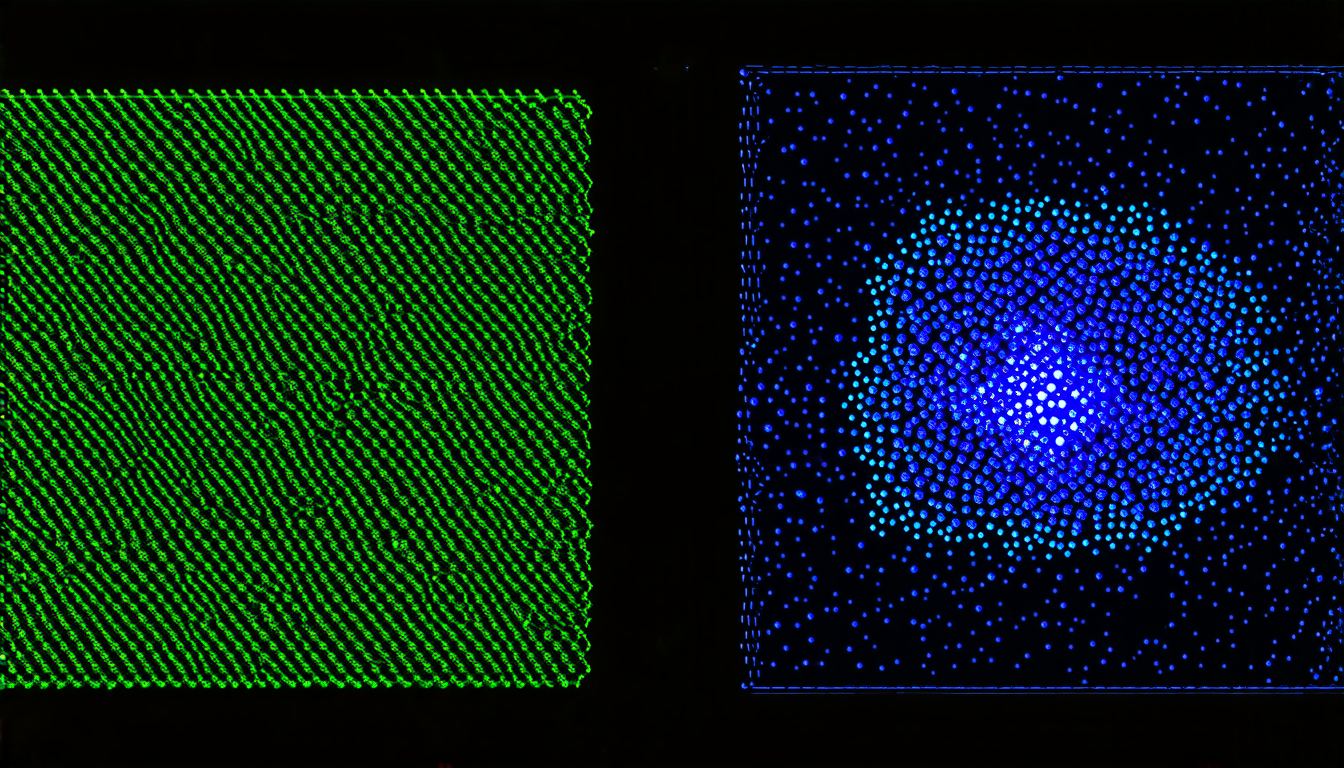
To tackle this problem, researchers employed a combination of density functional theory (DFT) calculations and elasticity modeling to simulate the behavior of various solute atoms in titanium. DFT is a powerful computational tool that allows scientists to study the electronic structure and chemical bonding of materials at the atomic level. The team used this method to calculate the energy differences between different configurations of the solute atoms and the host lattice, which revealed the strength of their interactions.
The researchers then used elasticity modeling to simulate the response of the titanium lattice to external stresses, taking into account the interactions between the solute atoms and the surrounding lattice. This allowed them to compute the critical resolved shear stress (CRSS), a key parameter that determines the material’s resistance to plastic deformation.
The study found that certain solute atoms, such as vanadium and molybdenum, can significantly strengthen titanium by creating an elastic dipole effect that enhances its ability to resist plastic flow. This is because these elements have a strong electronic interaction with the host lattice, which generates a local stress field that helps to pin dislocations and prevent them from moving freely.
In contrast, other solute atoms, such as chromium and tungsten, were found to weaken titanium by creating a dipole effect that reduces its resistance to plastic deformation. This is because these elements have a weaker electronic interaction with the host lattice, which generates a local stress field that helps to facilitate dislocation motion.
The researchers also discovered that the solute atoms can exhibit unique segregation behavior around dislocations, which can significantly influence their strengthening or weakening effects. In some cases, the solute atoms form an atmosphere above or below the slip plane of the dislocation, while in others they are attracted to specific sites within the lattice.
Cite this article: “Understanding Solute Atom Effects on Titaniums Mechanical Properties”, The Science Archive, 2025.
Titanium, Alloys, Solute Atoms, Mechanical Properties, Computer Simulations, Density Functional Theory, Elasticity Modeling, Critical Resolved Shear Stress, Dislocations, Segregation Behavior





