

Saturday 01 February 2025
The quest for machines that can diagnose their own faults has been a longstanding challenge in the field of artificial intelligence. Recently, researchers have made significant progress in developing machine learning algorithms that can identify and classify bearing faults, a critical component in many industrial applications.
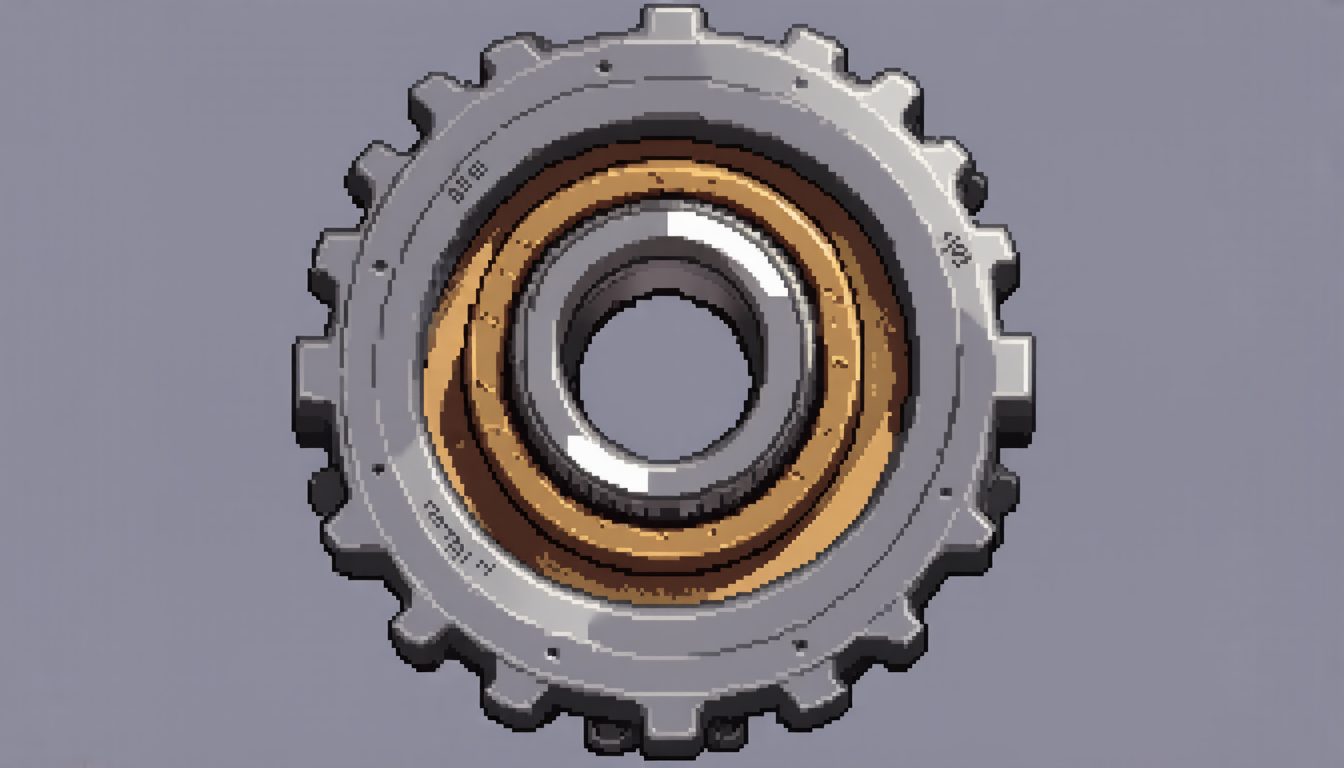
Bearing faults can be particularly problematic as they can cause equipment failure, leading to costly downtime and even safety hazards. Traditional methods for diagnosing bearing faults rely on manual inspection and monitoring, which can be time-consuming and prone to errors.
To address this issue, scientists have turned to machine learning algorithms that can analyze large amounts of data from sensors and identify patterns indicative of bearing faults. One such approach is the use of Kolmogorov-Arnold networks (KANs), a type of neural network that combines symbolic logic with numerical computations.
In a recent study, researchers demonstrated the effectiveness of KANs in diagnosing bearing faults using two widely recognized datasets: the Case Western Reserve University (CWRU) dataset and the MaFaulDa dataset. The CWRU dataset is commonly used for testing machine learning algorithms in fault diagnosis, while the MaFaulDa dataset contains a wider range of signals and fault types.
The researchers trained KANs on both datasets using a novel optimization technique that combines grid search with multi-objective optimization. This approach allowed them to automatically select the most relevant features from each dataset and tune the hyperparameters of the KANs.
The results were impressive, with the KANs achieving perfect accuracy in fault detection for both datasets. In addition, the researchers found that the KANs were able to accurately classify bearing faults into different severity levels, a critical aspect of effective maintenance planning.
One of the key advantages of KANs is their ability to provide interpretable results, making it easier for engineers and technicians to understand how the models arrived at their conclusions. This transparency is crucial in industries where safety and reliability are paramount.
The study’s findings have significant implications for industrial applications, particularly in the fields of manufacturing, energy, and transportation. By developing machine learning algorithms that can accurately diagnose bearing faults, companies can reduce downtime, improve maintenance planning, and increase overall efficiency.
Furthermore, the researchers’ approach to feature selection and hyperparameter tuning using grid search and multi-objective optimization has broader implications for machine learning applications across various domains. The ability to automatically select relevant features and tune model parameters could lead to improved performance and interpretability in a wide range of applications.
Cite this article: “Machine Learning Algorithms for Accurate Bearing Fault Diagnosis”, The Science Archive, 2025.
Machine Learning, Bearing Faults, Artificial Intelligence, Neural Networks, Fault Diagnosis, Sensor Data, Feature Selection, Hyperparameter Tuning, Grid Search, Multi-Objective Optimization.





