

Saturday 01 February 2025
The quest for a more efficient and sustainable future has led researchers to explore new ways of harnessing machine learning (ML) in pervasive computing applications. A team of scientists at the LIG Laboratory, Université Grenoble Alpes, France, has developed a novel architecture and platform that enables the creation of edge-level AI services in smart spaces.
The traditional approach to developing ML-based applications involves moving computation and storage to the cloud, which can lead to latency issues and decreased performance. The new platform, built on microservices, addresses these challenges by allowing for decentralized processing and data collection at the edge. This architecture enables real-time predictions and updates, making it suitable for applications that require fast decision-making.
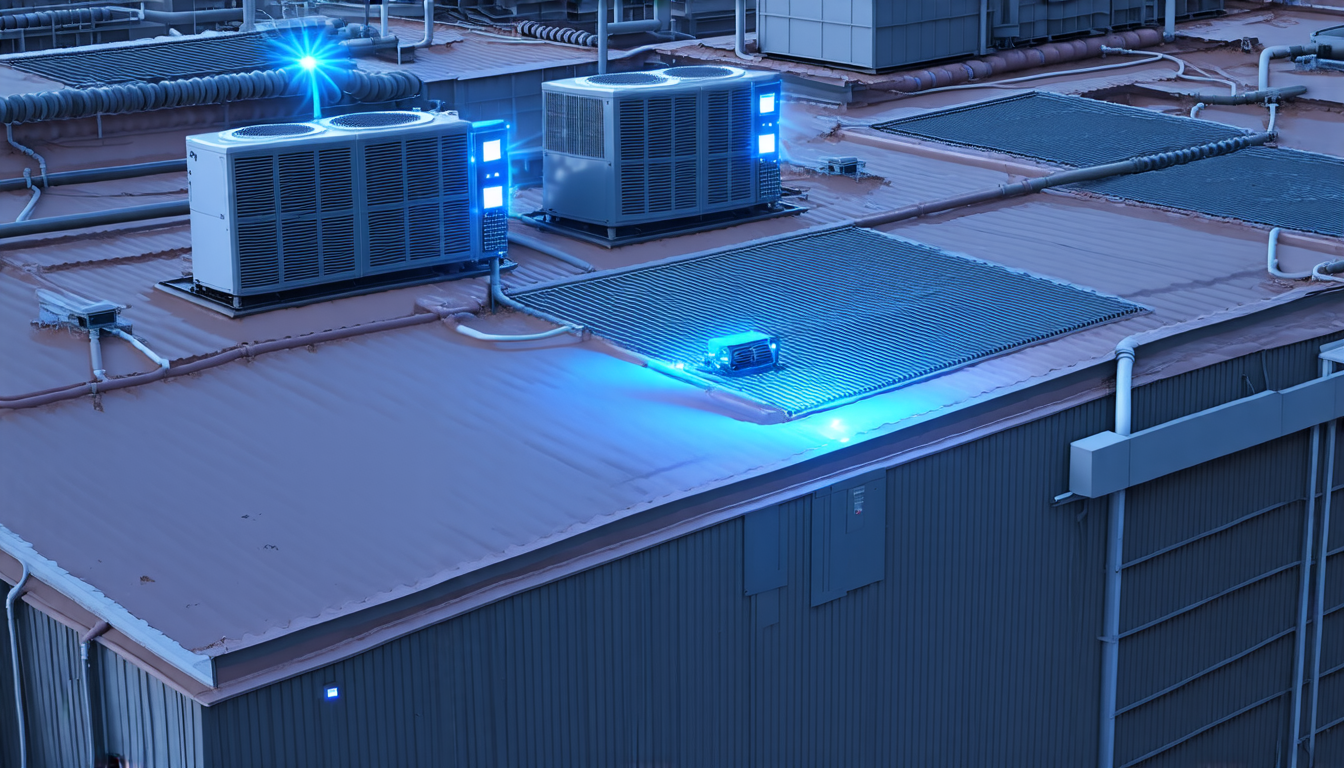
The team’s work focuses on chiller sequencing in HVAC systems, a critical aspect of building management. Chiller sequencing involves optimizing the activation of chillers to minimize energy consumption while meeting cooling demands. The researchers used ML techniques to predict chiller performance and developed a platform that integrates data collection, feature engineering, model training, and deployment.
The platform consists of four main microservices: device access manager, context module, time-series database, and machine learning manager. Each microservice is designed to handle specific tasks, such as collecting data from devices, presenting contextual information, storing data in a time-stamped format, and executing ML models.
The device access manager provides a standardized interface for interacting with various protocols and devices, allowing for seamless integration of heterogeneous systems. The context module presents relevant information to the application, while the time-series database stores historical data for use in model training and updates.
The machine learning manager is responsible for deploying and managing ML models, including prediction, update, and data collection tasks. This microservice integrates with the cloud infrastructure, enabling continuous training and retraining of models.
The platform’s architecture has several benefits, including reduced latency, improved performance, and enhanced security. The use of microservices allows for independent development and deployment of components, making it easier to manage complex systems.
The team’s work has significant implications for Industry 4.0 applications, where real-time processing and decision-making are crucial. The platform’s ability to integrate with various devices and protocols makes it a versatile solution for diverse industries.
In the future, the researchers plan to expand the platform’s capabilities by integrating multiple ML models and exploring new applications in areas such as predictive maintenance and autonomous systems.
Cite this article: “Edge-Level AI Services for Smart Spaces”, The Science Archive, 2025.
Machine Learning, Edge Computing, Smart Spaces, Microservices, Hvac Systems, Chiller Sequencing, Data Collection, Feature Engineering, Model Training, Industry 4.0





