

Saturday 01 February 2025
Quantum computers have long promised to revolutionize fields like chemistry, allowing us to simulate complex molecular interactions with unprecedented precision and speed. But despite significant advances in recent years, these machines still struggle with the complexity of real-world molecules.
One major hurdle is the sheer size of the calculations required to model these molecules. Even small molecules can involve billions of variables, making it difficult for even the most powerful quantum computers to solve the problem efficiently.
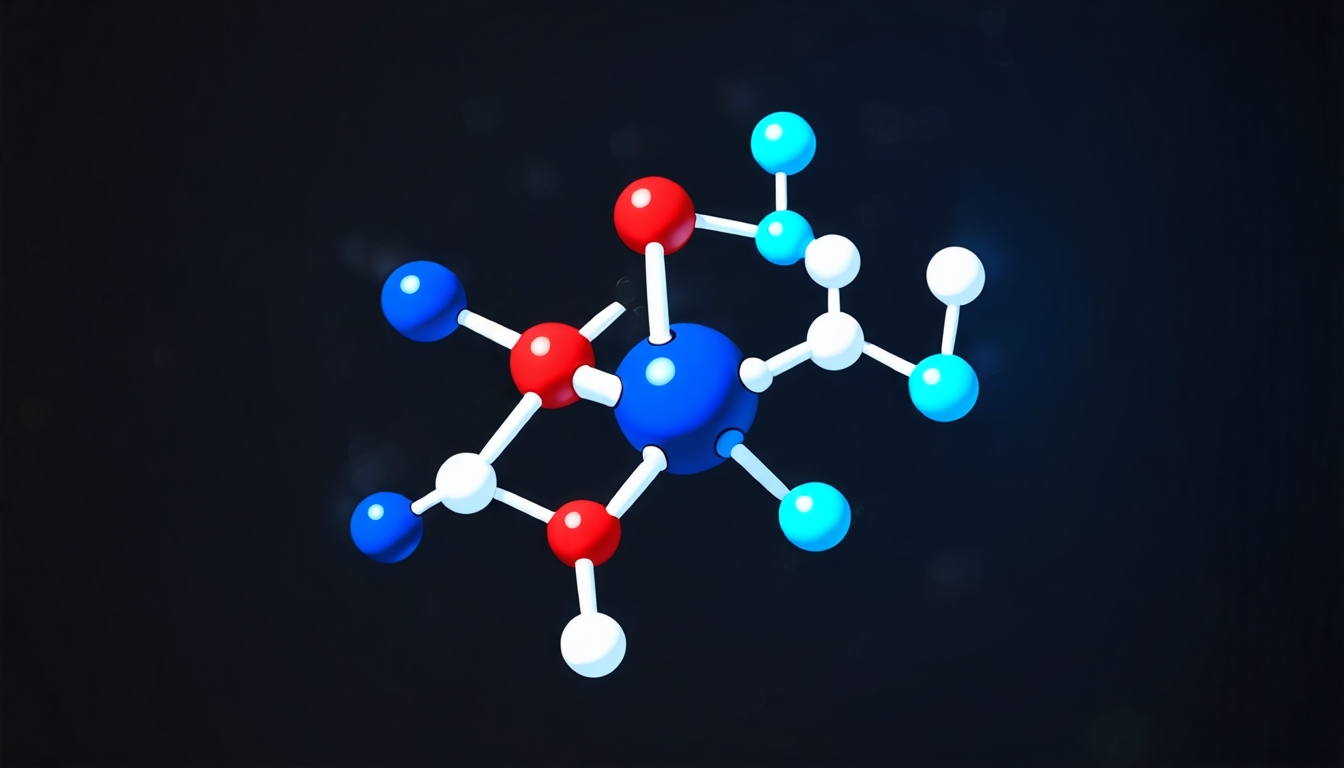
Enter a new technique developed by researchers at Los Alamos National Laboratory, which promises to reduce the complexity of quantum chemistry simulations by exploiting the symmetry of molecular structures. The approach, known as symmetry-shifted double-factorization, involves decomposing the molecule’s electronic Hamiltonian into simpler components that can be more easily simulated on a quantum computer.
The key insight behind this technique is that many molecules exhibit symmetries – patterns of structure and behavior that remain unchanged under certain transformations. By exploiting these symmetries, researchers can reduce the number of variables required to model the molecule, making it possible to simulate larger systems with greater accuracy.
To test their approach, the researchers applied it to two important molecules: FeMoCo, a key component of nitrogenase enzymes, and cytochrome P450, an enzyme involved in drug metabolism. They found that their technique reduced the complexity of these simulations by up to 25%, making it possible to model larger systems with greater accuracy.
The implications of this breakthrough are significant. With more efficient quantum chemistry simulations, researchers may be able to accelerate the discovery of new drugs and materials, as well as gain a deeper understanding of complex biological processes.
But for now, this technique is still in its early stages, and much work remains to be done before it can be widely adopted. Nevertheless, the potential rewards are significant enough that researchers will likely continue to push the boundaries of what’s possible with quantum chemistry simulations – and potentially unlock new secrets of the molecular world.
Cite this article: “Symmetry-Shifted Double-Factorization: A New Technique for Simulating Complex Molecules”, The Science Archive, 2025.
Quantum Computers, Chemistry, Molecules, Simulation, Symmetry, Hamiltonian, Decomposition, Variables, Enzymes, Materials





