
Saturday 01 February 2025
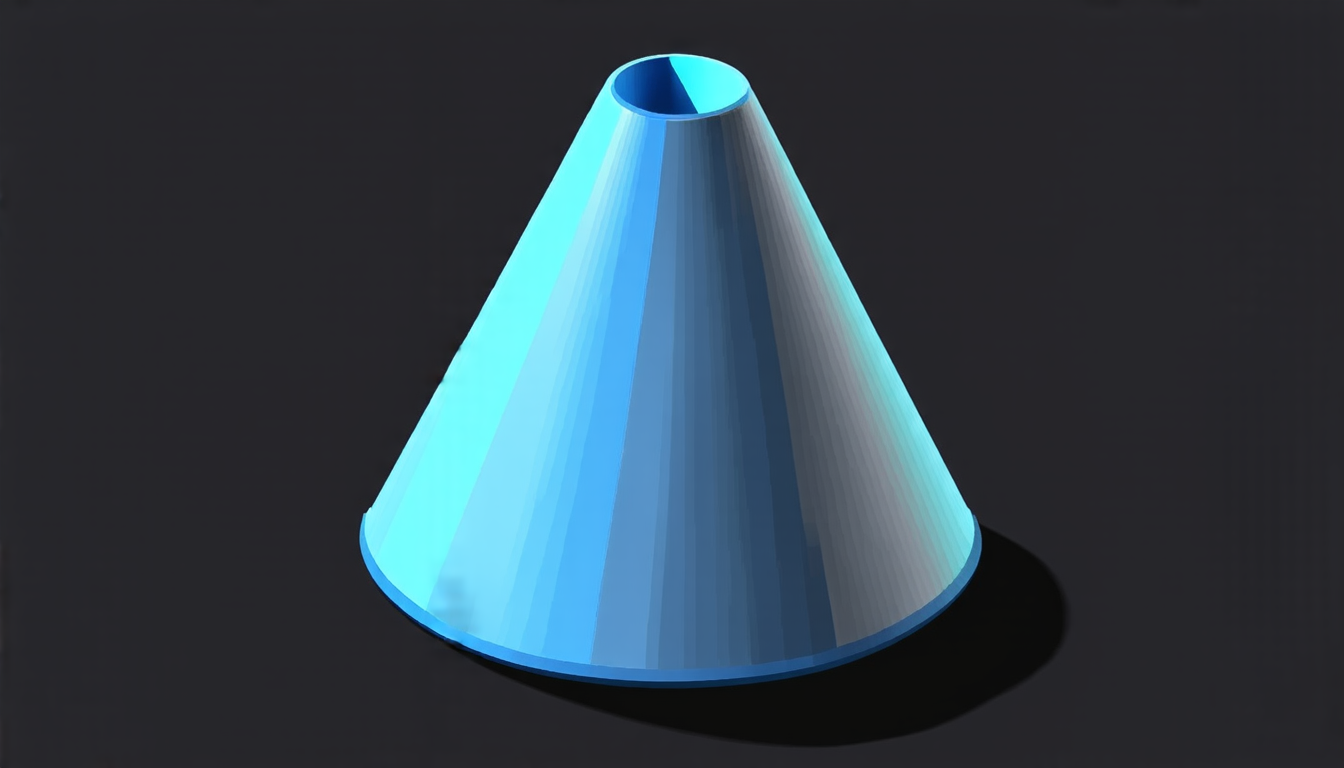
Mathematicians have long been fascinated by the concept of cones – shapes that are created by extending a set of points in space to infinity. In particular, they’ve been interested in finding the smallest possible set of points that can generate all other points within a given cone. This problem has puzzled researchers for decades, and now a team of mathematicians has made significant progress towards solving it.
The key idea behind their approach is to identify two types of generators: conically independent generators and minimum cardinality generators. Conically independent generators are sets of points that cannot be reduced further without losing the ability to generate all other points in the cone, while minimum cardinality generators are the smallest possible sets of points that can achieve this.
The team’s algorithm for finding minimum cardinality generators is particularly clever. It starts by identifying conically independent generators using a polynomial-time procedure, and then uses linear algebra to reduce these sets until they reach their minimum size.
One of the most impressive aspects of the algorithm is its ability to handle large cones with many points. In fact, the team’s method can solve problems that were previously thought to be intractable. This has significant implications for fields such as computer science and operations research, where cones are used to model complex systems.
The algorithm also has practical applications in optimization theory, where it can be used to identify redundant objective functions – variables that don’t affect the outcome of a problem. By removing these variables, researchers can simplify complex problems and make them more tractable.
In addition to its practical applications, the team’s work has also shed new light on the fundamental properties of cones. For example, they’ve shown that any conically independent generator can be reduced to a smaller set of points without losing its generating power.
The implications of this research are far-reaching and could have significant impacts on many fields. By developing more efficient algorithms for working with cones, researchers can tackle complex problems that were previously intractable. And by better understanding the properties of cones, they can develop new theories and models that can be applied to a wide range of real-world problems.
Overall, this research represents an important milestone in the study of cones and has significant implications for many fields. By developing more efficient algorithms and deeper insights into the nature of cones, researchers are opening up new possibilities for solving complex problems and advancing our understanding of the world around us.
Cite this article: “Cracking the Code of Cones: A Breakthrough in Mathematics”, The Science Archive, 2025.
Cones, Generators, Mathematics, Algorithm, Computer Science, Operations Research, Optimization Theory, Redundant Variables, Polynomial-Time Procedure, Linear Algebra