

Saturday 01 February 2025
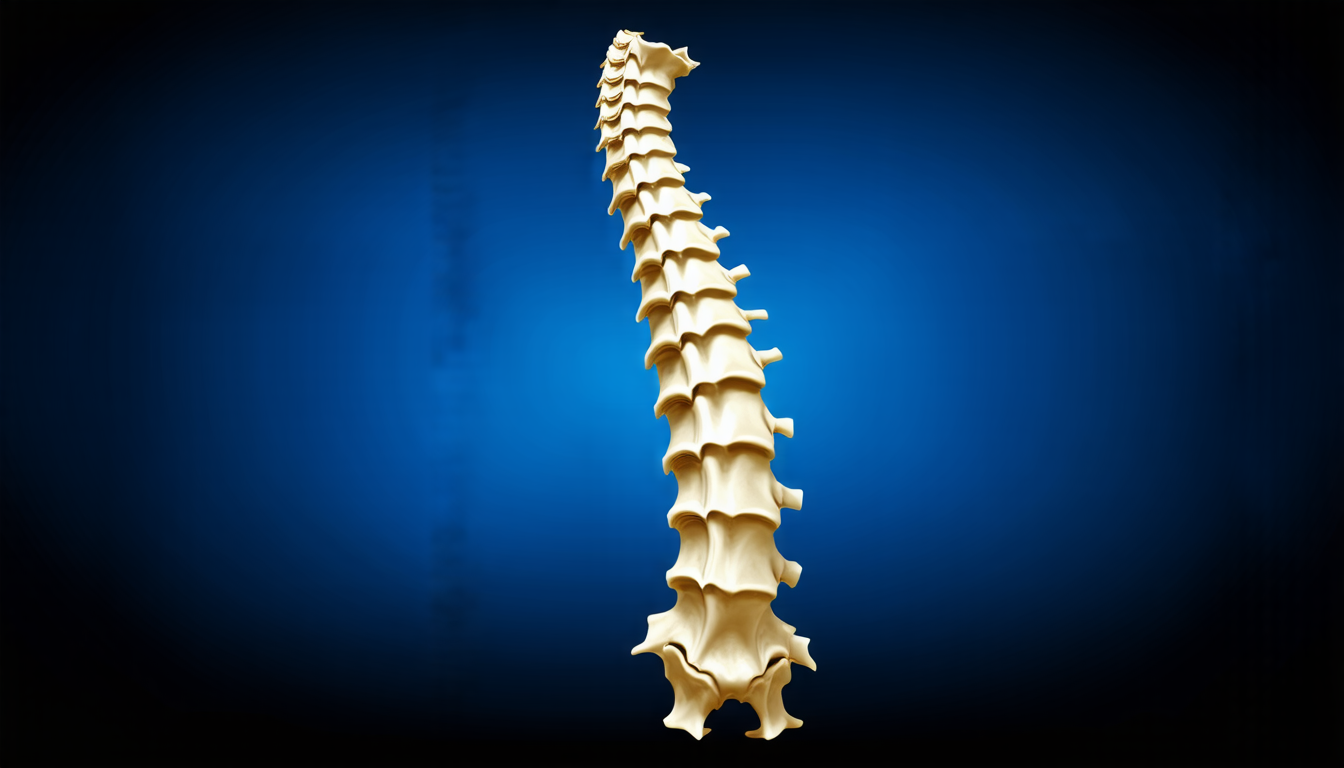
A team of researchers has made a significant breakthrough in medical imaging, developing a system that can estimate the 3D shape of the spine from just a single 2D X-ray scan. The innovation could revolutionize the diagnosis and treatment of scoliosis and other spinal disorders.
The new method uses artificial intelligence to analyze dual-energy X-ray absorptiometry (DXA) scans, which are commonly used in hospitals to assess bone density. By leveraging machine learning algorithms, the system can accurately predict the shape of the spine in three dimensions from just two 2D projections: coronal and sagittal.
The team’s approach involves training a neural network on a large dataset of paired DXA and magnetic resonance imaging (MRI) scans. The network is then able to learn patterns in the X-ray images that correspond to specific shapes and structures in the spine.
In testing the system, the researchers found that it was able to accurately estimate the 3D shape of the spine with high precision. They also demonstrated its ability to capture the intricacies of scoliosis, a condition characterized by abnormal curvature of the spine.
The potential benefits of this technology are significant. Scoliosis can be difficult to diagnose and treat, particularly in its early stages. By providing a more accurate and comprehensive understanding of spinal shape and structure, the new system could help doctors develop more effective treatment plans and improve patient outcomes.
Furthermore, the technique has implications for other areas of medical imaging and research. It could potentially be used to analyze other complex structures, such as the brain or organs, from 2D images.
The researchers are now working to refine their algorithm and explore its applications in clinical settings. With further development, this technology could become a valuable tool for diagnosing and treating a range of spinal disorders.
Cite this article: “Accurate 3D Spine Imaging from Single X-Ray Scan”, The Science Archive, 2025.
Medical Imaging, Artificial Intelligence, Dxa Scans, Machine Learning, Neural Network, Mri Scans, Scoliosis, Spinal Disorders, Bone Density, 3D Shape Estimation





