

Saturday 01 February 2025
The latest advancements in machine learning have led to significant breakthroughs in processing complex data, particularly in the realm of graphs. Graphs are a fundamental concept in computer science, representing relationships between entities such as social networks, molecular structures, or even traffic patterns. However, as datasets grow larger and more intricate, traditional graph processing methods begin to falter.
Enter ReHub, a novel architecture designed to tackle this challenge by introducing a dynamic reassignment mechanism for nodes within graphs. This innovative approach enables efficient communication between distant parts of the graph, allowing ReHub to excel in tasks such as node classification, link prediction, and clustering.
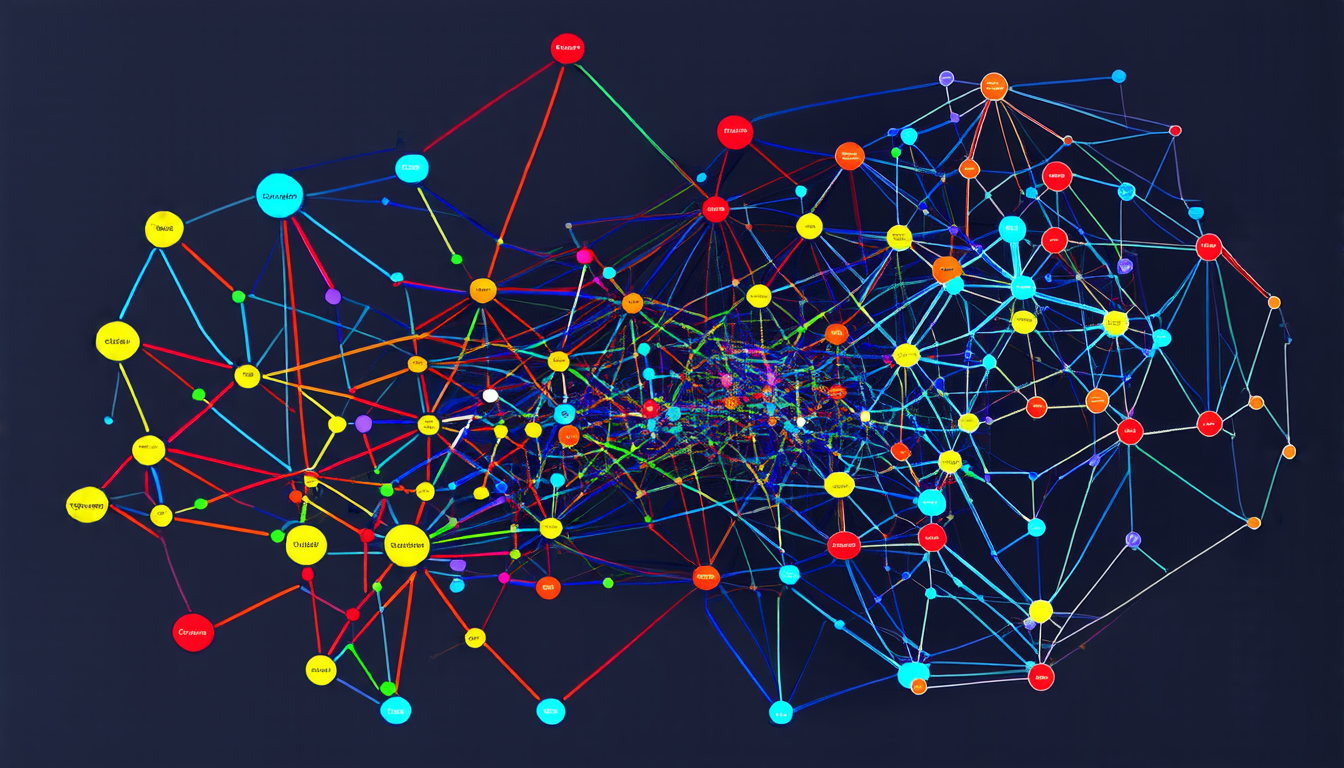
The key to ReHub’s success lies in its ability to balance the trade-off between computational efficiency and information flow. By assigning hubs – essentially virtual nodes that serve as hubs for spoke connections – ReHub creates a more efficient communication network within the graph. This reassignment process is adaptive, adjusting to changing graph structures and node relationships.
To demonstrate the effectiveness of ReHub, researchers evaluated its performance on various benchmark datasets. The results were striking: across different scenarios, ReHub consistently outperformed existing methods in terms of accuracy and efficiency. In some cases, it even rivaled state-of-the-art models while using significantly less computational resources.
One notable aspect of ReHub is its ability to adapt to graph sizes and structures. By dynamically reassigning hubs based on the number of spoke connections, ReHub can efficiently process large datasets without sacrificing performance. This adaptability makes it an attractive solution for applications where graph size and complexity are uncertain.
Another interesting finding was the robustness of ReHub’s performance across different hubs ratio configurations. While some methods may falter when faced with varying parameter settings, ReHub demonstrated remarkable stability in its results. This suggests that the reassignment mechanism is robust and effective in a wide range of scenarios.
Furthermore, researchers analyzed the distribution of spoke connections within graphs and found that most graphs exhibit a high degree of uniformity. This indicates that ReHub’s reassignment process is effective in spreading node connections evenly across hubs, resulting in more efficient information flow.
In short, ReHub represents a significant step forward in graph processing technology. By introducing a dynamic reassignment mechanism, it enables efficient communication between distant parts of the graph while adapting to changing graph structures and node relationships. As researchers continue to push the boundaries of machine learning, innovations like ReHub will be crucial in unlocking the full potential of complex data analysis.
Cite this article: “Efficient Graph Processing with ReHub”, The Science Archive, 2025.
Machine Learning, Graph Processing, Data Analysis, Node Classification, Link Prediction, Clustering, Computational Efficiency, Information Flow, Hub Assignment, Adaptive Architecture.





