

Saturday 01 February 2025
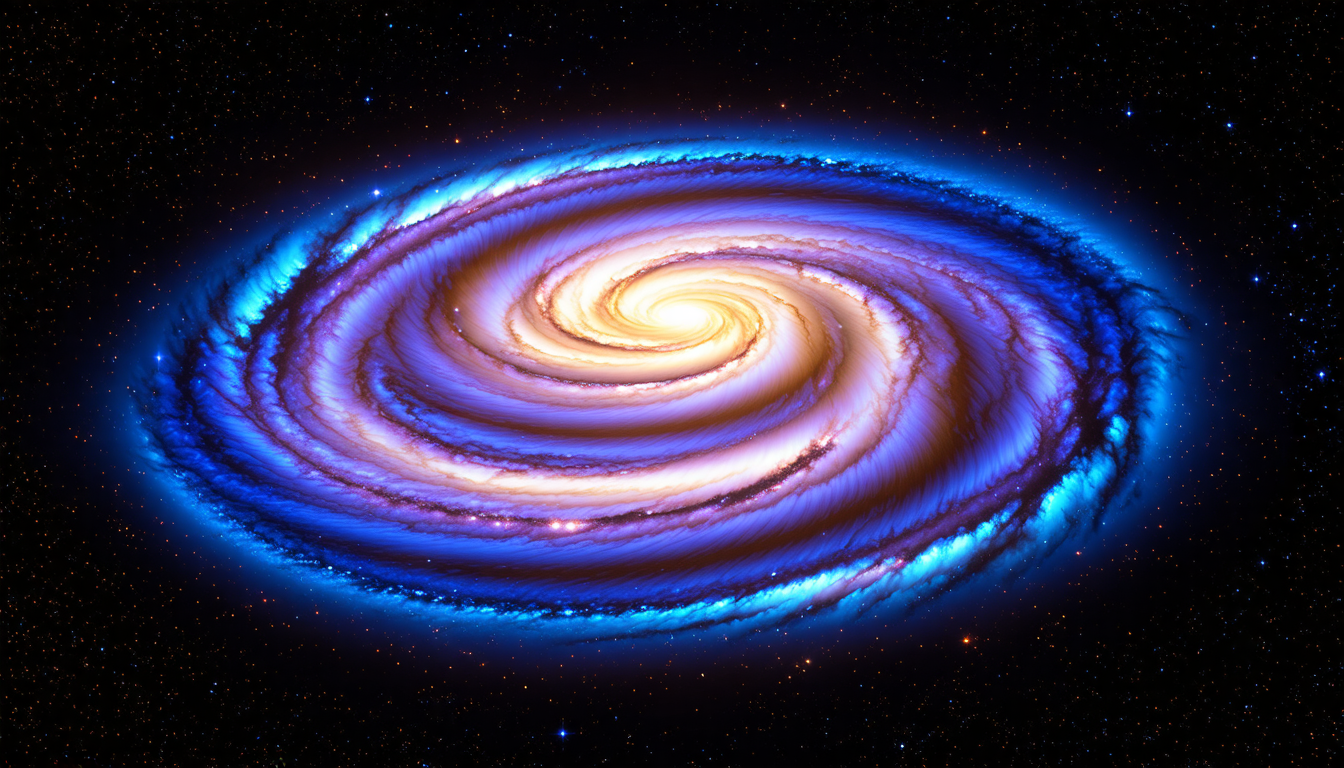
A team of researchers has made a significant breakthrough in understanding the behavior of stars and galaxies by solving a long-standing problem in astrophysics. For decades, scientists have been trying to find a way to mathematically model the behavior of stars and galaxies using the Vlasov-Poisson system, a set of equations that describe how matter moves under the influence of gravity.
The Vlasov-Poisson system is particularly challenging because it involves both time-dependent and space-dependent variables, making it difficult to solve analytically. However, researchers have been able to make significant progress in understanding its behavior by using numerical methods and approximations.
In their latest paper, a team of scientists has made a major breakthrough by developing a new method for solving the Vlasov-Poisson system. The method is based on a fixed-point iteration scheme that iteratively updates the density of stars or gas within a galaxy until it converges to a stable solution.
The researchers used this method to study the behavior of spherically symmetric galaxies, which are thought to be the building blocks of larger galaxies like our own Milky Way. They found that their method was able to accurately model the behavior of these galaxies and predict the formation of stars and black holes at their centers.
The implications of this breakthrough are significant, as it could help scientists better understand the evolution and structure of galaxies over time. For example, by studying how stars form and evolve within a galaxy, researchers may be able to gain insights into the origins of life on Earth.
In addition to its scientific significance, the research has also important practical applications. For instance, the method developed in this paper could be used to improve the accuracy of simulations of galaxy formation and evolution, which are critical for understanding many astrophysical phenomena, such as dark matter and dark energy.
Overall, this breakthrough represents a major advance in our understanding of the Vlasov-Poisson system and its role in shaping the behavior of stars and galaxies. It has important implications for both theoretical and experimental research in astrophysics and could ultimately help us better understand the origins of life and the universe itself.
Cite this article: “Cracking the Code of Star and Galaxy Behavior”, The Science Archive, 2025.
Stars, Galaxies, Vlasov-Poisson System, Astrophysics, Numerical Methods, Fixed-Point Iteration, Spherically Symmetric, Galaxy Formation, Dark Matter, Dark Energy





