

Saturday 01 February 2025
The latest advancements in artificial intelligence have led to significant breakthroughs in understanding and interacting with the physical world. A new study has made a major contribution to this field by introducing a novel task called Sequential 3D Affordance Reasoning, which enables machines to comprehend complex user intentions that involve sequential or long-horizon subtasks.
The researchers have developed a large-scale benchmark dataset, comprising 180,000 instruction-point pairs collected from diverse sources. This dataset is designed to test the ability of AI models to reason about sequences of actions and affordances on objects in 3D space. The task is challenging because it requires the model to not only recognize the object and its parts but also understand the context and intentions behind the user’s instructions.
To tackle this challenge, the researchers have created a multimodal large language model (MLLM) that integrates world knowledge to interpret complex user intentions. This MLLM is trained on a combination of 3D point clouds, text data, and semantic features representing instructions with dense features from point clouds and sparse features from point clouds.
The model’s performance was evaluated using four metrics: Area Under the Curve (AUC), Mean Intersection Over Union (mIoU), SIMilarity (SIM), and Mean Absolute Error (MAE). The results show that the MLLM outperforms existing methods in both single-object and sequential affordance reasoning tasks, achieving state-of-the-art performance.
One of the key innovations of this study is the introduction of a multi-granular language-point integration module. This module enables the model to integrate information from different levels of granularity, including object parts, objects, and scenes, to generate more accurate predictions. The researchers also experimented with different 3D vision encoder backbones and found that Uni3D performs better than other alternatives.
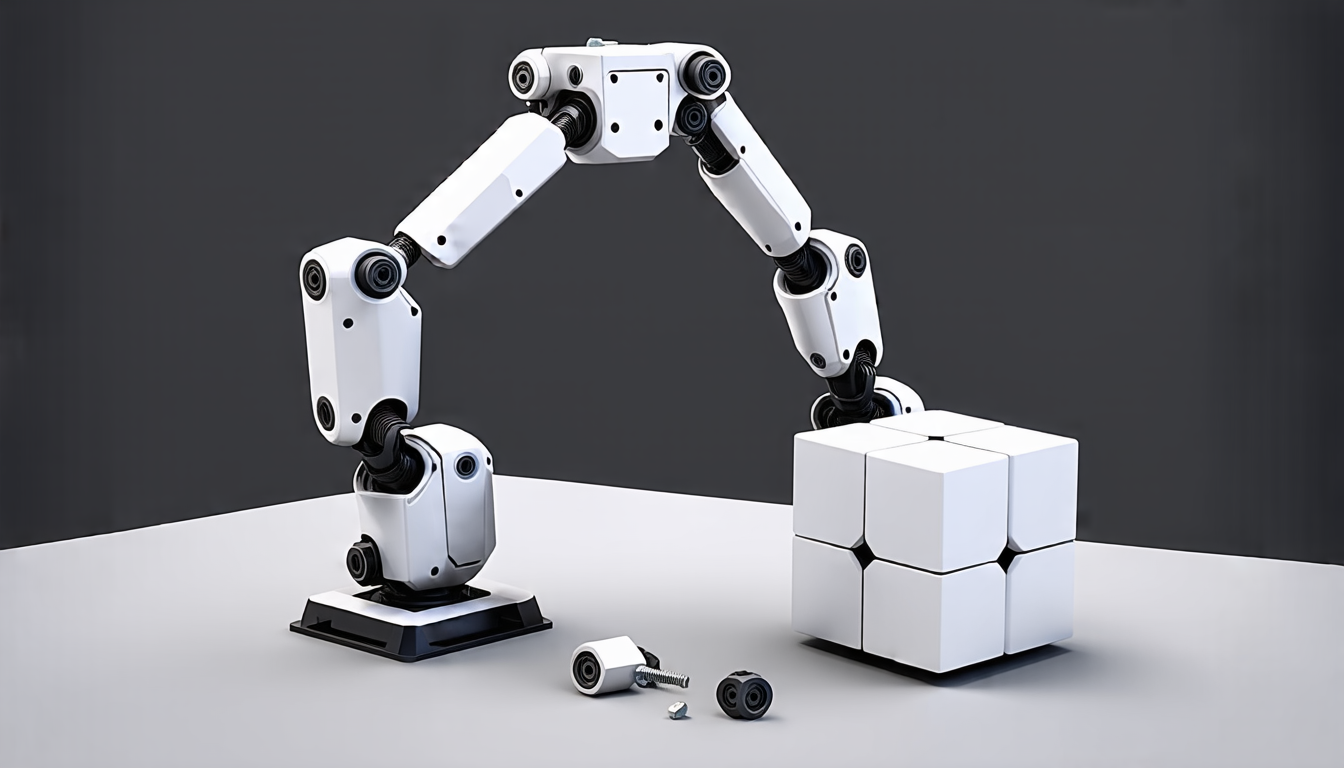
The implications of this study are far-reaching, as it has the potential to enable machines to assist humans in a variety of tasks, from assembly line production to search and rescue operations. For example, a robot could be trained to assemble complex objects by following a sequence of instructions provided by a human operator.
In addition, the Sequential 3D Affordance Reasoning task can be applied to other areas, such as virtual reality and gaming, where machines need to understand complex user interactions with virtual objects. The study’s findings demonstrate the potential of AI to improve human-machine collaboration and enhance our ability to interact with the physical world.
Cite this article: “Machine Intelligence Breakthrough: Understanding Complex User Intentions in 3D Space”, The Science Archive, 2025.
Artificial Intelligence, Sequential 3D Affordance Reasoning, Multimodal Language Model, Object Recognition, 3D Point Clouds, Semantic Features, World Knowledge, Machine Learning, Human-Machine Collaboration, Physical World.





