

Saturday 01 February 2025
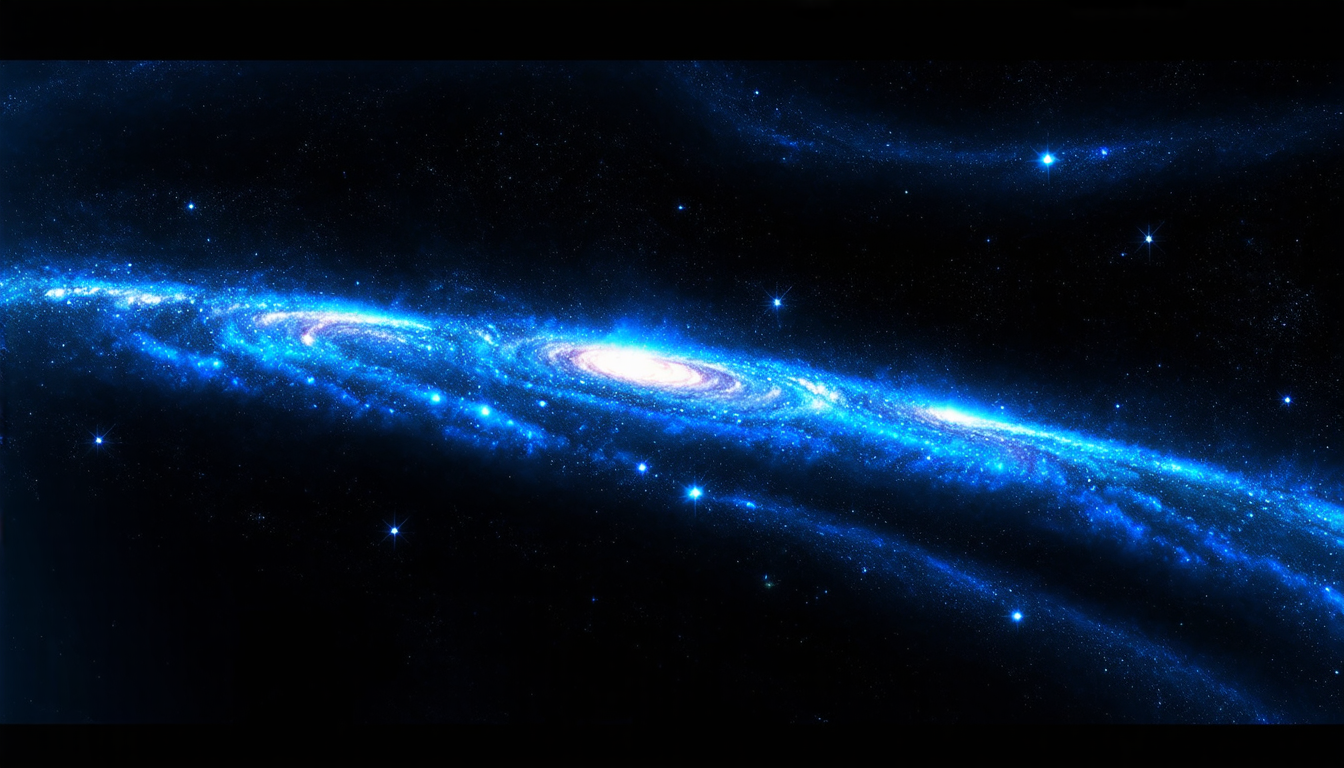
Scientists have made a groundbreaking discovery about the earliest galaxies in the universe, which could change our understanding of how they formed and evolved. By analyzing data from the James Webb Space Telescope (JWST), researchers have found that some galaxies at the dawn of time were much bluer than expected.
The JWST is designed to study objects that are too distant or faint for other telescopes to detect, allowing scientists to peer back in time to when the universe was just 4 billion years old. By examining the light coming from these ancient galaxies, researchers can learn about their composition and behavior.
In a recent study, scientists discovered that some of these early galaxies had very blue colors, which is unusual because they are thought to be formed by hot stars and massive black holes. The researchers found that these bluer galaxies were more common at higher redshifts (i.e., further away from us), suggesting that the universe was undergoing a period of rapid galaxy formation during this time.
One possible explanation for these blue colors is that they are due to the presence of young, massive stars or the interstellar gas and dust in these galaxies. These elements can absorb certain wavelengths of light, making them appear more blue than other galaxies. Another possibility is that some of these galaxies may have been affected by powerful explosions known as supernovae, which could have ionized the surrounding gas and changed its color.
The discovery of these bluer galaxies has significant implications for our understanding of galaxy formation and evolution. It suggests that the universe was more dynamic and complex than previously thought, with many different processes occurring simultaneously to shape the development of galaxies.
This study also highlights the importance of continued research into the early universe. By studying the properties of ancient galaxies, scientists can gain insights into how they formed and evolved over time, which can help us better understand the origins of our own galaxy and the universe as a whole.
In addition to providing new information about the earliest galaxies, this study demonstrates the power of the JWST in detecting faint, distant objects. With its advanced technology and capabilities, the JWST is poised to make many more important discoveries about the universe in the years to come.
Cite this article: “Unveiling the Secrets of Ancient Galaxies”, The Science Archive, 2025.
James Webb Space Telescope, Galaxy Formation, Early Universe, Blue Galaxies, Star Formation, Supernovae, Interstellar Gas, Dust, Redshift, Rapid Galaxy Formation





