

Saturday 01 February 2025
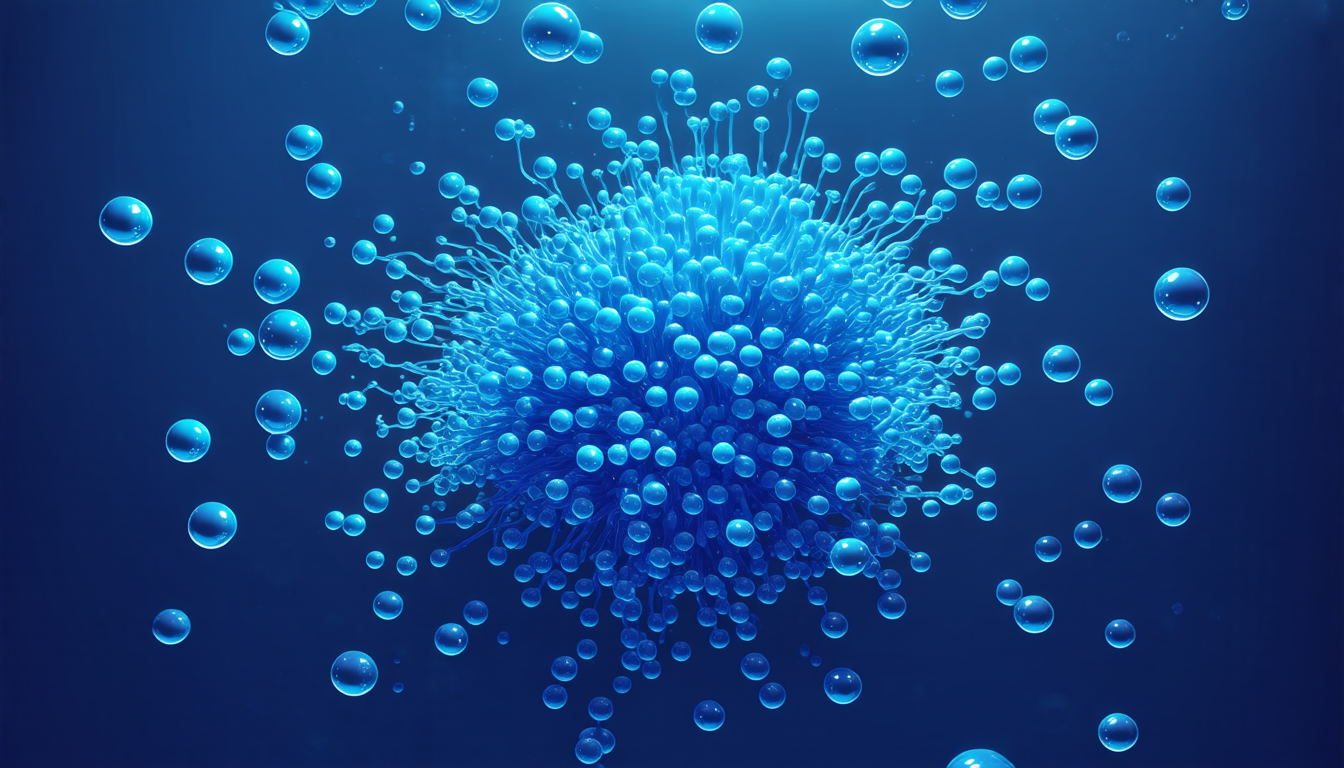
Mathematicians have made a breakthrough in understanding the intricate dance of vesicles, tiny membrane-bound sacs that play a crucial role in many biological processes. By developing a new model for the behavior of these vesicles, researchers have shed light on how they move and interact with their surroundings.
Vesicles are found throughout the body, from the surface of cells to the lining of blood vessels. They’re like tiny bubbles that can change shape, merge, and split apart in response to their environment. But despite their importance, understanding how vesicles behave has been a challenge for scientists.
The new model developed by mathematicians uses a combination of mathematical techniques to describe the behavior of vesicles. It’s based on the idea that vesicles are like tiny droplets of fluid that can change shape and interact with each other. By using this approach, researchers have been able to simulate the behavior of vesicles in different situations.
One of the key findings is that vesicles can move in unexpected ways. They can slide along surfaces, merge with each other, and even break apart into smaller pieces. This movement is driven by changes in the shape of the vesicle membrane, which is influenced by factors such as temperature, pressure, and the presence of other molecules.
The model also reveals that vesicles can interact with their surroundings in complex ways. For example, they can attach to surfaces, merge with other vesicles, or even engulf larger particles. This interaction is crucial for many biological processes, from cell signaling to immune responses.
The implications of this research are far-reaching. By better understanding how vesicles behave, scientists may be able to develop new treatments for diseases such as cancer and Alzheimer’s. They could also create more effective delivery systems for drugs and vaccines.
In addition, the model has potential applications in fields beyond biology. For example, it could be used to study the behavior of fluids in complex environments, such as oil droplets in water or bubbles in a liquid.
Overall, this breakthrough has opened up new avenues for research into the behavior of vesicles. By using a combination of mathematical techniques and experimental data, scientists can gain a deeper understanding of these tiny membrane-bound sacs and their role in biological processes.
Cite this article: “Modeling the Behavior of Vesicles: A Breakthrough in Understanding Biological Processes”, The Science Archive, 2025.
Vesicles, Biology, Mathematics, Model, Behavior, Membrane-Bound, Fluid Dynamics, Cell Signaling, Immune Responses, Cancer Research
Reference: Yuan Chen, “Volume Preserving Willmore Flow in a Generalized Cahn-Hilliard Flow” (2024).





