

Saturday 01 February 2025
The universe is a vast and mysterious place, full of secrets waiting to be uncovered. One of the most fascinating areas of study is the formation of planets and stars, which has long been shrouded in mystery. Researchers have made significant progress in recent years, uncovering new insights into the early days of our solar system.
One area that has garnered particular attention is the role of dust particles in the formation of planets. These tiny grains play a crucial role in shaping the development of our solar system and beyond. By studying the properties of these particles, scientists can gain valuable insights into the conditions under which planets form.
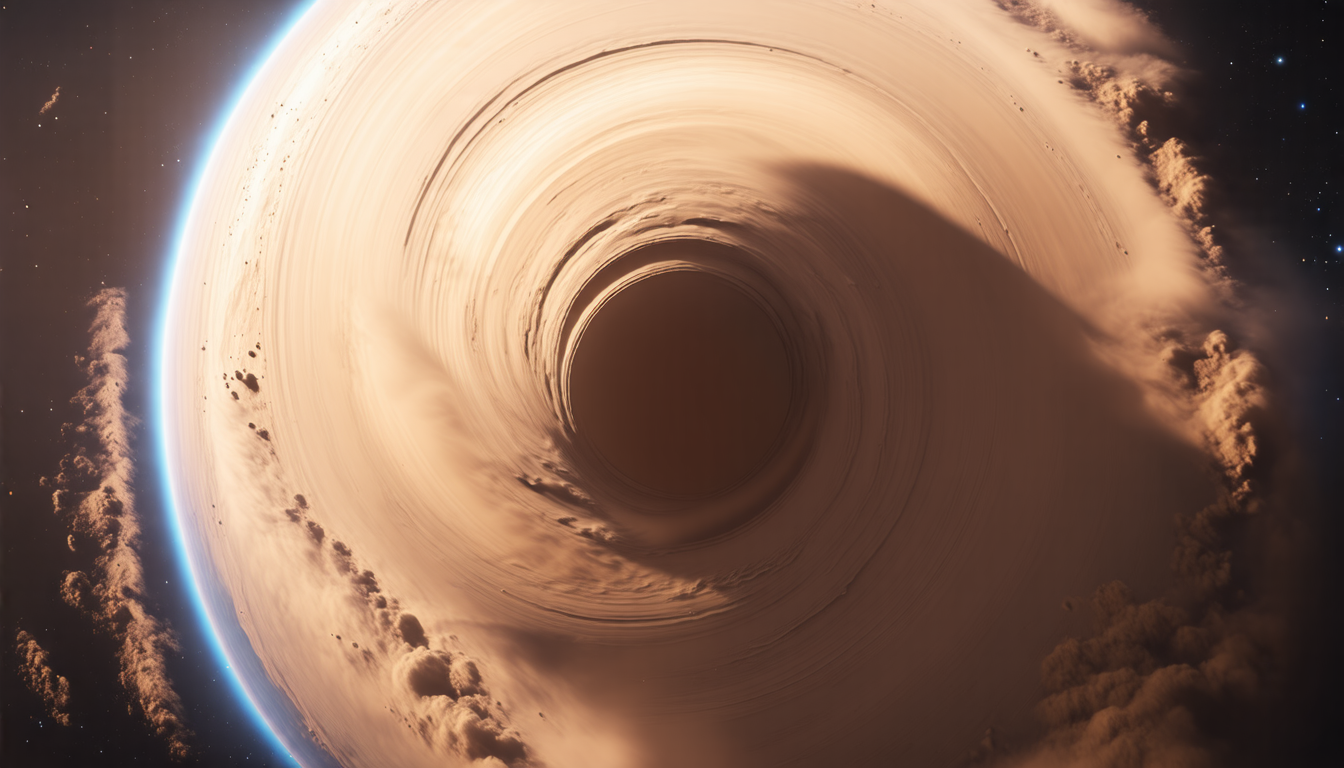
A recent study published in the journal Astronomy & Astrophysics has shed new light on this process. Researchers used advanced computer simulations to model the behavior of dust particles in a protoplanetary disk, mimicking the early days of our solar system. The results were striking: they found that the particles are constantly being stirred up by turbulence in the disk, which causes them to collide and merge into larger bodies.
This process, known as accretion, is thought to be key to the formation of planets. As more and more particles accumulate, they eventually become massive enough to form a planet. The simulations also revealed that the rate at which this happens depends on various factors, including the strength of the turbulence and the size of the particles.
The findings have significant implications for our understanding of planet formation. They suggest that the process is much more complex than previously thought, with multiple factors influencing the outcome. This could help to explain why some planets are so different from others, with varying sizes, compositions, and orbits.
One of the most fascinating aspects of this study is the role that ultraviolet (UV) radiation plays in shaping the behavior of the dust particles. UV light can cause chemical reactions on the surface of the particles, altering their properties and influencing their ability to stick together. This has important implications for our understanding of the early solar system, where UV radiation was much stronger than it is today.
The study also highlights the importance of considering the context in which these events occur. The researchers used a combination of observations from space telescopes and computer simulations to recreate the conditions under which planets form. By combining these two approaches, they were able to gain a more complete understanding of the process.
In summary, this study has provided new insights into the complex dance of dust particles that occurs in protoplanetary disks.
Cite this article: “Unraveling the Mysterious Dance of Dust: New Insights into Planet Formation”, The Science Archive, 2025.
Planets, Stars, Formation, Dust Particles, Protoplanetary Disk, Accretion, Turbulence, Uv Radiation, Planet Formation, Astronomy





