
Saturday 01 February 2025
The quest for faster, more reliable wireless communication has led researchers to explore new technologies and techniques. One such innovation is Joint Phase-Time Arrays (JPTAs), which have been gaining traction in recent years as a potential solution to improve mmWave base station performance.
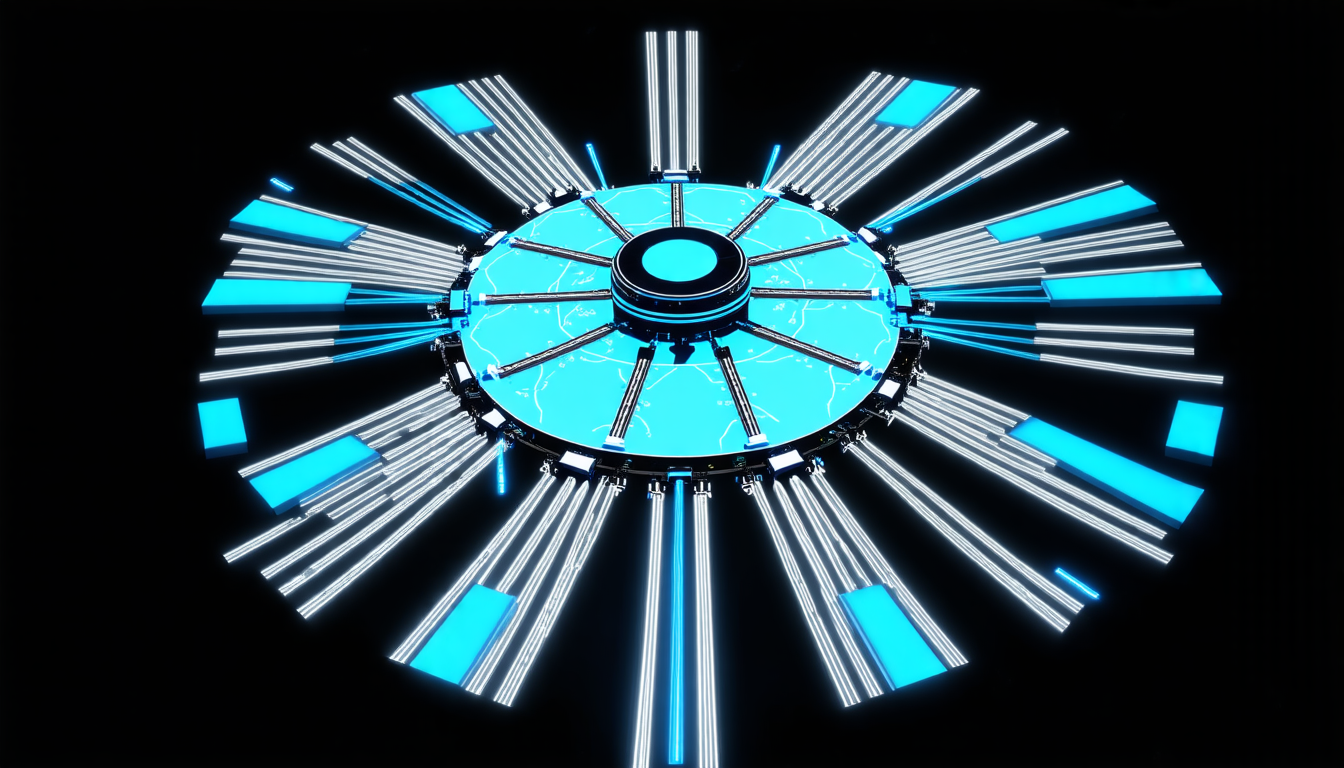
A JPTA combines two crucial components – phase arrays and time-delay arrays – into one system, allowing it to form flexible beams that can adapt to different user locations and scenarios. This flexibility is particularly important for mmWave communication systems, which are susceptible to interference and have limited range due to their high frequency.
The benefits of JPTAs are numerous. They enable the simultaneous transmission of multiple signals, reducing latency and improving overall system capacity. Additionally, JPTAs can dynamically adjust beamforming patterns to optimize coverage and throughput, making them more efficient than traditional analog beamforming techniques.
Researchers have been experimenting with JPTAs in various settings, including fixed wireless access (FWA) scenarios, where they found significant improvements in average and cell-edge throughput. In fact, the results showed that JPTAs can increase throughput by up to 65% at the cell edge, which is often a bottleneck for FWA systems.
The success of JPTAs also relies on advanced algorithms and system design considerations. For instance, researchers have developed methods to optimize JPTA parameters in real-time, taking into account factors such as channel conditions, user locations, and beamforming constraints.
However, there are challenges to overcome before JPTAs can become a mainstream technology. One major hurdle is the need for more complex hardware and software systems, which could increase costs and energy consumption.
Despite these challenges, researchers remain optimistic about the potential of JPTAs to revolutionize mmWave communication systems. As the demand for faster and more reliable wireless connectivity continues to grow, innovations like JPTAs are likely to play a critical role in shaping the future of mobile technology.
In this context, Samsung Research America has been at the forefront of JPTA research, exploring new applications and techniques to improve system performance and efficiency. The company’s researchers have developed advanced algorithms for real-time JPTA parameter computation, as well as novel system design approaches that take into account beamforming constraints and user locations.
The future of mmWave communication systems is likely to be shaped by innovations like JPTAs, which offer a promising solution to improve performance, reliability, and efficiency.
Cite this article: “Improving mmWave Communication Systems with Joint Phase-Time Arrays”, The Science Archive, 2025.
Mmwave, Joint Phase-Time Arrays, Jpta, Phase Arrays, Time-Delay Arrays, Beamforming, Wireless Communication, Base Station Performance, Latency, Throughput.