

Saturday 01 February 2025
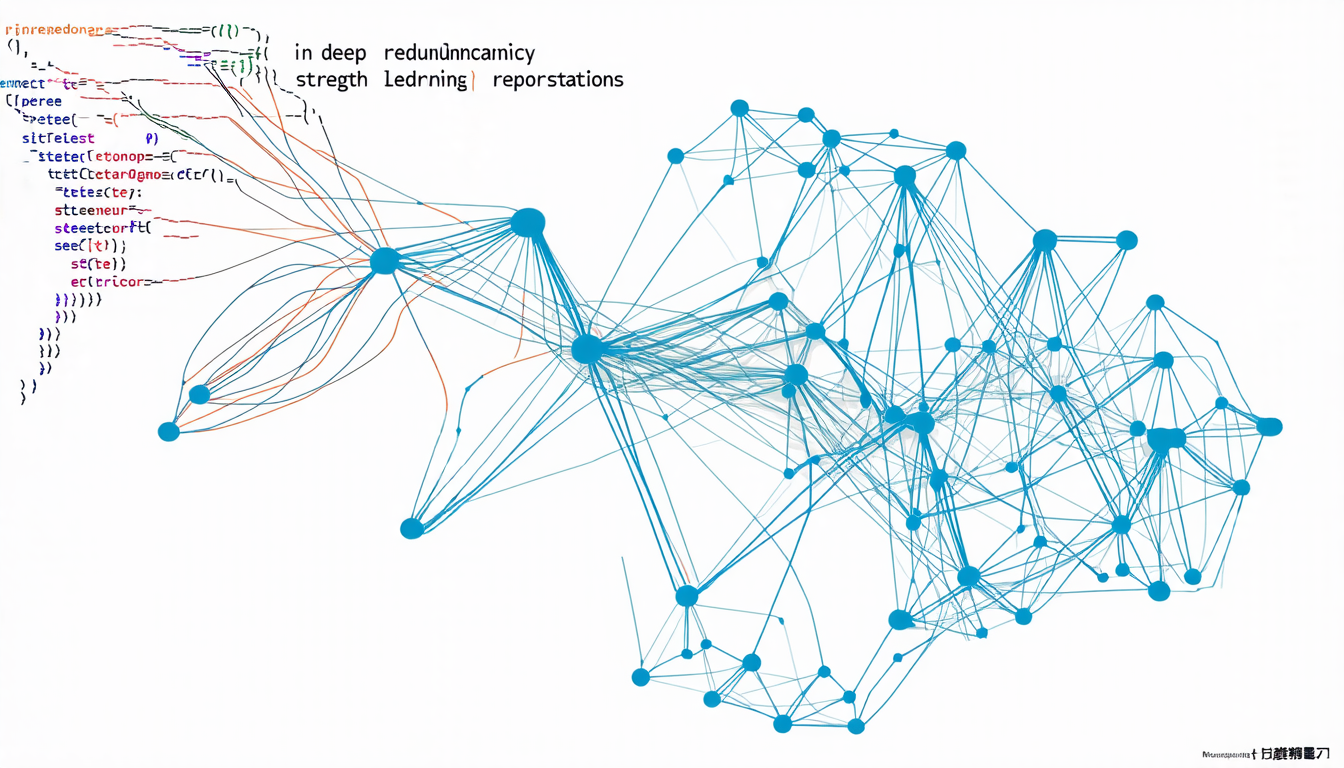
Deep learning models have revolutionized many fields, but one of the most significant challenges they face is redundancy – the repetition of information in their internal representations. This redundancy can lead to inefficiencies and make it harder for models to learn new concepts.
Researchers have proposed various methods to measure this redundancy, but a recent study has shed new light on the subject. The team used three different measures of redundancy – Autoencoder Correlation (AAC), Linear Regression Correlation (LR), and Non-Linear Regression Correlation (NLR) – to analyze deep learning models trained on three popular datasets: CIFAR-100, ImageNet-100, and a masked version of these datasets.
The results show that the three measures are highly correlated with each other, indicating that they capture similar aspects of redundancy. The team also found that the redundancy measures are strongly related to the performance of the models, with higher redundancy typically corresponding to better accuracy.
One of the most surprising findings was that the NLR measure, which captures non-linear relationships between features, is more closely tied to model performance than the other two measures. This suggests that non-linear relationships play a crucial role in deep learning representations.
The study also explored the relationship between redundancy and the number of layers in the projector – a key component of many deep learning models. The results show that increasing the number of layers can lead to higher redundancy, but only up to a point. Beyond a certain threshold, further increases in layer depth do not necessarily improve performance.
The team’s findings have important implications for the development of more efficient and effective deep learning models. By better understanding the role of redundancy in deep learning representations, researchers can design new models that are more robust and scalable.
In addition to its technical significance, this study has broader implications for our understanding of intelligence and cognition. The human brain is thought to be highly redundant, with many different areas and pathways working together to enable complex cognitive functions. By studying the redundancy in deep learning models, researchers can gain insights into the neural mechanisms underlying human intelligence.
Overall, this study provides a valuable contribution to our understanding of deep learning and its limitations. As researchers continue to push the boundaries of what is possible with deep learning, it will be essential to develop new methods for measuring and mitigating redundancy – and this study takes us one step closer to achieving that goal.
Cite this article: “Uncovering the Role of Redundancy in Deep Learning Representations”, The Science Archive, 2025.
Deep Learning, Redundancy, Autoencoder Correlation, Linear Regression Correlation, Non-Linear Regression Correlation, Model Performance, Accuracy, Layer Depth, Efficiency, Intelligence.





