

Saturday 01 February 2025
A team of scientists has made a significant breakthrough in the field of quantum computing by developing a new type of amplifier that can detect individual electrons on liquid helium. This achievement is crucial for the development of spin-based quantum computers, which rely on the manipulation and measurement of single electrons to process information.
The researchers used a cryogenic amplifier circuit based on commercially available high-electron-mobility transistors (HEMTs) to achieve this feat. The HEMTs are designed to operate at extremely low temperatures, making them ideal for use in quantum computing applications. By amplifying the signal from individual electrons on liquid helium, the researchers were able to detect and measure the spin state of these electrons with unprecedented precision.
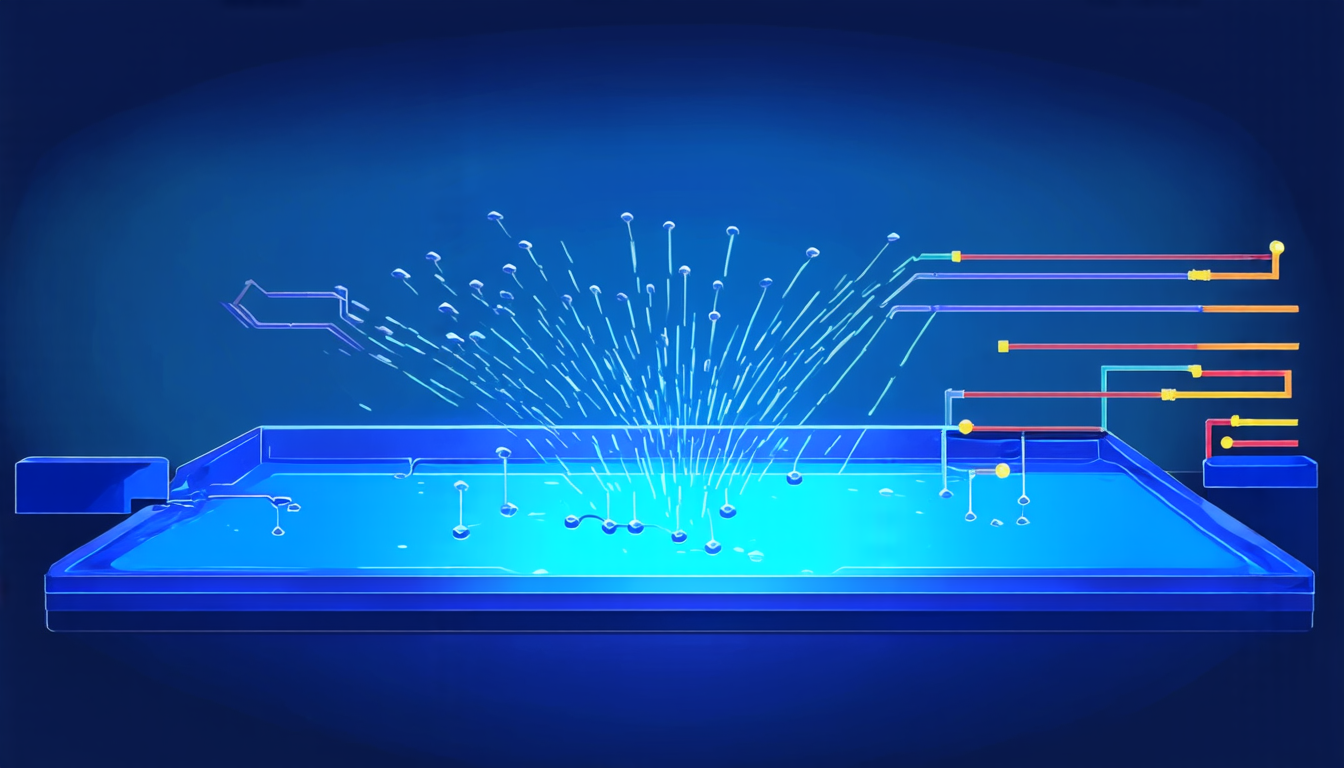
The detection process involves using a gate electrode to manipulate the electron’s position and then measuring its image charge as it moves across the surface of the helium. The amplifier circuit is designed to amplify this signal, allowing the researchers to detect individual electrons even in the presence of noise and interference.
The team used a combination of advanced techniques, including finite element modeling and cryogenic amplification, to optimize their design and achieve high sensitivity and resolution. They found that their amplifier circuit could detect as few as two electrons on helium, making it possible to read out the spin state of individual electrons with high accuracy.
This achievement has significant implications for the development of quantum computing, as it paves the way for the creation of more sensitive and precise measurement tools. The ability to manipulate and measure individual electrons will enable the development of more complex quantum algorithms and increase the overall efficiency of quantum computers.
The researchers are optimistic about the potential applications of their technology, citing its potential use in a wide range of fields, including quantum computing, materials science, and biology. They believe that their amplifier circuit could be used to detect and measure individual electrons on other surfaces, such as graphene or superconducting materials, which would open up new possibilities for quantum computing and other applications.
Overall, this breakthrough has the potential to revolutionize our understanding of quantum computing and its applications. The development of more sensitive and precise measurement tools will enable researchers to explore new frontiers in quantum computing and unlock the secrets of the universe.
Cite this article: “Quantum Computing Breakthrough: Detecting Individual Electrons on Liquid Helium”, The Science Archive, 2025.
Quantum Computing, Liquid Helium, Electron Amplification, Spin-Based Quantum Computers, Hemts, Cryogenic Amplifier Circuit, Finite Element Modeling, Quantum Algorithms, Graphene, Superconducting Materials





