

Sunday 02 February 2025
The quest for a universal refolding algorithm has been a long-standing challenge in the field of computational geometry. Researchers have been working tirelessly to develop a method that can transform any two polyhedral manifolds into each other, without introducing new boundaries or holes. And finally, after years of effort, they’ve cracked it.
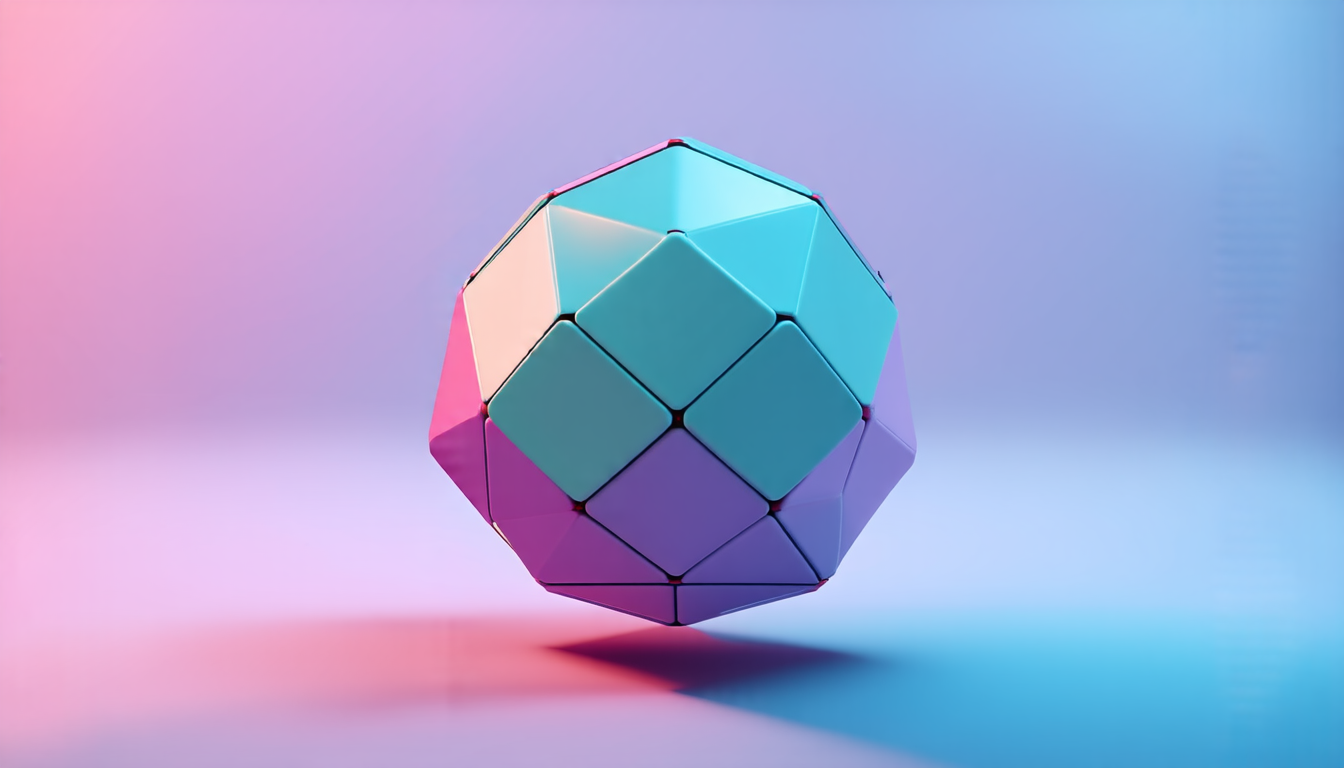
The secret lies in an intermediate manifold, which is constructed by cutting and gluing the original polyhedra together in a specific way. This intermediate shape is not just any ordinary polyhedron – it’s specially designed to be embeddable in 3D space without self-intersection or boundary introduction.
To achieve this, researchers had to develop new techniques for cutting and gluing the polyhedra. They found that by using zig-zag patterns and carefully controlled folds, they could create a structure that would allow them to transform the original polyhedra into each other. This process involves two refolding steps: first, the intermediate manifold is created through a series of cuts and glues, and then it’s transformed into the target polyhedron.
The implications of this discovery are vast. For one, it opens up new possibilities for manufacturing and engineering applications. Imagine being able to transform complex shapes and structures into each other with ease – it would revolutionize industries such as aerospace, robotics, and architecture.
But the benefits extend beyond just practical applications. This breakthrough also has significant theoretical implications. It shows that there is no fundamental limit to the number of refolding steps needed to transform polyhedra, and that any two polyhedra can be transformed into each other through a series of carefully controlled cuts and glues.
Of course, this achievement isn’t without its challenges. The researchers had to overcome numerous technical hurdles along the way, from developing new algorithms for cutting and gluing to ensuring that the intermediate manifold was embeddable in 3D space. But their perseverance has paid off, and we’re now one step closer to unlocking the secrets of polyhedral geometry.
In a world where complexity is increasingly important, this breakthrough offers a beacon of hope. It shows us that even the most seemingly insurmountable challenges can be overcome with determination and creativity. And who knows – maybe one day, we’ll find ourselves transforming entire cities into each other, all thanks to the power of refolding algorithms.
Cite this article: “Polyhedral Geometry Breakthrough: Unlocking New Possibilities”, The Science Archive, 2025.
Universal, Refolding, Algorithm, Polyhedral, Geometry, Computational, Cutting, Gluing, 3D, Embedding





