
Sunday 02 February 2025
As our reliance on databases grows, so does the need for efficient and reliable query optimization techniques. A team of researchers has proposed a new approach called HERO (Hierarchical Ensemble-based Relational Optimization) that uses machine learning to optimize database queries.
Traditional query optimization techniques rely on complex algorithms that analyze the query structure, statistical data, and system constraints to determine the most efficient execution plan. However, these methods can be slow, inefficient, or even fail to find optimal solutions.
HERO takes a different approach by using an ensemble of context-aware models to learn from a large dataset of queries and their corresponding execution plans. These models are trained to recognize patterns in the query structure, statistical data, and system constraints that indicate the most efficient execution plan.
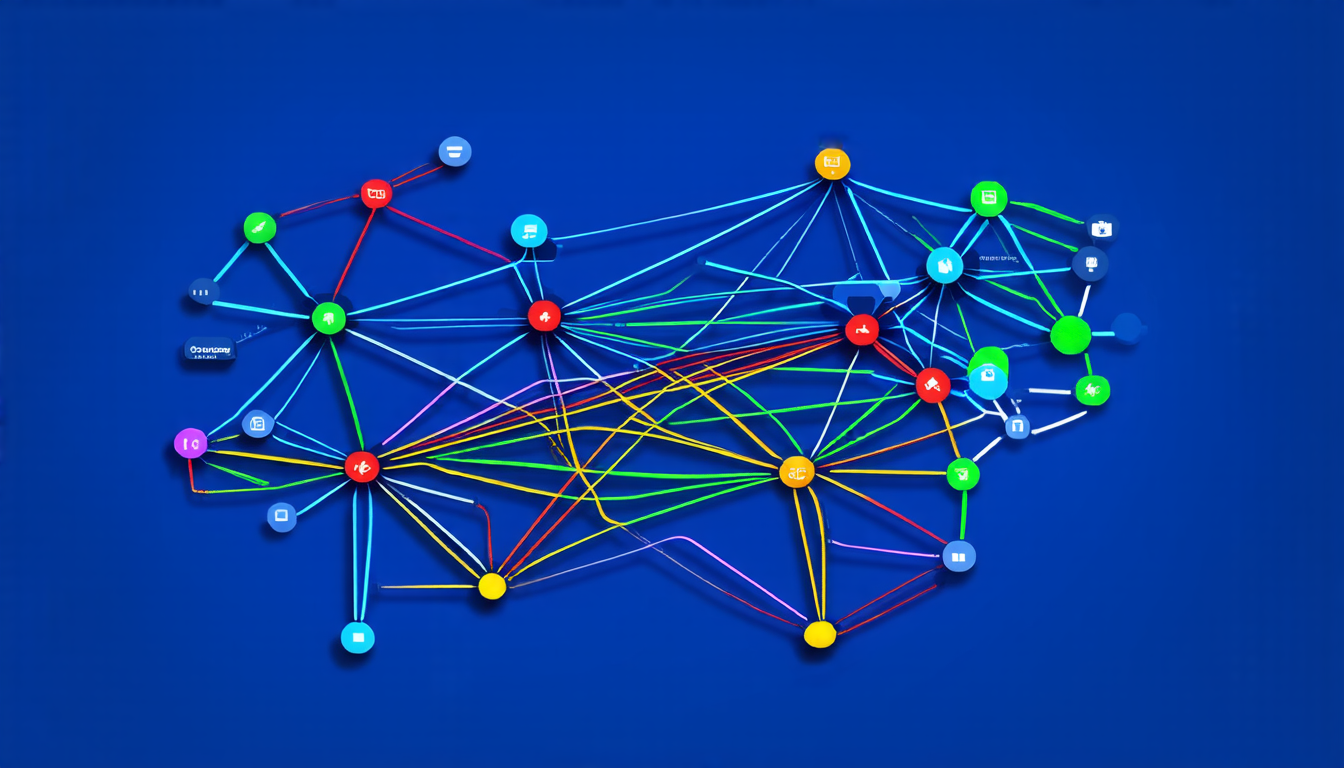
The key innovation of HERO is its hierarchical architecture, which allows it to adapt to different query types and complexities. The model consists of multiple layers, each responsible for processing a specific aspect of the query, such as join orders or cardinality estimates.
One of the main advantages of HERO is its ability to generalize well to new queries that are not present in the training data. This is achieved through the use of transfer learning, which allows the model to adapt to unseen queries by leveraging knowledge learned from similar queries.
The researchers tested HERO on a range of databases and query types, including real-world workloads. The results showed that HERO outperformed traditional query optimization techniques in terms of execution time and query acceleration.
HERO also offers improved reliability compared to traditional methods, which can be prone to errors or timeouts. This is achieved through the use of a new parameterized local search procedure that efficiently explores queries and supports adjusting balance between training time and performance gains.
The researchers believe that HERO has the potential to revolutionize database query optimization, enabling faster and more efficient execution of complex queries. They plan to continue refining the model and exploring its applications in real-world scenarios.
In summary, HERO is a powerful new approach to query optimization that uses machine learning to learn from a large dataset of queries and their corresponding execution plans. Its hierarchical architecture allows it to adapt to different query types and complexities, and its ability to generalize well to new queries makes it an attractive solution for complex database workloads.
Cite this article: “HERO: A Machine Learning-Based Approach to Efficient Database Query Optimization”, The Science Archive, 2025.
Database, Query Optimization, Machine Learning, Hero, Relational Databases, Ensemble Models, Transfer Learning, Hierarchical Architecture, Execution Plans, Query Acceleration.
Reference: Sergey Zinchenko, Sergey Iazov, “HERO: Hint-Based Efficient and Reliable Query Optimizer” (2024).