

Sunday 02 February 2025
Robots are getting smarter and more agile, but they still struggle to navigate complex environments like our daily lives. Researchers have been working on solving this problem by developing better ways for robots to understand their surroundings using cameras, sensors, and other technologies. A new study published in the journal IEEE Transactions on Robotics has made significant progress in this area.
The researchers created a large dataset of images and sensor data from various outdoor environments, including forests, gardens, and even construction sites. They then used this data to train artificial intelligence algorithms that can detect and recognize specific objects, like trees or buildings, and track the robot’s movements over time.
One of the key challenges in developing robots that can navigate complex environments is dealing with changes in lighting conditions, weather, and other environmental factors. The researchers addressed this issue by incorporating sensors that can detect changes in temperature, humidity, and light levels, allowing the robot to adjust its navigation accordingly.
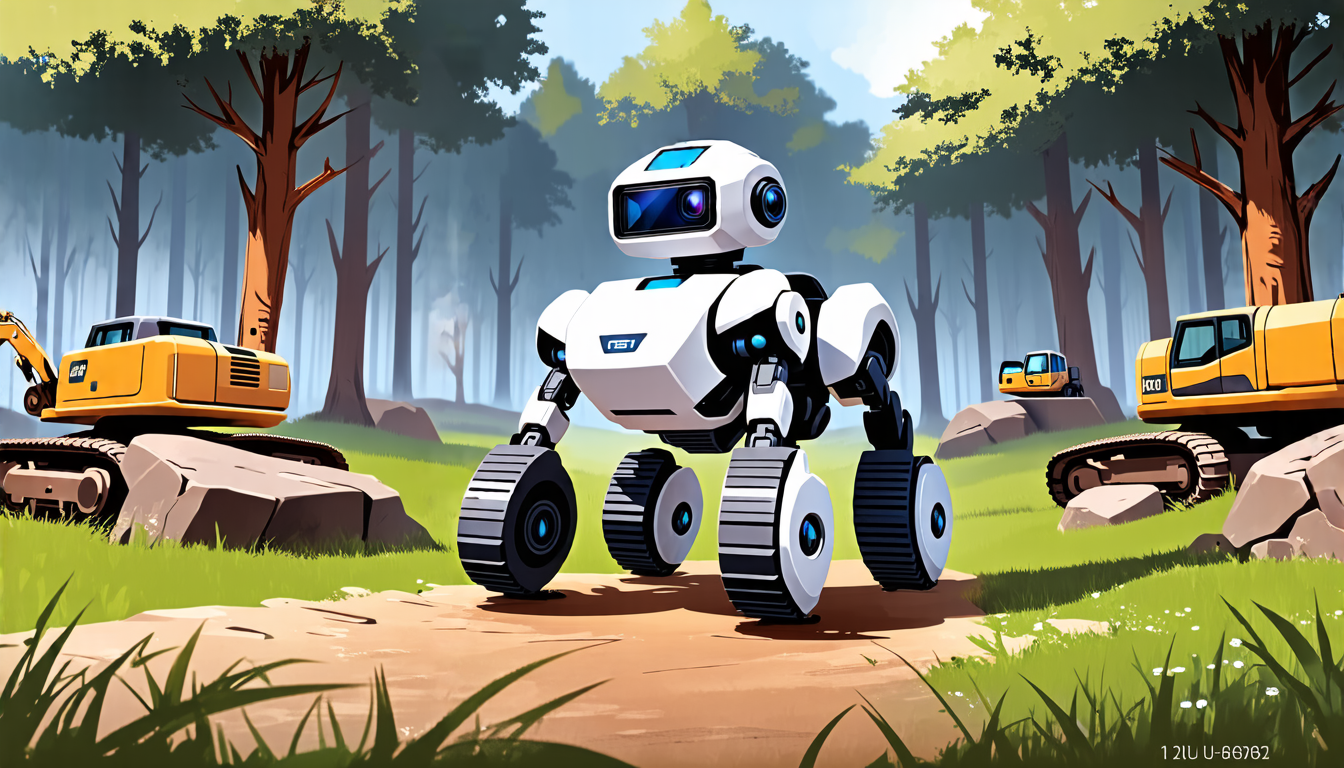
The study also showed that using multiple cameras and sensors simultaneously can improve the accuracy of the robot’s navigation. For example, a camera mounted on the robot’s head can provide information about the immediate surroundings, while a sensor on the side can detect changes in the environment further away.
Another important aspect of the study is its focus on lifelong learning. This means that the robot can learn and adapt to new environments and situations over time, rather than requiring retraining or updating every time it encounters something new. This could be particularly useful for robots that need to operate in a variety of settings, such as search and rescue missions or construction sites.
The researchers are now working on refining their algorithms and testing them with real-world applications. They hope that their work will pave the way for more advanced and autonomous robots that can safely and efficiently navigate complex environments.
Overall, this study represents an important step forward in developing robots that can effectively navigate complex outdoor environments. By combining multiple sensors and cameras with artificial intelligence algorithms, researchers are making significant progress towards creating robots that can adapt to changing situations and learn over time.
Cite this article: “Robots Learn to Navigate Complex Environments with Improved Sensors and Algorithms”, The Science Archive, 2025.
Robots, Navigation, Complex Environments, Artificial Intelligence, Cameras, Sensors, Lighting Conditions, Weather, Lifelong Learning, Autonomous Robots





