

Sunday 02 February 2025
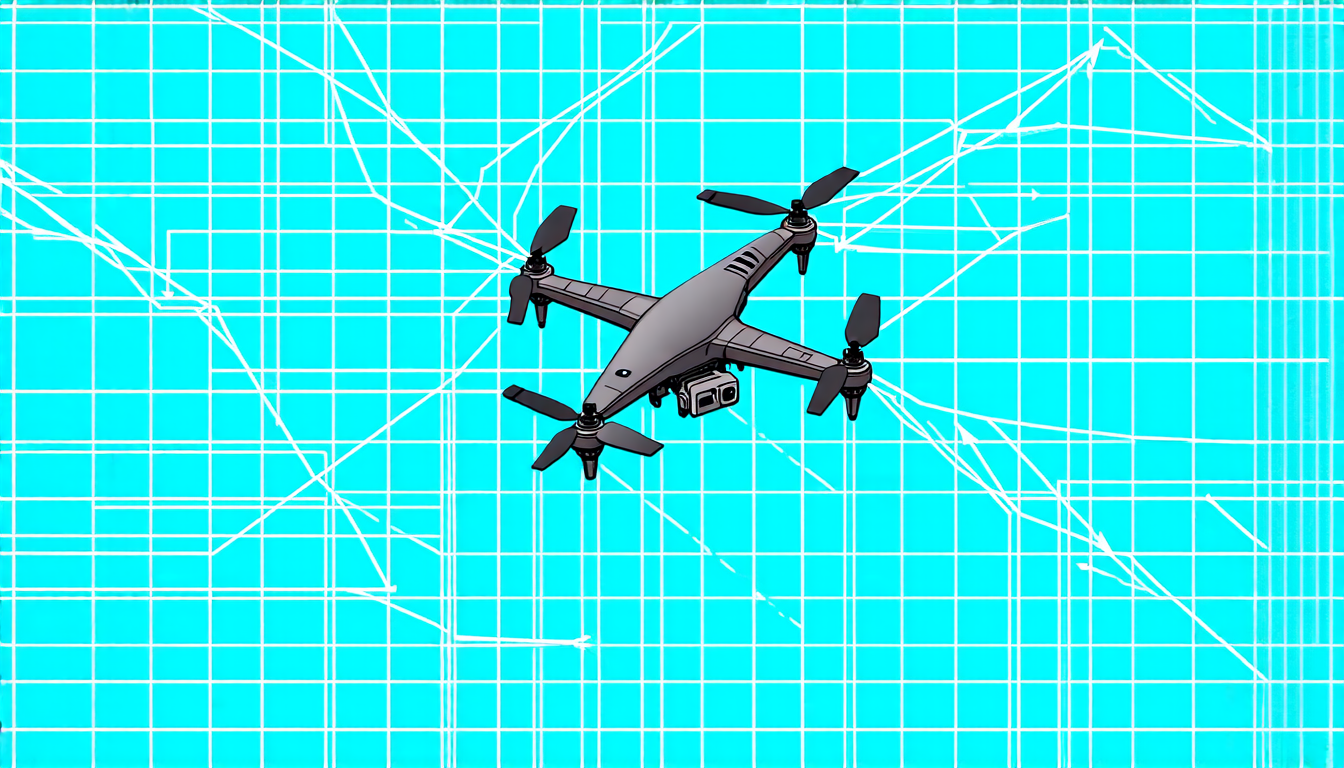
The world of unmanned aerial vehicles (UAVs) has taken a significant leap forward in terms of technology and innovation. With the increasing use of UAVs for various purposes, including surveillance, delivery, and entertainment, it’s essential to ensure their safety and security. One crucial aspect is protecting the communication networks used by these vehicles.
Controller Area Network (CAN) bus is a common protocol used for communication between electronic control units in vehicles, including UAVs. However, this network can be vulnerable to cyber attacks, which could compromise the entire system. In recent years, researchers have been working on developing intrusion detection systems (IDS) to detect and prevent such attacks.
A team of experts has developed a graph-based machine learning (GB-ML) model for detecting intrusions in CAN bus networks used by UAVs. The model uses graph convolutional neural networks (GCNN) and graph attention networks (GAT) to analyze the communication patterns on the network and identify potential threats.
The researchers tested their model using real-world data from various attack scenarios, including injection attacks, replay attacks, and mixed attacks. They found that the GB-ML models outperformed traditional sequence-based models like long short-term memory (LSTM) networks in detecting intrusions.
One of the key advantages of the GB-ML approach is its ability to capture complex communication patterns on the CAN bus network. The model can analyze the relationships between different nodes and edges in the graph, allowing it to detect anomalies and potential threats more effectively than traditional models.
The researchers also evaluated the performance of their model using various metrics, including accuracy, precision, recall, and F1-score. They found that the GB-ML models achieved higher detection rates compared to LSTM networks, with an average improvement of 12%.
The development of this IDS has significant implications for the security of UAVs and other vehicles using CAN bus networks. With the increasing use of autonomous vehicles in various industries, it’s essential to ensure their safety and security.
In addition, the GB-ML approach can be applied to other areas where graph-based data is used, such as social network analysis and traffic flow prediction. The researchers hope that their work will inspire further research into the application of graph-based machine learning for intrusion detection and cybersecurity.
The future of UAVs depends on the development of advanced technologies like IDS to ensure their safety and security.
Cite this article: “Graph-Based Machine Learning Model Detects Intrusions in CAN Bus Networks Used by Unmanned Aerial Vehicles”, The Science Archive, 2025.
Uavs, Can Bus, Intrusion Detection Systems, Machine Learning, Graph-Based, Gb-Ml, Gcnn, Gat, Lstm, Cybersecurity





