

Sunday 02 February 2025
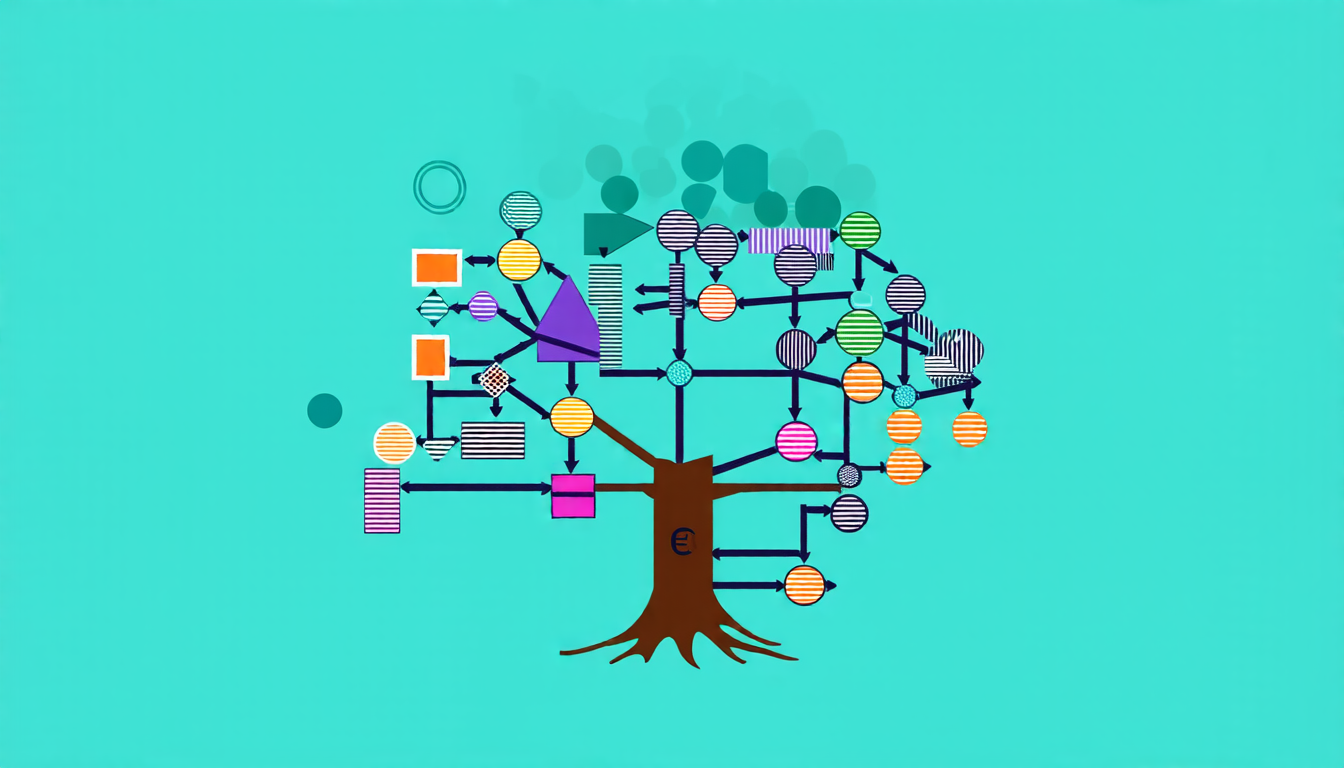
In the world of computer science, automata are theoretical models that simulate the behavior of machines. They’re used to analyze and understand the properties of languages, which are sets of rules for generating sequences of symbols. Tree-walking automata, in particular, are a type of automaton that moves along the nodes of a tree-like structure, making decisions based on the labels of those nodes.
A recent study has shed light on the capabilities of these tree-walking automata. Researchers have shown that they cannot be determinized, meaning there is no way to convert them into deterministic machines without losing their ability to recognize certain languages. This is significant because it implies that some languages are inherently nondeterministic, and therefore cannot be recognized by deterministic machines.
The study also explored the relationship between tree-walking automata and unambiguous automata. Unambiguous automata are a type of machine that can recognize only one language for each input string. The researchers found that unambiguous tree-walking automata are strictly weaker than nondeterministic ones, meaning they are capable of recognizing fewer languages.
These findings have important implications for the study of formal languages and their recognition by machines. They suggest that some languages may require the use of nondeterministic machines to recognize them, while others can be recognized by deterministic machines.
The researchers used a variety of techniques, including combinatorial arguments and reduction methods, to arrive at their conclusions. Their results have far-reaching implications for our understanding of the computational power of different types of automata.
One of the key insights gained from this study is that tree-walking automata are not as powerful as previously thought. This has important implications for the design of algorithms and the recognition of languages by machines. It also highlights the need for further research into the capabilities and limitations of different types of automata.
Overall, this study provides a deeper understanding of the properties of tree-walking automata and their role in the study of formal languages. Its findings have important implications for computer science and will be of interest to researchers and practitioners alike.
Cite this article: “Tree-Walking Automata: Limitations and Implications for Language Recognition”, The Science Archive, 2025.
Automata, Tree-Walking Automata, Formal Languages, Determinism, Nondeterminism, Unambiguous Automata, Recognition, Computation, Algorithms, Computer Science





