

Sunday 02 February 2025
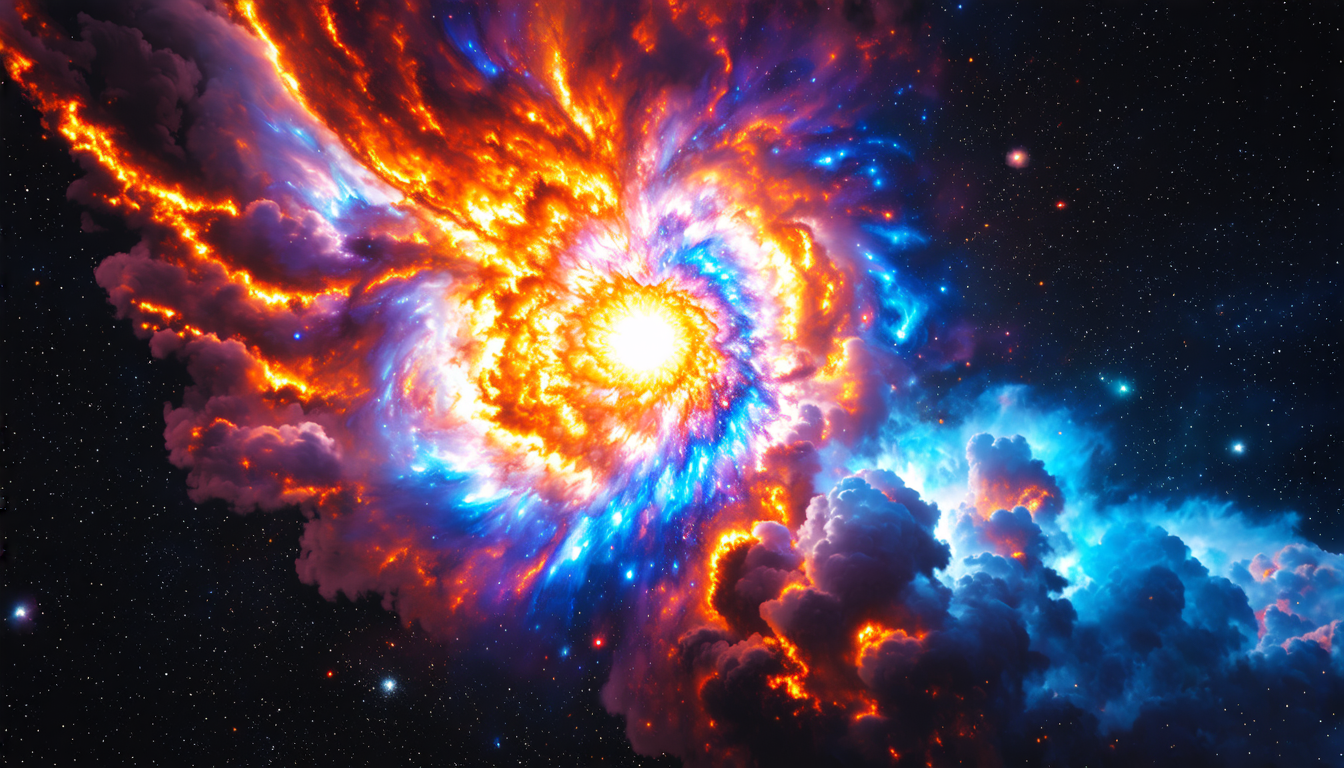
Scientists have long been fascinated by supernovae, those explosive events that mark the death of a star and are often visible from Earth. But despite their destructive power, supernovae also hold secrets about the fundamental nature of the universe. A new study has shed light on this mystery by analyzing the chemical makeup of stars that exploded as supernovae.
The research team studied the spectra of 246 supernovae, using data from a range of sources including space-based telescopes and ground-based observatories. By analyzing the light emitted by these explosions, they were able to determine the composition of the stars that had blown up. The results showed that many of these stars were enriched with heavy elements, such as iron and nickel, which are forged in the hearts of massive stars.
But what’s really interesting is that some supernovae also contained significant amounts of lighter elements, like carbon and oxygen. These elements are typically found in smaller, cooler stars, but their presence in these massive explosions suggests that they must have been created elsewhere – perhaps even during the early days of the universe itself.
The study also revealed a surprising diversity in the chemical makeup of supernovae. While some showed signs of having formed in metal-rich environments, others seemed to have come from regions with much lower levels of heavy elements. This could be due to differences in the way stars form and evolve in different galaxies, or even the role of external factors like nearby supernova explosions.
One of the most striking findings was that many supernovae had higher levels of certain elements than expected. For example, some showed signs of having formed in environments with high levels of carbon and oxygen, while others seemed to have been enriched by elements like iron and nickel. This suggests that these elements were not only created within the stars themselves, but also transported from elsewhere – possibly even from other galaxies.
The implications of this study are far-reaching. By studying the chemical makeup of supernovae, scientists can gain insights into the formation and evolution of stars and galaxies. They can also learn more about the fundamental processes that shape the universe, from the creation of heavy elements to the role of gravity in shaping galaxy clusters.
In short, this research has opened up new avenues for understanding the mysteries of the cosmos. By analyzing the chemical makeup of supernovae, scientists can unravel the secrets of star formation and evolution, and gain a deeper appreciation for the awe-inspiring beauty of these explosive events.
Cite this article: “Unveiling the Secrets of Supernovae: A Study on Star Formation and Evolution”, The Science Archive, 2025.
Supernovae, Stars, Chemical Makeup, Heavy Elements, Iron, Nickel, Carbon, Oxygen, Galaxy Evolution, Universe Formation





