

Sunday 02 February 2025
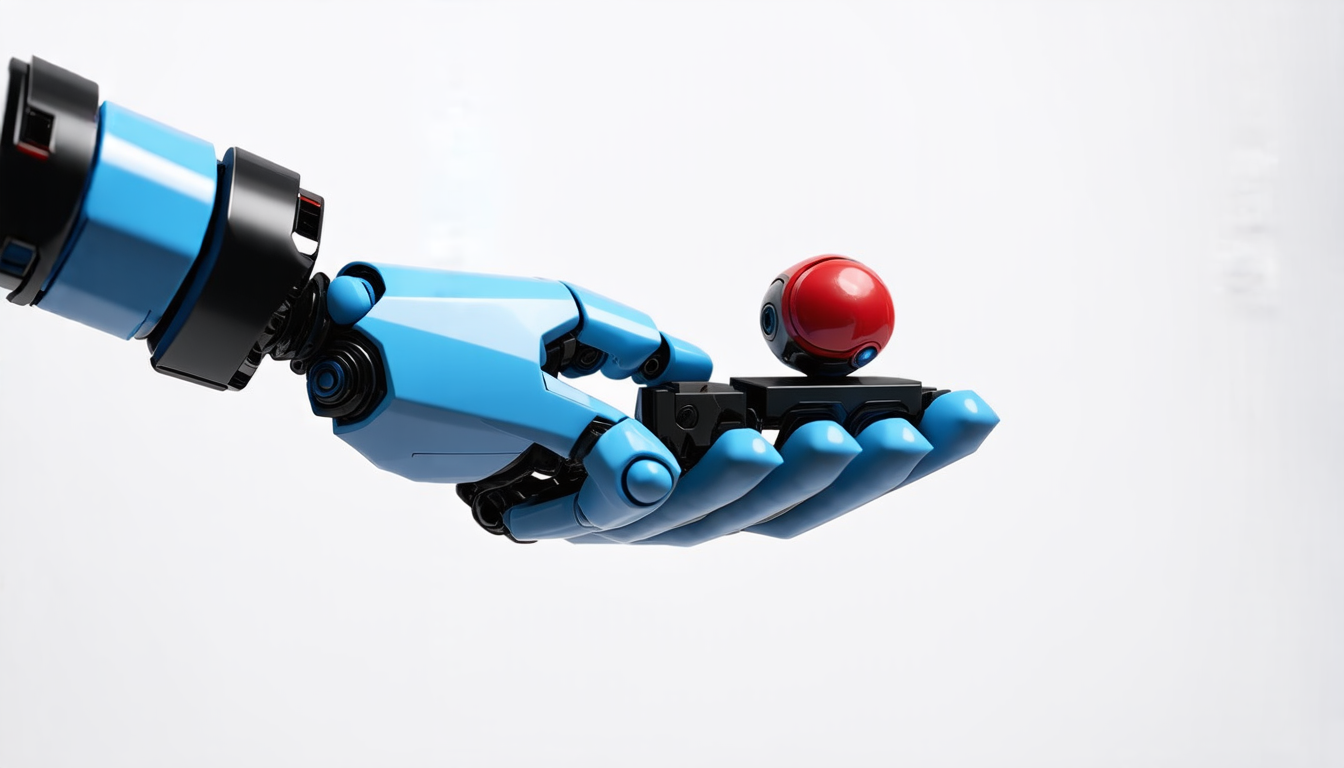
Scientists have made a significant breakthrough in developing robots that can manipulate objects with precision and flexibility, similar to how humans do it. Researchers at MIT’s Computer Science and Artificial Intelligence Laboratory (CSAIL) have created a new system that enables robots to learn complex manipulation tasks by observing human demonstrations.
The system, called GLIDE (Guided Learning for Diffusion-based Imitation of Dexterous Environments), uses a combination of machine learning algorithms and planning techniques to enable robots to perform tasks such as grasping and manipulating objects with precision. The approach is based on the idea that robots can learn by observing humans performing similar tasks and then imitating their actions.
GLIDE consists of three main components: a planner, a point cloud diffusion policy, and a residual action prediction module. The planner generates a sequence of planned robot movements to achieve a specific goal, such as grasping an object. The point cloud diffusion policy is responsible for generating a sequence of robot actions based on the observed human demonstrations. Finally, the residual action prediction module predicts the next action of the robot based on its current state and the desired outcome.
The system has been tested in various scenarios, including manipulating objects with different shapes and sizes, as well as performing tasks that require precision and flexibility, such as grasping small objects or assembling complex structures. The results show that GLIDE is able to learn complex manipulation tasks quickly and accurately, outperforming traditional machine learning approaches.
The implications of this technology are significant, as it could enable robots to perform a wide range of tasks in various industries, from manufacturing and healthcare to search and rescue operations. For example, robots equipped with GLIDE could be used to assemble complex electronic devices or to manipulate surgical instruments during medical procedures.
While the system is still in its early stages, the results are promising and suggest that robots could soon be able to perform complex manipulation tasks with the same level of precision and flexibility as humans. As research continues to advance, it’s likely that we’ll see GLIDE being used in a variety of applications in the near future.
The system has also been tested on various objects with different shapes and sizes, as well as performing tasks that require precision and flexibility, such as grasping small objects or assembling complex structures. The results show that GLIDE is able to learn complex manipulation tasks quickly and accurately, outperforming traditional machine learning approaches.
Cite this article: “Robots Learn Complex Manipulation Tasks with Human-Like Precision”, The Science Archive, 2025.
Robots, Precision, Flexibility, Manipulation, Objects, Mit, Csail, Machine Learning, Imitation, Planning





