

Sunday 02 February 2025
Flexible electronics have been gaining attention in recent years due to their potential to revolutionize various industries, from wearable devices to medical implants. However, creating flexible and durable electronic components has proven to be a significant challenge. One major hurdle is finding materials that can withstand repeated bending and stretching without compromising their electrical conductivity.
Researchers have traditionally relied on indium tin oxide (ITO), but its brittleness limits its durability under intense bending conditions. In search of a more reliable alternative, scientists have been exploring metal nanomeshes, which offer superior mechanical flexibility while maintaining high electrical conductivity. But these structures can be complex to fabricate and may not be scalable for mass production.
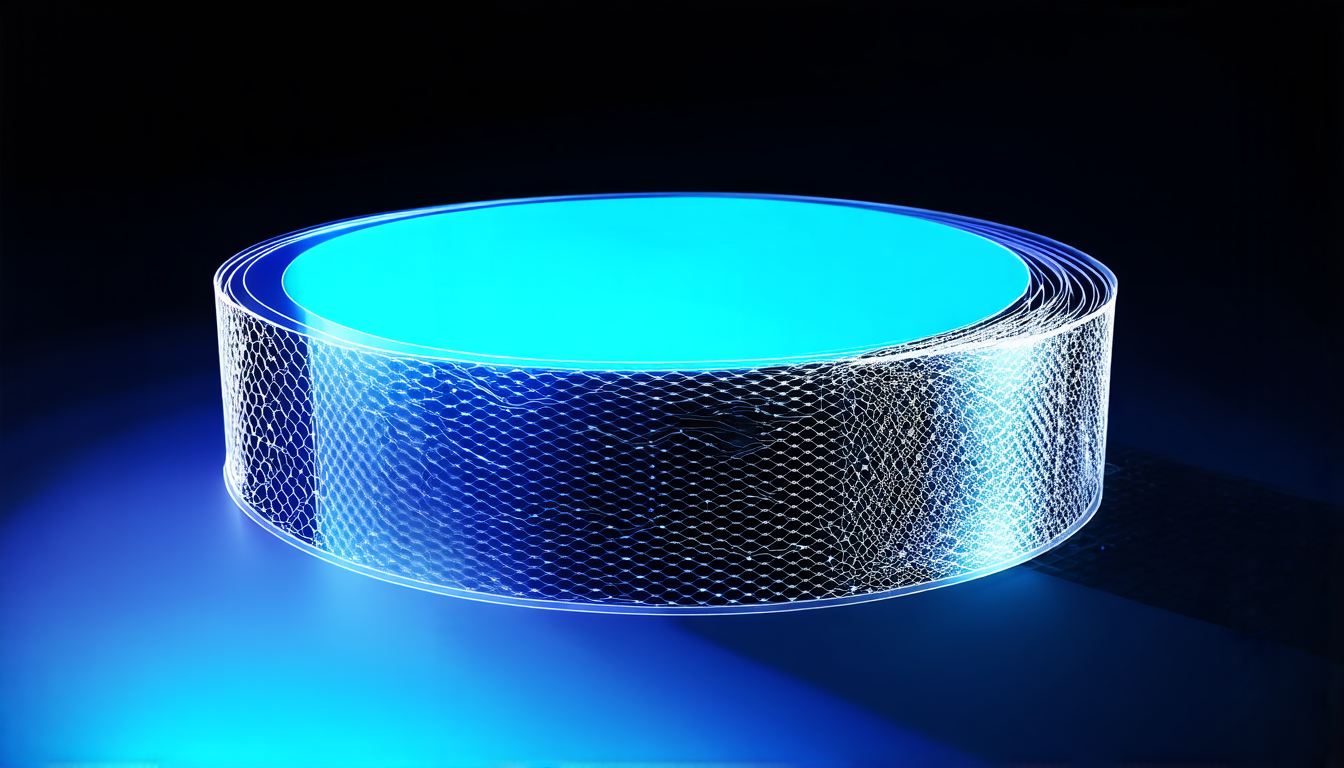
A team of researchers has now introduced a new approach that uses platinum (Pt) nanonetworks as an alternative to ITO. These networks are fabricated using a simple method involving the deposition of Pt-cerium alloy thin films on polyimide substrates, followed by atmospheric treatments at elevated temperatures. The resulting Pt nanonetworks exhibit high mechanical flexibility and maintain their electrical conductivity even after repeated bending.
The team’s approach is based on the concept of nanophase separation, where the Pt-Ce alloy is treated to form a nanotexture comprising interconnected Pt networks and insulating cerium dioxide (CeO2). This structure allows for efficient electrical conduction while providing mechanical flexibility. The researchers discovered that by optimizing the atmospheric treatment conditions, they could control the formation of these nanonetworks.
The team’s findings were published in a recent paper, where they demonstrated the feasibility of their approach using LCR measurements and flexibility tests. The results showed that the Pt nanonetworks exhibited excellent electrical conductivity and mechanical flexibility, maintaining their sheet resistance even after 1000 bending cycles at diameters as small as 1.5 mm.
The potential applications of these flexible Pt nanonetworks are vast. They could be used in wearable devices, foldable displays, and medical implants, where durability and reliability are crucial. The simplicity of the fabrication process also makes it more feasible for large-scale production.
In addition to their mechanical flexibility, the Pt nanonetworks exhibit excellent electrical properties, including high conductivity and low resistance. These characteristics make them an attractive alternative to traditional ITO-based materials.
While there is still much work to be done to fully realize the potential of flexible electronics, this breakthrough offers a promising new direction for researchers and industry professionals alike.
Cite this article: “Flexible Platinum Nanonetworks Show Promise in Wearable Devices and Medical Implants”, The Science Archive, 2025.
Flexible Electronics, Platinum Nanonetworks, Indium Tin Oxide, Ito, Metal Nanomeshes, Mechanical Flexibility, Electrical Conductivity, Nanophase Separation, Cerium Dioxide, Pt-Ce Alloy.





