

Sunday 02 February 2025
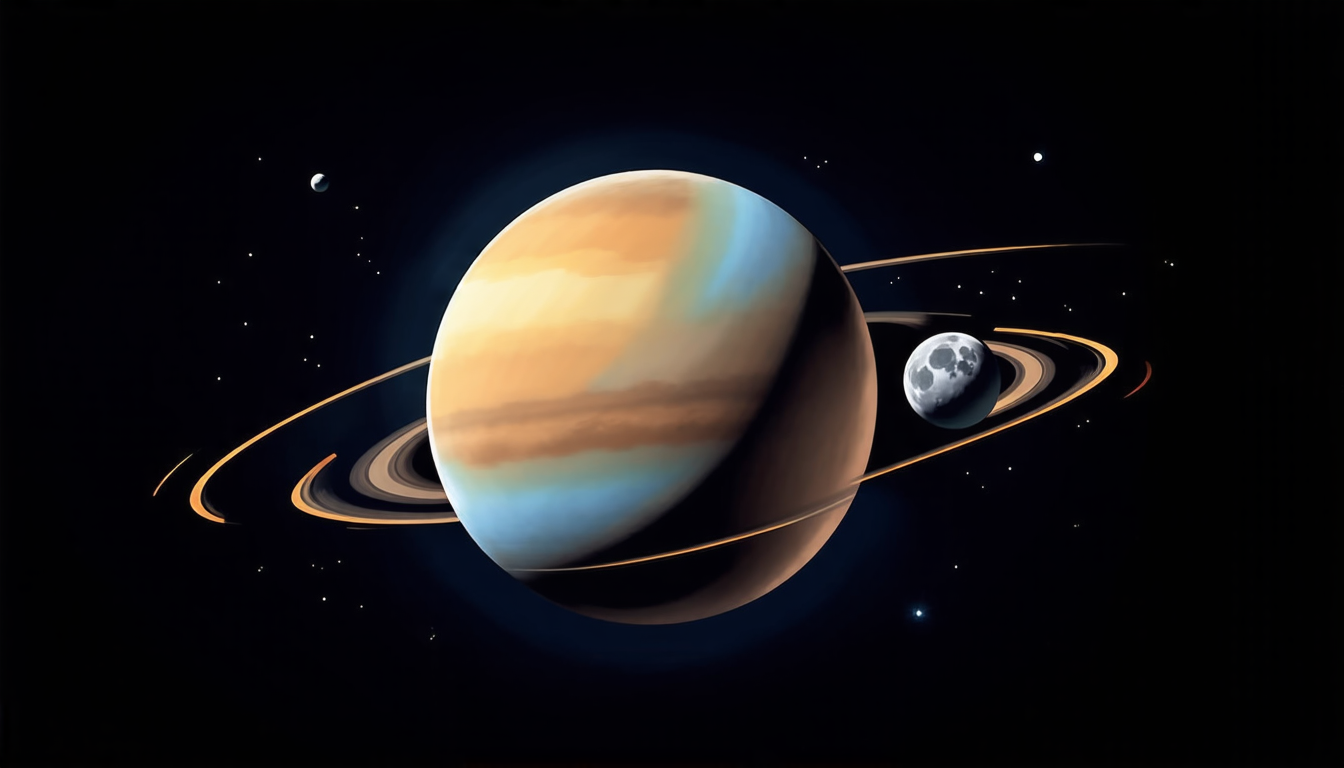
A new exoplanet has been discovered orbiting a star in our galaxy, and it’s unlike any other found so far. The planet is called TOI-4994b, and it’s a gas giant, meaning it’s massive enough to be considered a planet, but made mostly of gas rather than rock.
What makes this discovery significant is that TOI-4994b orbits its star in a very unusual way. It takes about 43 days to complete one orbit, which is much longer than the typical time for planets in our solar system. This suggests that the planet may be experiencing some kind of gravitational interaction with another object in the system, such as another planet or even a dark matter particle.
The discovery was made by a team of scientists using data from NASA’s Transiting Exoplanet Survey Satellite (TESS). The spacecraft is designed to search for planets that pass in front of their stars, causing a mini-eclipse that can be detected from Earth. By analyzing the light curves of thousands of stars, the researchers were able to identify TOI-4994b as a promising candidate and then confirmed its existence using follow-up observations.
The team used data from the W.M. Keck Observatory in Hawaii to study the planet’s atmosphere and determine its composition. They found that it is a gas giant with a mass similar to Jupiter, but slightly smaller. It orbits its star at a distance of about 10 times the distance between Earth and the Sun.
This discovery has significant implications for our understanding of planetary formation and the search for life beyond Earth. The unusual orbit of TOI-4994b may be indicative of a complex planetary system that could harbor other planets or moons, making it an exciting target for future study.
The team plans to continue studying TOI-4994b and its star using a combination of ground-based telescopes and space-based observatories like the James Webb Space Telescope. This will allow them to learn more about the planet’s atmosphere, magnetic field, and potential for hosting life. The discovery of TOI-4994b is an exciting addition to our understanding of the universe and highlights the ongoing quest to explore and understand exoplanet systems.
Cite this article: “Unusual Exoplanet Discovery Challenges Our Understanding of Planetary Formation”, The Science Archive, 2025.
Toi-4994B, Exoplanet, Gas Giant, Nasa, Tess, Planetary Formation, Dark Matter, W.M. Keck Observatory, James Webb Space Telescope, Exoplanet System





