

Sunday 02 February 2025
Scientists have made a significant breakthrough in developing a new technology that can improve the quality of high-energy laser beams, making them more precise and powerful. The innovative method uses a gas-based spatial filter, which is capable of absorbing unwanted light frequencies and cleaning up the beam’s profile.
The concept is based on saturated absorption, where the gas molecules absorb excess light energy above a certain threshold. By carefully controlling the concentration of ozone in the gas mixture, researchers were able to create a pinhole-like effect that filters out high-frequency components of the laser beam. This results in a cleaner and more focused beam with less noise and distortion.
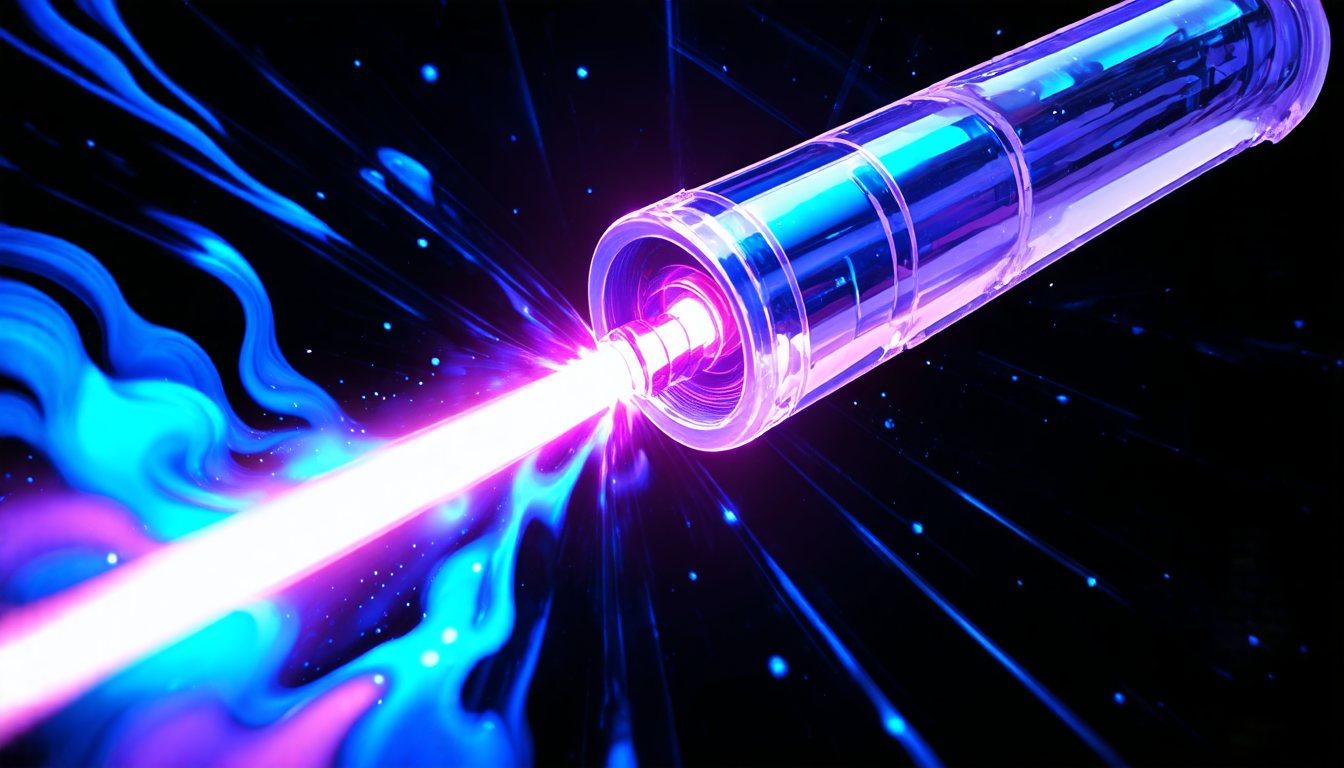
The team used a combination of theoretical modeling, computer simulations, and experimental testing to validate their findings. They created a custom-built setup using an ultraviolet laser pulse focused through an ozone-oxygen mixture flowing in a tube. The experiment showed that the gas pinhole was able to effectively clean up the beam’s profile, reducing the noise and improving its spatial quality.
The implications of this technology are significant for various applications, including high-repetition-rate high-energy lasers used in industries such as medicine, manufacturing, and national security. The gas-based spatial filter is alignment-insensitive and damage-resistant, making it an attractive alternative to traditional solid pinholes.
In addition to its potential uses, the research also highlights the versatility of the technology. By adjusting the concentration of ozone and the length of the gas mixture, the researchers were able to achieve different levels of filtering and beam cleaning. This could potentially enable the creation of multi-pass spatial filters for even greater precision and control.
The team’s findings have opened up new avenues for research and development in the field of laser technology. As scientists continue to push the boundaries of what is possible with high-energy lasers, innovations like this gas-based spatial filter will play a crucial role in shaping the future of these technologies.
Cite this article: “Improving Laser Beam Quality through Gas-Based Spatial Filtering”, The Science Archive, 2025.
Laser Beams, High-Energy Lasers, Gas-Based Spatial Filter, Saturated Absorption, Ozone-Oxygen Mixture, Ultraviolet Laser Pulse, Noise Reduction, Beam Cleaning, Alignment-Insensitive, Multi-Pass Spatial Filters





