

Sunday 02 February 2025
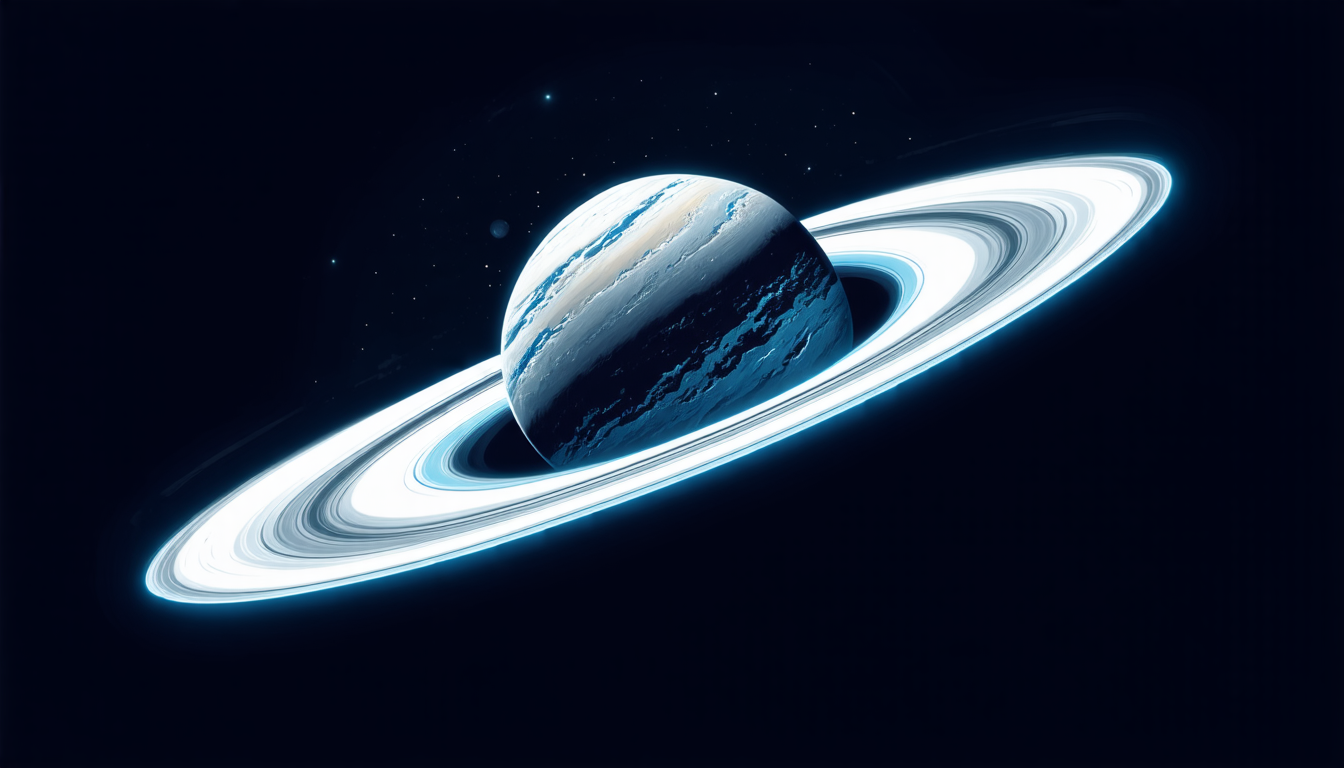
The formation of Uranus and Neptune, the two largest planets in our solar system, has long been a topic of interest among astronomers and planetary scientists. For decades, researchers have debated the mechanisms that led to the creation of these massive worlds. A recent study published in Astronomy & Astrophysics sheds new light on this process, proposing a novel scenario that challenges our current understanding.
According to the research, Uranus and Neptune may not have formed through the conventional method of planetary accretion, where small particles collide and merge to form larger bodies. Instead, the scientists suggest that these planets might have grown from a swarm of tiny, icy particles called planetesimals that were present in the early solar system.
This idea is based on computer simulations that modeled the behavior of planetesimals in a protoplanetary disk, a swirling disk of gas and dust that surrounded the young Sun. The simulations showed that these small bodies could have accumulated and merged to form larger and more massive planets, eventually giving rise to Uranus and Neptune.
The researchers also explored the possibility that giant impacts between the forming planets played a crucial role in shaping their final configuration. These collisions would have released enormous amounts of energy, causing the planets’ orbits to become tilted and their internal structures to be rearranged.
One of the most intriguing aspects of this new scenario is its potential to explain the unique characteristics of Uranus and Neptune. For instance, these planets have highly inclined orbits that are tilted relative to the plane of the solar system. The proposed mechanism could account for this tilt by suggesting that a massive impact occurred early in their history, causing their orbits to become perturbed.
The study’s findings also shed light on the possible formation mechanisms of other icy bodies in our solar system, such as Pluto and Neptune’s moon Triton. These objects are thought to have originated from a region beyond Neptune’s orbit, but the new scenario suggests that they might have formed closer to the Sun and then migrated outward due to gravitational interactions with the giant planets.
While this research offers a compelling alternative to traditional theories of planetary formation, it is not without its challenges. The simulations relied on simplified assumptions about the behavior of planetesimals and the early solar system’s environment, which may need to be refined in future studies.
Despite these limitations, the study represents an important step forward in our understanding of Uranus and Neptune’s origins.
Cite this article: “New Insights into the Formation of Uranus and Neptune”, The Science Archive, 2025.
Uranus, Neptune, Planetary Accretion, Planetesimals, Protoplanetary Disk, Giant Impacts, Tilted Orbits, Pluto, Triton, Solar System Formation





