

Sunday 02 February 2025
The pursuit of better materials and manufacturing processes is a never-ending quest for scientists and engineers. One crucial aspect of this research is understanding the behavior of materials under various conditions, such as stress, strain, and temperature. To achieve this, researchers employ complex mathematical models that simulate the material’s response to different stimuli.
In recent years, elasto-viscoplasticity has emerged as a vital area of study in the field of materials science. This phenomenon occurs when a material exhibits both elastic and viscous behavior under stress, with the latter dominating at high strain rates or temperatures. Elasto-viscoplastic models are essential for predicting the mechanical properties of materials, such as their strength, toughness, and ductility.
Researchers have developed various methods to solve elasto-viscoplastic problems, including finite element methods (FEM) and adjoint-based optimization techniques. FEM involves discretizing the material’s domain into small elements and solving the governing equations numerically. Adjoint-based optimization, on the other hand, uses a mathematical technique called the adjoint method to compute the sensitivity of the material’s response to changes in its parameters.
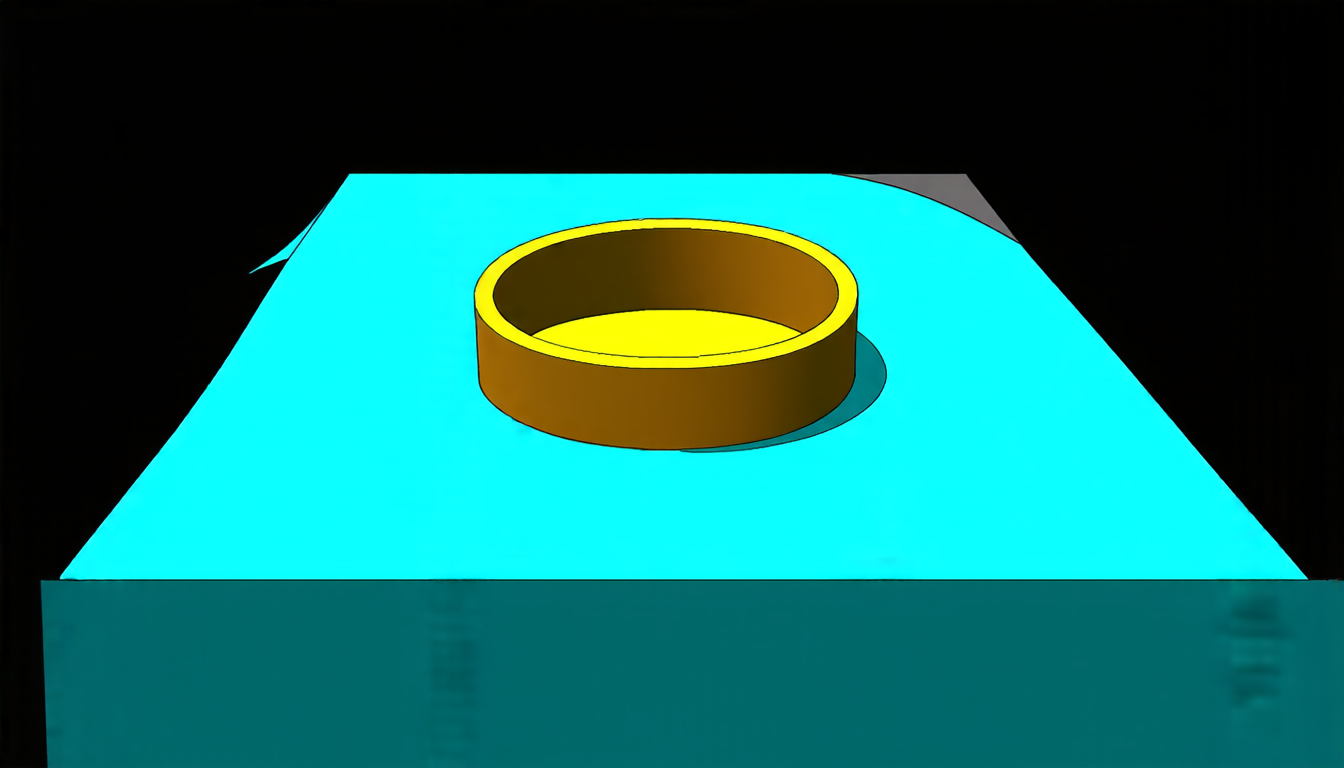
In this study, researchers employed both FEM and adjoint-based optimization techniques to simulate the behavior of an annular specimen under dynamic compression testing. The specimen was subjected to a sudden compressive force, causing it to deform rapidly. The researchers aimed to predict the material’s response to this loading condition using elasto-viscoplastic models.
To reduce the computational cost of solving the problem, the researchers employed dimension reduction techniques, which allowed them to simulate the material’s behavior in two dimensions rather than three. This involved approximating the displacement field as a function of the radial distance from the center of the specimen and neglecting the axial component of the stress tensor.
The results of the simulation showed excellent agreement with experimental data, providing insight into the material’s elasto-viscoplastic behavior under dynamic compression testing. The researchers also demonstrated that their adjoint-based optimization technique could be used to identify the optimal parameters of the material’s constitutive model, which would enable more accurate predictions of its mechanical properties.
This study highlights the importance of combining advanced mathematical modeling techniques with experimental data to gain a deeper understanding of complex materials behavior. As researchers continue to push the boundaries of materials science, it is likely that elasto-viscoplasticity will remain a critical area of research, enabling the development of new materials and manufacturing processes with improved performance and efficiency.
Cite this article: “Simulation of Elasto-Viscoplastic Behavior in Dynamic Compression Testing”, The Science Archive, 2025.
Elasto-Viscoplasticity, Materials Science, Finite Element Methods, Adjoint-Based Optimization, Dimension Reduction Techniques, Dynamic Compression Testing, Constitutive Modeling, Mechanical Properties, Simulation, Experimental Data





