

Sunday 02 February 2025
Medical imaging is a crucial field in healthcare, allowing doctors and researchers to visualize the human body’s internal structures and diagnose diseases more accurately. However, analyzing medical images can be a challenging task, especially when it comes to identifying specific cells or tissues within an image.
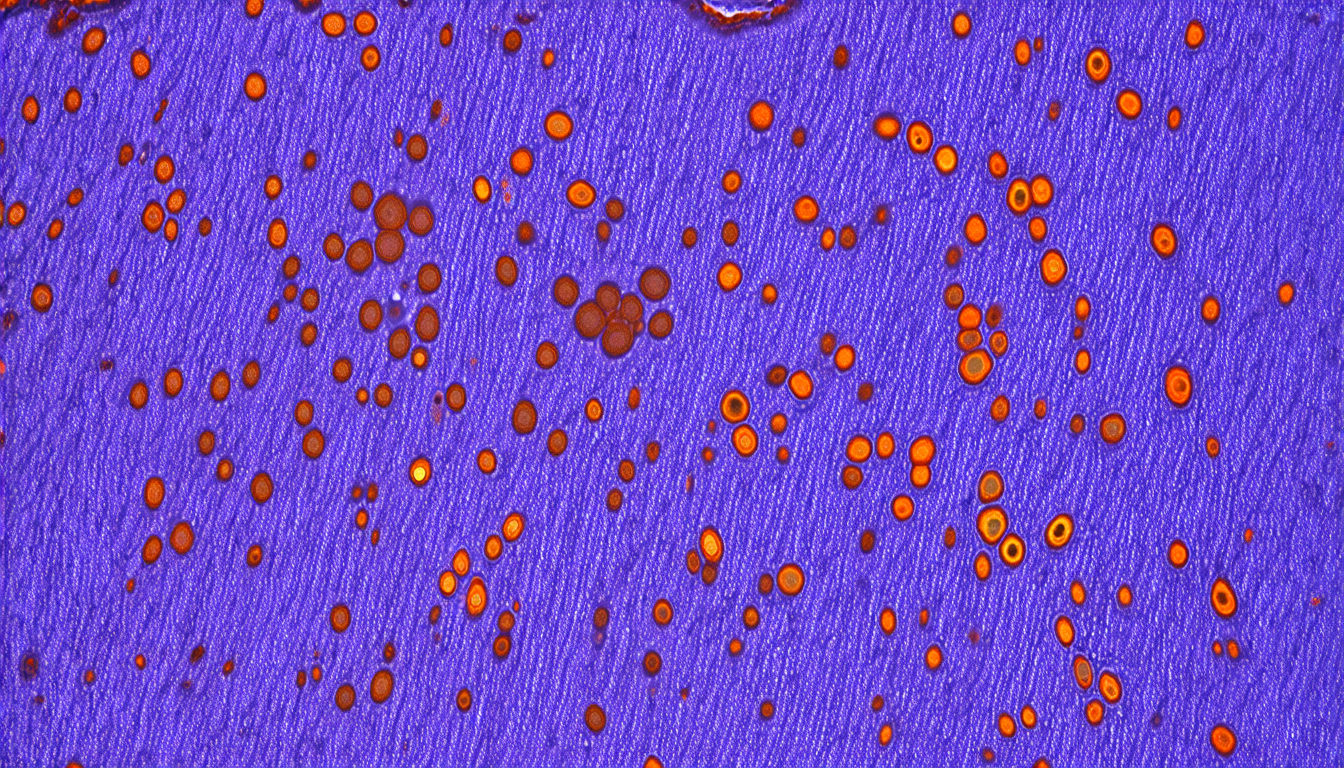
Recently, a team of researchers has made significant progress in developing a new method for segmenting cells in medical images using artificial intelligence (AI). The approach combines the power of vision and language processing to accurately identify and classify different types of cells.
The researchers used a dataset called PanNuke, which contains over 100,000 images of histology samples from various tissues. They trained an AI model on this data, using a technique called progressive prompt decoding, which allows the model to learn from both visual and linguistic cues.
The model is able to identify different types of cells, including neoplastic, epithelial, inflammatory, connective, and dead cells. It achieves impressive accuracy rates, outperforming state-of-the-art methods in cell segmentation tasks.
One of the key innovations of this approach is its ability to integrate visual and linguistic features from a single image. The model uses attention mechanisms to focus on specific regions of interest within an image, allowing it to capture subtle details that may be missed by traditional segmentation algorithms.
The researchers also evaluated their method on a range of cell types and tissues, demonstrating its versatility and effectiveness in different scenarios. This work has significant implications for the field of medical imaging, particularly in the diagnosis and treatment of diseases such as cancer.
Furthermore, this approach has potential applications beyond medical imaging. The ability to analyze images using both visual and linguistic cues could be applied to a wide range of fields, including robotics, autonomous vehicles, and even video analysis.
Overall, this research demonstrates the power of combining vision and language processing in AI models, with significant implications for medical imaging and beyond.
Cite this article: “AI-Powered Cell Segmentation Revolutionizes Medical Imaging”, The Science Archive, 2025.
Medical Imaging, Artificial Intelligence, Cell Segmentation, Histology Samples, Pannuke Dataset, Progressive Prompt Decoding, Attention Mechanisms, Visual Features, Linguistic Cues, Medical Diagnosis





