

Sunday 02 February 2025
A team of researchers has made a significant breakthrough in developing an end-to-end solution for identifying and tracking transmitters, and predicting the optimal beams for wireless communication systems. The innovative approach uses computer vision to identify the transmitter, track it across frames, and predict the top-N beams, all while accounting for geographical nuances such as vertical vanishing points.
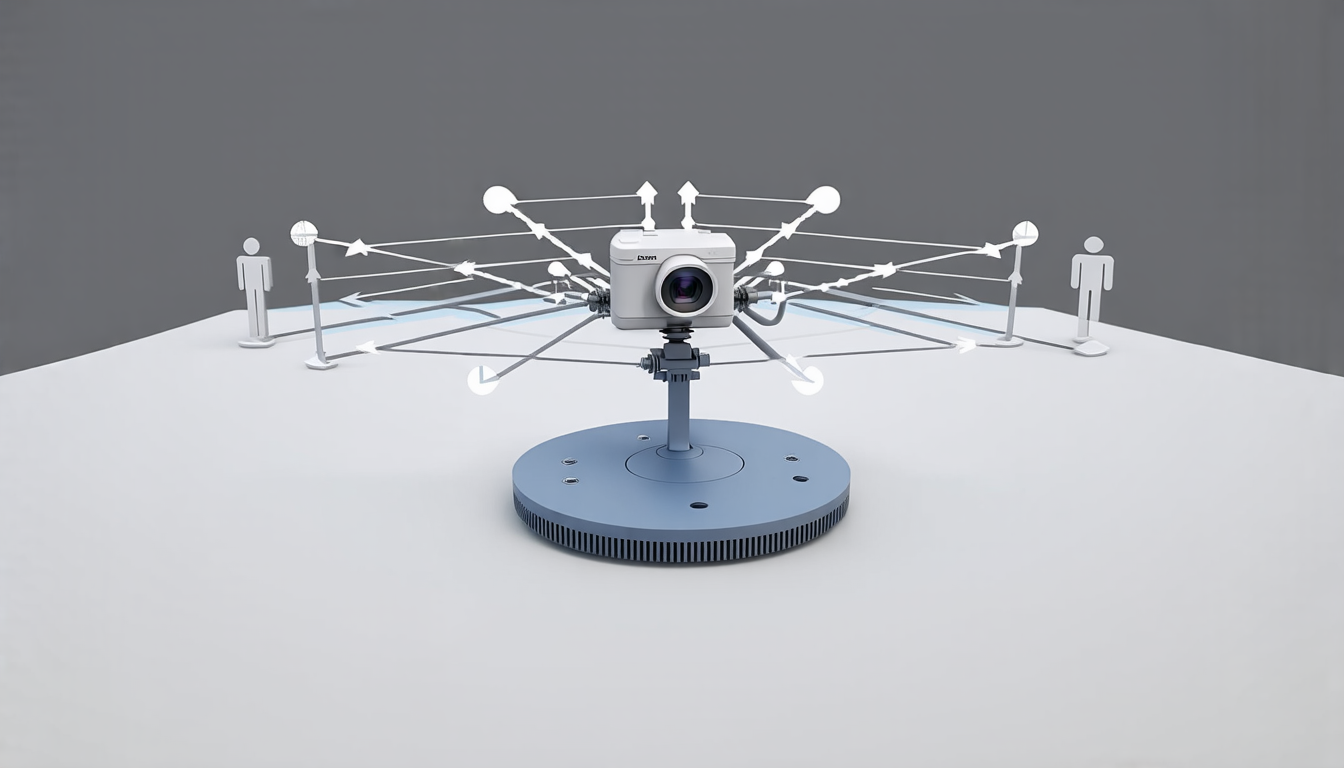
The team’s system begins by processing images captured by a camera mounted on a base station, using a modified 3-channel input image that incorporates mmWave power profiles. A YOLOv8 object detector is then used to identify the transmitter and track it across subsequent frames. The tracker updates the bounding box coordinates of the transmitter and distinguishes it from potential distractors.
The next step is to predict the top-N beams, which involves reducing the beam search space by projecting the beams onto the image and isolating the transmitter within the image. The system then uses a custom neural network architecture to process the reduced beam search space and predict the top-N beams.
In experiments, the team’s approach achieved near-perfect accuracy in top-5 beam predictions, surpassing current state-of-the-art methods by at least 6%. The results demonstrate the effectiveness of using RGB data as a sensory input for beam prediction, enabling accurate predictions across varied conditions with minimal overhead.
The researchers’ innovation has significant implications for wireless communication systems, particularly those operating in high-frequency bands such as millimeter-wave and sub-terahertz frequencies. These frequencies require precise alignment of narrow beams between transmitters and receivers, which can be challenging to achieve. The team’s approach provides a robust solution that can adapt to dynamic environments and reduce the beam training overhead.
The use of computer vision in wireless communication systems is an emerging area of research, with potential applications in areas such as object detection and tracking, scene understanding, and human-computer interaction. The team’s work demonstrates the power of combining machine learning and computer vision techniques to solve complex problems in wireless communications.
Cite this article: “Accurate Beam Prediction for Wireless Communication Systems Using Computer Vision”, The Science Archive, 2025.
Wireless Communication, Beam Prediction, Computer Vision, Object Detection, Tracking, Millimeter-Wave, Neural Network, Machine Learning, Beam Training, Sub-Terahertz Frequencies.





