

Sunday 02 February 2025
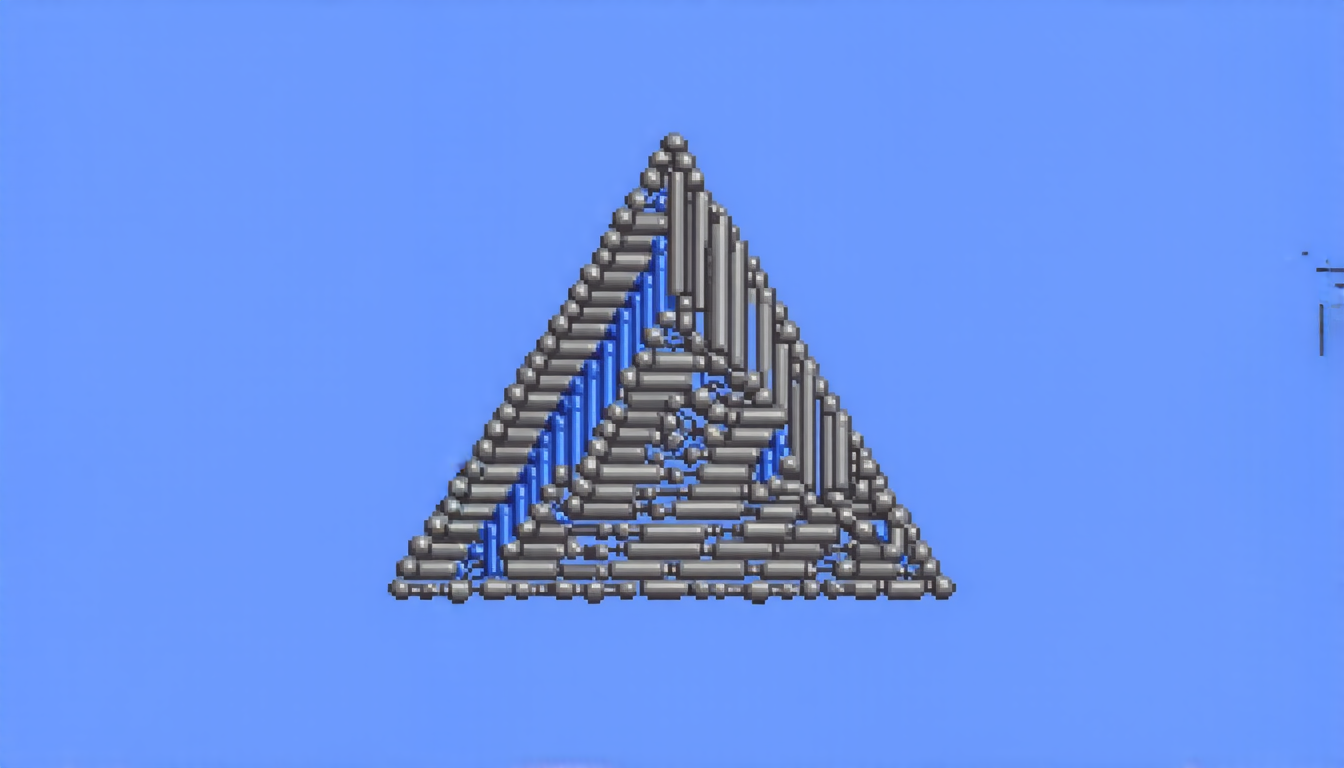
Scientists have made a significant breakthrough in understanding the behavior of magnets at the atomic level. Researchers have been studying a type of magnet called a triangular-lattice antiferromagnet, which is made up of atoms arranged in a triangle shape. These magnets are known for their unique properties, such as being able to resist external magnetic fields.
The team of scientists used a technique called neutron diffraction to study the behavior of these magnets at very low temperatures. They found that the magnets undergo two separate transitions, or changes in their structure and behavior, as they cool down. These transitions are thought to be caused by the alignment of the atoms’ spins, which are like tiny bar magnets.
The first transition occurs at a temperature of around 1.13 Kelvin, and is characterized by the alignment of the spins in a specific pattern. This pattern is known as a Y-like structure, because it resembles the shape of the letter Y. The second transition occurs at a slightly higher temperature, around 1.28 Kelvin, and is characterized by the alignment of the spins in a different pattern.
The team’s findings suggest that these magnets are much more complex than previously thought, with multiple states of matter existing within them. This has important implications for our understanding of magnetism and its applications in technology.
The study also highlights the importance of neutron diffraction as a tool for studying magnetic materials. Neutron diffraction is a technique that uses neutrons to study the structure and behavior of materials at the atomic level. It is particularly useful for studying magnets, because it can detect the alignment of the spins within the material.
Overall, this study has shed new light on the behavior of triangular-lattice antiferromagnets, and has important implications for our understanding of magnetism and its applications in technology.
Cite this article: “Atomic-Level Insights into Triangular-Lattice Antiferromagnet Behavior”, The Science Archive, 2025.
Magnets, Atomic Level, Neutron Diffraction, Antiferromagnet, Triangular Lattice, Spin Alignment, Y-Like Structure, States Of Matter, Magnetism, Technology.





