

Tuesday 25 February 2025
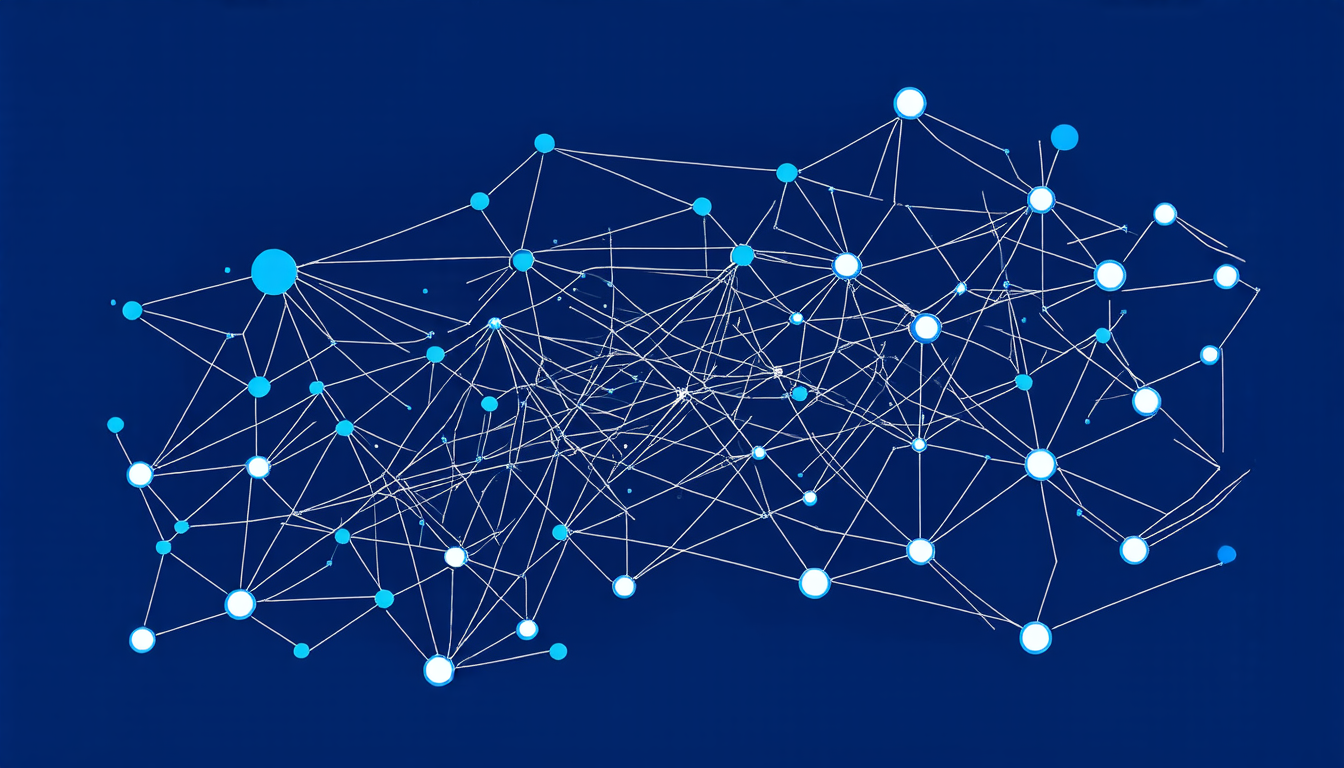
A team of mathematicians has made a significant breakthrough in understanding the behavior of complex systems, specifically in the field of percolation theory. Percolation is the study of how connections form between individual elements, such as particles or nodes, to create larger structures.
In this research, the scientists focused on a specific type of percolation called first-passage percolation, where the goal is to find the shortest path between two points in a network. They discovered that by analyzing the behavior of these networks under certain conditions, they could predict how quickly connections would form and how long it would take for information or resources to spread through the system.
One of the key findings was that even in systems with infinite passage times, which means that it may take an eternity for some particles to connect, the researchers were able to identify a pattern in the way connections formed. This pattern allowed them to predict the rate at which connections would form and how long it would take for information or resources to spread through the system.
The implications of this research are far-reaching and could have significant impacts on many fields, including computer science, biology, and economics. For example, understanding how quickly connections form in social networks could help us better understand how ideas spread and how communities develop. Similarly, analyzing the behavior of particles in a material could provide insights into its mechanical properties.
The researchers used advanced mathematical techniques to analyze the data and identify patterns in the behavior of these complex systems. They also developed new methods for simulating these systems and predicting their behavior under different conditions.
Overall, this research is an important step forward in our understanding of complex systems and has significant potential applications across many fields.
Cite this article: “Unlocking the Secrets of Complex Systems: A Breakthrough in Percolation Theory”, The Science Archive, 2025.
Percolation, Complexity, Networks, Connections, First-Passage, Pattern Recognition, Prediction, Simulation, Computer Science, Biology





